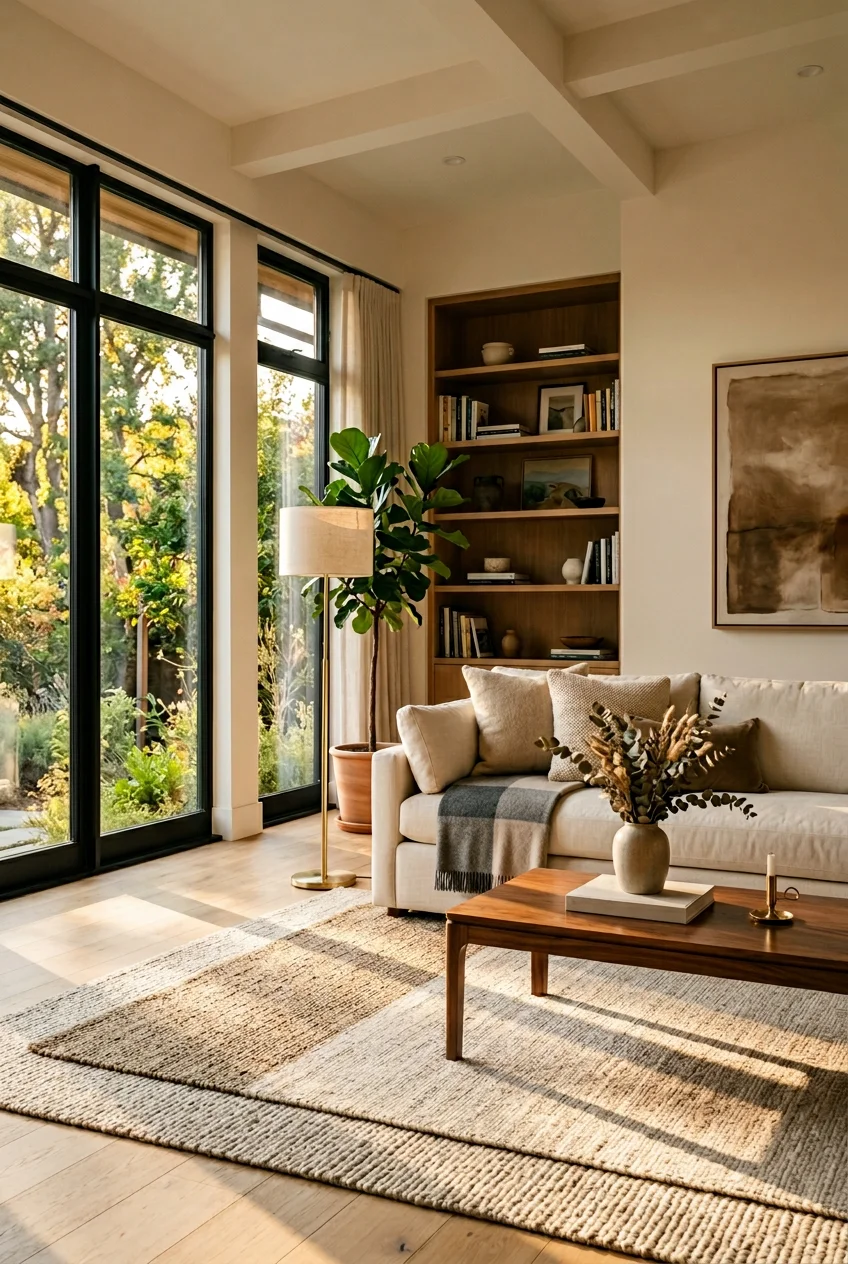
What’s Inside
- Embrace Modular Sofas for Flexibility and Longevity
- Choose the Right Rug Size to Anchor Your Space
- Layer Your Lighting for Ambiance and Functionality
- Hang Curtains High and Wide to Enhance Room Height
- Curate Your Color Palette with Warm Tones
- Avoid Matchy-Matchy Furniture Sets
- Integrate Biophilic Living Room Decoration Ideas
- Master the Gallery Wall with Precise Spacing
- Prioritize Functionality with Ample Surfaces
- Incorporate Sculptural and Low-Profile Furniture
- Explore Color Capping for Depth and Height
- Integrate Smart Home Technology Practically
- Don’t Push All Furniture Against the Walls
- Embrace Pattern-on-Pattern Layering
- Incorporate Vintage and Sustainable Pieces
- Upgrade Your Throw Pillows with Down Alternatives
- Use Oversized Mirrors to Double Natural Light
- Strategic Plant Placement for Awkward Corners
- Smart Living Room Decoration Ideas for Coffee Tables
I stared at my 2019 furniture setup last Tuesday and realized it smelled like stale dog hair and looked like a sterile waiting area. If you’re hunting for living room decoration ideas that actually work in real life, you’re in the right place. I tried forcing a matching gray sectional and a tiny rug into my space for months before figuring out why it felt so cold and uncomfortable. Let’s fix those awkward layouts and sterile corners with practical solutions. I’ve wasted a lot of money on bad decor, so I’m sharing the exact measurements and brands that finally made my house feel like a home.
1. Embrace Modular Sofas for Flexibility and Longevity

When I bought my first apartment, I bought a cheap, rigid sofa that wouldn’t fit up the stairs of my next house. I learned the hard way that modular sofas are a much smarter investment. Brands like Lovesac are great for reconfigurability, especially if you move a lot. You can add or remove seats as your floor plan changes. The Koala Torquay Modular Sofa is also a top pick, featuring an FSC-certified wood frame and washable, water-resistant covers. Prices for quality modular sofas range from $2,000 to $6,000 depending on the setup. I bought a three-seat modular piece last October for $2,499. The latching mechanism is a bit stiff at first, which is annoying when you’re trying to connect the heavy base pieces alone. Trust me on this.
2. Choose the Right Rug Size to Anchor Your Space

A common mistake I see constantly is picking a rug that’s way too small. A tiny 5×7 rug under a massive sectional makes a room look unbalanced and cheap. For most standard spaces, an 8×10 or 9×12 rug is ideal. You want the rug to be at least 6 inches, and ideally 8 inches, wider than your sofa on both sides. I bought a 9×12 jute rug at Costco last month for $199.99, and it completely grounded my seating area. If possible, all furniture legs should sit fully on the rug in large rooms for a unified look. In medium-sized rooms, at least the front legs of your sofas and chairs should rest on the fibers. Leave 18 to 24 inches of bare floor space between the rug edges and your baseboards in smaller rooms.
3. Layer Your Lighting for Ambiance and Functionality

Relying on a single overhead light is a guaranteed way to make your space feel like a harsh cafeteria. Overlooking lighting layers is a mistake I made for years. Instead, you need a layered lighting scheme. Combine your overhead fixtures with task lighting, like a brass floor lamp next to a reading chair, and accent lighting on your consoles. For evening, experts recommend using 2700K bulbs. These warmer bulbs mimic natural sunset light cycles and create a cozy warmth. I picked up a pack of Philips LED 2700K bulbs at Target for $13.99 and swapped out all my harsh daylight bulbs. The difference is immediate. Avoid 5000K bulbs in your lounging spaces, as they cast a blue, clinical glare that ruins any cozy vibe you’re trying to build.

UTTCMK Bookshelf Decor Thinker Statue
Honestly, UTTCMK Bookshelf Decor Thinker Statue – Abstract Art Reading Thinker S surprised me — sturdier than it looks in the photos, and over 809 buyers gave it 4.5 stars.
4. Hang Curtains High and Wide to Enhance Room Height

I used to drill my curtain brackets directly into the window trim. That common error makes a ceiling feel incredibly low and chops the wall in half. To make your ceilings appear taller, hang your curtain rod at least 12 inches above the window frame. If you have the space, take the rod all the way up to the ceiling line. You also need to extend the rod 3 to 5.5 inches beyond each side of the window frame. This allows the curtain panels to stack completely off the glass when open, maximizing your natural light. I bought the IKEA Ritva curtains for $39.99 a pair and hung them using a matte black rod from Walmart that cost $24.88. Ensure the curtain material drapes all the way to the floor with a slight half-inch excess for a tailored puddle. It’s a small measurement detail that dictates the entire vertical proportion of your wall.
5. Curate Your Color Palette with Warm Tones

Cool, sterile grays are finally fading out. Warm tones are winning right now, replacing those icy shades with creamy whites, greiges, and rich earth tones. Popular warm whites include Sherwin-Williams Alabaster (SW 7008) and Benjamin Moore White Dove (OC-17). I painted my main walls Alabaster last spring. A gallon costs about $70, and the subtle yellow undertone prevents the room from feeling stark on cloudy days. For accent walls or built-in bookshelves, consider moody shades like Sherwin-Williams Evergreen Fog (SW 9130), which is a muted sage green, or Benjamin Moore Hale Navy (HC-154). When I tried a dark green accent wall, I used a cheap roller and ended up with terrible lap marks. I learned that the hard way. Spend the extra $14.98 on a high-quality Purdy roller cover at your local hardware store so you won’t have to repaint.
6. Avoid Matchy-Matchy Furniture Sets

Purchasing an entire matching furniture set with the exact same fabric and wood tone makes your home look like a big-box showroom. It lacks personality and feels rigid. Instead, opt for a curated look by mixing different pieces that complement each other through scale and texture. Pair a modern, clean-lined sofa with a vintage accent chair or a heavily textured wood coffee table to create character and depth. I bought a sleek cream sofa and paired it with a distressed leather armchair I found at a local antique mall for $150. The contrast between the soft fabric and the worn leather makes the room visually interesting. If you already have a matching set, break it up. Move the matching loveseat to a bedroom or basement, and replace it with two contrasting upholstered chairs. Mixing textures is the secret to a high-end look. You might also like: 18 Easter Home Decor Ideas Worth Trying

Homedics Tabletop Water Fountain
A dependable everyday pick — Homedics Tabletop Water Fountain pulls in 44 ratings at 4.5 stars. Not flashy, just solid.
7. Integrate Biophilic Living Room Decoration Ideas

Biophilic design connects your interior layout with the natural world. This goes beyond just setting a potted pothos on a shelf. You need to incorporate raw, natural materials like sustainably sourced wood, rough stone, and organic textiles such as heavy wool or slub linen to execute these living room decoration ideas properly. I recently swapped my glass coffee table for a solid travertine stone table. The porous, imperfect texture of the stone adds a grounded, earthy feel that glass just can’t replicate. Consider adding a living wall with ferns or air-purifying moss panels if you have the wall space. I bought a large fiddle leaf fig at Trader Joe’s for $12.99 last Tuesday. I placed it in a woven seagrass basket next to the media console. Just remember to use a plastic drip tray inside the basket, because water damage on hardwood floors is an expensive mistake I’ve made before. You might also like: 20 Cozy Wall Decor Ideas for Every Budget
8. Master the Gallery Wall with Precise Spacing

Hanging a gallery wall without a measuring tape is a disaster waiting to happen. For a cohesive gallery layout, treat the entire collection as one single visual composition rather than individual pieces floating randomly. Experts recommend spacing your frames exactly 2 to 3 inches apart if you are using identical frame sizes. For a more eclectic mix of different sizes, 2 to 4 inches is a good general guideline. Larger walls benefit from 4 to 6 inches of spacing to avoid looking cluttered. The center of the overall arrangement should be at eye level, roughly 57 to 60 inches from the floor, or 7 to 10 inches above a piece of furniture like a sofa back. I bought a set of thick, matted frames from Target for $45. I cut out craft paper in the exact sizes of the frames and taped them to the wall first. This allowed me to adjust the 3-inch gaps before putting any nails into the drywall. You might also like: 15 Lovely Cozy Home Decor Ideas to Steal Right Now
9. Prioritize Functionality with Ample Surfaces

A beautiful room is useless if you don’t have anywhere to set down your coffee mug. A common oversight is not having enough hard surfaces reachable from every single seat. You need at least one or two side tables and a central coffee table. The ideal distance between a coffee table and the front edge of a sofa is 16 to 18 inches. This provides enough room to walk past, but keeps the table close enough to reach your drink without leaning awkwardly. I found a solid acacia wood side table at Kroger in their home goods section for $34.99, and it fits perfectly next to my reading chair. Consider a coffee table with hidden storage, especially if you need to manage remote controls and charging cables. Switching to a heavy wooden trunk-style table with a lift top gave me a place to hide the mess when guests come over unexpectedly.

Govee RGBIC Floor Lamp Basic
Govee RGBIC Floor Lamp Basic has been one of the most consistently praised picks in this category. 107 reviewers averaged 4.5/5.
10. Incorporate Sculptural and Low-Profile Furniture

There is a noticeable shift toward low-profile silhouettes with architectural purity right now. We’re moving away from overly cushioned, oversized recliners that swallow the whole room. Look for sculptural sofas with rounded edges, deep seating proportions, and monolithic armchairs that sit closer to the floor. Brands like Joybird are known for their bold, vintage-inspired modular designs. I recently tested a Joybird sofa priced around $2,200. The low back height makes the ceilings feel significantly taller, and the curved arms soften the harsh angles of the room. Always check the seat height measurement before ordering. Aim for a seat height of 17 to 18 inches if you want the sculptural look without sacrificing basic ergonomic comfort. It keeps the room grounded without making you struggle to stand up.
11. Explore Color Capping for Depth and Height

Color capping is a technique that uses multiple shades from the exact same color tone on your walls and trim to create movement. Unlike color drenching, which uses a single flat hue on every surface, color capping offers a more polished and dynamic look. You might paint the baseboards a dark taupe, the walls a medium taupe, and the picture rail a light taupe. This gradient effect draws the eye upward and makes ceilings feel taller. I tried this in my den last month. I used three varying shades of warm gray. The darkest shade went on the bottom third of the wall below the chair rail. I bought the paint at Walmart for $29 a gallon. The subtle transition between the shades adds incredible depth without being as loud as a traditional wallpapered accent wall.
12. Integrate Smart Home Technology Practically

Smart home decor is about blending technology with your daily routines so you aren’t staring at ugly plastic hubs. Consider smart lighting systems that allow you to change the mood, brightness, and color temperature via a phone app. I installed a Lutron Caseta smart dimmer switch for $99. It lets me dim the overhead lights from the couch without getting up. Tech-integrated furniture with built-in charging stations or embedded speakers is also a great way to maintain a clutter-free space. Automated window treatments are incredibly convenient for hard-to-reach windows. I bought a motorized roller shade for the high window above my television. It runs on a rechargeable battery pack that lasts about six months. The motor is a bit loud when it rolls up, which startles my cat, but the convenience of blocking the afternoon sun glare with a remote is fantastic.

Farmhouse White Fake Decorative Books for Home Office Decor
Farmhouse White Fake Decorative Books for Home Office Decor – Religion punches above its price — 10 buyers rated it 4.5 stars. I would buy it again.
13. Don’t Push All Furniture Against the Walls

Pushing every piece of furniture flat against the perimeter walls is the most common layout mistake I encounter. It makes a room feel cramped, less inviting, and leaves a massive, awkward dance floor of empty rug in the center. Instead, pull your furniture away from the walls. This creates a central focal point and arranges the pieces to encourage actual conversation. Allow your furniture to breathe and define distinct groupings. Even pulling the sofa just 12 inches off the wall creates a shadow line that makes the room feel wider. I rearranged my layout last Sunday, floating the main sofa in the middle of the room facing the fireplace. I put a slim console table behind it to hold two lamps. I found the narrow console at Whole Foods in their seasonal home pop-up for $89.99.
14. Embrace Pattern-on-Pattern Layering

Designers like Shea McGee note that pattern-on-pattern layering is a huge trend, utilizing drapery, wallpaper, upholstery, and throw pillows in coordinating bold prints. Florals are especially popular right now. The key to making this work is thoughtful pairing. You must allow one large hero pattern to lead the room, and support it with softer, smaller-scale companions. I mixed a large-scale floral pillow with a small, tight geometric print pillow on my solid sofa. I bought the geometric covers for $18 each. I tried mixing a wide stripe with a massive botanical print last year, and it gave me a headache every time I walked in. Keep your color palette tight when mixing patterns. If the floral has navy and rust, make sure the supporting geometric print uses that exact same navy.
15. Incorporate Vintage and Sustainable Pieces

There is a strong push toward vintage and antique pieces, driven by a desire for unique spaces and better sustainability. You don’t want a room full of fast furniture that will end up in a landfill in three years. Look for vintage artwork, thick matted frames, and heavy brass lamps to add immediate character. Brands like The Citizenry, West Elm, and GOODEE offer ethically made and sustainably sourced home decor. They utilize materials like GOTS-certified organic cotton, FSC-certified wood, and cruelty-free wool. I bought a vintage Turkish rug runner for $250 and placed it over my modern sisal rug. The worn, faded colors of the antique wool add a layer of history that brand new items simply can’t provide.

Lwenki Key Holder for Wall
Lwenki Key Holder for Wall has been one of the most consistently praised picks in this category. 86 reviewers averaged 4.5/5.
16. Upgrade Your Throw Pillows with Down Alternatives

Flat, lifeless throw pillows make even an expensive sofa look cheap. The secret to that plump, high-end look is sizing your inserts correctly. You should always buy pillow inserts that are two inches larger than your pillow covers. If you have a 20×20 inch cover, you need a 22×22 inch insert. This overstuffing fills out the corners perfectly. I used to buy standard poly-fill pillows, but they clump up and lose their shape after a month of leaning on them. I switched to a heavy down-alternative microfiber insert. I found a great set of two inserts at Target for $22. They have the weight and chop-ability of real feathers without the allergy issues or the sharp quills poking through the fabric. Don’t rely on the cheap inserts that come free with your decorative covers. Throw those away and spend the extra twenty bucks on proper heavyweight inserts.
17. Use Oversized Mirrors to Double Natural Light

If your space feels dark or claustrophobic, a large floor mirror is the fastest way to fix it. Placing an oversized mirror directly opposite a window reflects the natural light back into the room, essentially acting as a second window. I bought a 7-foot tall arched mirror with a brass frame and leaned it against the darkest wall in my den. The famous Anthropologie Gleaming Primrose mirror is beautiful, but it costs over $1,500. I found a nearly identical dupe at Costco for $149.99. When leaning a heavy mirror, you absolutely must secure it to the wall with an anti-tip kit, especially if you have pets or kids. I skipped this step once, and my dog bumped the frame, causing it to slide on the hardwood floor. It didn’t break, but the heavy thud terrified me. Spend the $6.99 on a heavy-duty drywall anchor and a steel cable strap.
18. Strategic Plant Placement for Awkward Corners

Every room has that one awkward, empty corner that is too small for a chair but too large to leave blank. A tall indoor tree is the perfect solution. It adds vertical height and vibrant color without taking up much floor space. I bought a 5-foot Ficus Audrey at Sprouts during their spring plant sale for $39.99. It thrives in bright, indirect light and is much less temperamental than the trendy Ficus Lyrata. I placed it in a heavy ceramic planter to anchor the corner next to my television console. If you don’t have good natural light, don’t waste money killing real plants. High-quality faux plants have gotten incredibly realistic. I have a fake olive tree in my basement that looks completely authentic. The trick to making a fake plant look real is to top the plastic nursery pot with real dried Spanish moss. You can buy a bag of moss at any craft store for $4.99.
19. Smart Living Room Decoration Ideas for Coffee Tables

Styling a coffee table without making it useless requires a specific formula. I rely on the rule of three to keep things balanced but functional. You need a stack of large books for height, a tray to corral small items, and a sculptural object for visual interest. I use a round wooden tray I bought at Walmart for $14.98 to hold the television remotes and a set of coasters. Next to the tray, I stack two heavy photography books. On top of the books, I place a small brass knot sculpture or a short, wide candle. This leaves exactly half of the coffee table completely empty for people to actually set down their drinks or put their feet up. I used to cover every square inch of the table with decorative beads, small vases, and knick-knacks. Keep the decor clustered in one specific zone. It looks intentional and preserves the table’s actual function.
Redecorating doesn’t require tearing down drywall or buying entirely new furniture sets. Sometimes, all it takes is swapping out your harsh lightbulbs, pulling the sofa a few inches away from the wall, and investing in a rug that actually fits the room. I’d rather spend money on a few high-quality, functional pieces than fill a room with cheap clutter. I highly recommend starting with your layout before you spend money on accessories. Pin this guide for later so you have all the exact measurements and spacing rules handy when you’re ready to tackle your own space.
Frequently Asked Questions
How do I choose the right rug size for my living room?
Always measure your seating area first. For most standard living rooms, an 8×10 or 9×12 rug is ideal. Ensure the rug is at least 6 to 8 inches wider than your sofa on both sides so the front legs of your furniture rest completely on the fibers.
What is color capping in living room decoration?
Color capping is a painting technique where you use multiple shades of the exact same color tone on your walls and trim. It creates subtle movement and depth. Applying a darker shade on the lower walls and a lighter shade above draws the eye upward, making ceilings feel taller.
How far should a coffee table be from the sofa?
The ideal distance between your coffee table and the front edge of your sofa is 16 to 18 inches. This specific measurement provides enough room to walk past comfortably, but keeps the table close enough to reach your drink without leaning awkwardly.
How high should I hang my living room curtains?
To make your ceilings appear taller, hang your curtain rod at least 12 inches above the window frame, or all the way to the ceiling line. Extend the rod 3 to 5.5 inches beyond the window frame sides to allow maximum natural light when the curtains are open.
