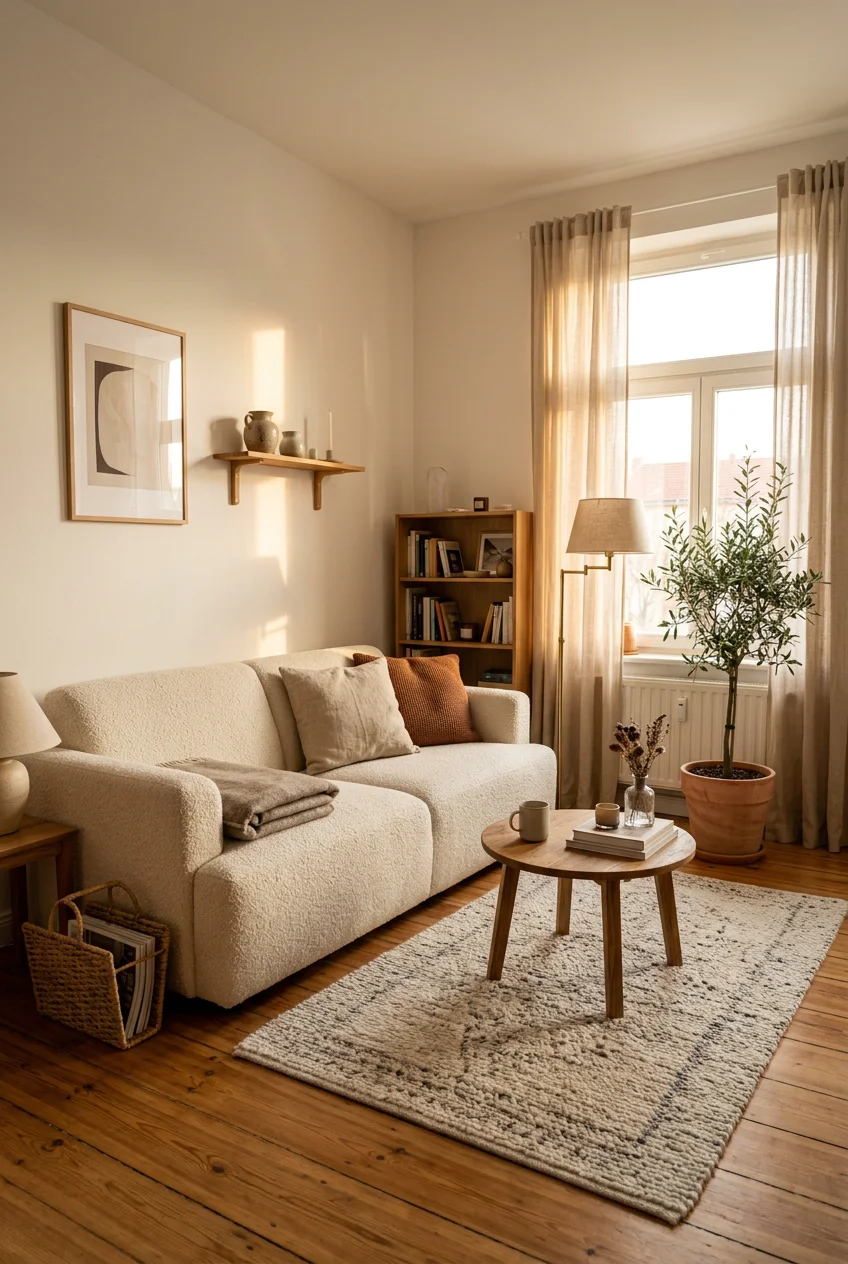
What’s Inside
- Embrace Multifunctional Furniture for Tight Layouts
- Choose Compact Sofas with a Light Visual Footprint
- Maximize Vertical Space with Floating Shelves
- Strategically Place Mirrors to Expand the Room
- Opt for Warm Neutral and Earthy Paint Colors
- Layer Lighting for Ambiance and Depth
- Choose the Right Rug Size to Anchor the Space
- Curate Decor to Avoid Visual Clutter
- Create Clear Pathways and Avoid Pushing Furniture Against Walls
- Incorporate Texture for Coziness
- Utilize Smart Storage Solutions Beyond Shelves
- Choose Low-Profile Furniture to Enhance Perceived Height
- Don’t Shy Away from a Dark Accent Wall
- Integrate Smart Home Devices Discreetly
- Create Zones Without Walls Using Rugs and Furniture Placement
- Hang Floor-to-Ceiling Drapes for the Illusion of Height
Last November, I sat on the floor of my 400-square-foot apartment eating a $6.99 Whole Foods hot bar dinner right out of the box. My place felt like a concrete cell. That’s exactly why I started looking for ways to fix my layout. I’d shoved a massive, rolled-arm sectional against the far wall, leaving no room to walk and blocking my only heat vent. It felt cramped, dark, and uninviting. Making a small space cozy isn’t about buying more throw pillows. It’s about math, specific measurements, and how light hits surfaces. I spent six months measuring every inch of my floor, testing paint samples, and returning furniture that didn’t fit. I made plenty of expensive mistakes. I bought rugs that were too small and lamps that cast harsh, clinical shadows. Now, I know what works and what doesn’t. Here’s my breakdown of how to arrange a tight space without losing your mind.
1. Embrace Multifunctional Furniture for Tight Layouts

Multifunctional furniture is a necessity when you’re short on space. Every piece needs to pull double duty. I used a standard glass coffee table for months before realizing I was constantly eating takeout on my lap and tripping over cords. I replaced it with the POVISON Modern Drum Coffee Table with Side Tables. The nesting set runs about $549, and the 32-inch diameter gives me a surface for drinks while hiding a deep storage cavity. The wood grain hides dust well, though the sliding mechanism gets sticky if you don’t clean the tracks monthly. For seating, I bought the Swyft Model 04 sofa bed. It’s around $1,400 and measures 82 inches wide. The foam is firm and doesn’t sag after six months of daily use. It folds out for guests, but the back cushions are heavy. You’ll need a closet to store them when the bed is open. If you’re skipping a sofa, a storage ottoman at the foot of an armchair holds 4 oz of remotes and cables while acting as a footrest.
2. Choose Compact Sofas with a Light Visual Footprint

When you’re buying a sofa for a tight room, the physical dimensions matter less than the visual weight. I learned this when I bought a bulky thrift store couch. It blocked the walkway and I bruised my hip on the armrest every morning for a month. Now, I stick to compact sofas with slim arms and exposed legs. Lifting the frame 6 inches off the floor lets light pass underneath, keeping the floor space looking continuous. The Crate & Barrel Lounge Classic 73″ Apartment Sofa costs $1,899 and fits perfectly against short walls. The seat depth is 46 inches, giving you plenty of room to sit without eating into your floor plan. I also tested the West Elm Eddy Sofa Performance fabric version, priced around $849. The 74-inch width is ideal, but the cushions run a bit stiff for the first few weeks. Interior designer Nick Scott from WN Interiors suggests avoiding skirts or block feet entirely. If your sofa touches the ground, your room shrinks. I’ve found that a 72 to 84-inch width is the sweet spot for a primary piece in rooms under 150 square feet.
3. Maximize Vertical Space with Floating Shelves

Floor space is a finite resource, so look at your blank walls. Installing floating shelves is a practical way to store books and plants without a heavy bookcase. I spent a Saturday drilling holes for corner shelves, creating about 1/2 cup of drywall dust on my rug, but it fixed my storage problem. I spaced my shelves exactly 14 inches apart. This gap gives you enough room for hardback books while keeping the setup looking connected. If you go beyond 15 inches, they look like isolated islands and the cohesion falls apart. I bought heavy-duty steel brackets and sourced 2-inch thick pine boards. You want thick wood to anchor the wall. I use the corners for trailing plants and small ceramic bowls for keys. Don’t crowd the shelves. Leave at least 30 percent of the surface bare. This negative space stops the wall from feeling top-heavy and keeps the room open.

Vanselia Ceramic Vase Home Table Decor
If you want something that just works, Vanselia Ceramic Vase Home Table Decor – Flower Vases Set of 3 Small L is a safe bet (406 reviews, 4.5 stars).
4. Strategically Place Mirrors to Expand the Room

Mirrors are a tool for bouncing light, not just a decoration. Positioning a large mirror opposite a window reflects natural light and creates an illusion of depth. I bought the MAL-0911 White Framed Mirror from MirrorLot for $350. It measures 36 by 42 inches. Last Tuesday, I tried hauling a cheaper mirror from Target in the rain, and the flimsy frame snapped before I even got it inside. The MirrorLot version has a solid wood frame that doesn’t bow. If you’re hanging a rectangular mirror above your sofa, it should be two-thirds the width of the sofa and centered 6 to 10 inches above the backrest. A common mistake is hanging mirrors too high, which just reflects your ceiling fan. Another effective method is leaning a full-length mirror in a dark corner. This reflects light without requiring you to drill massive anchors into your drywall. Just make sure the mirror isn’t reflecting a messy kitchen or a pile of laundry, or you’re just doubling your clutter.
5. Opt for Warm Neutral and Earthy Paint Colors

Cold whites and flat grays make a small room feel like a dentist’s office. Warm shades are strictly better. Paint colors like Sherwin-Williams Alabaster (SW 7008) or Benjamin Moore White Dove (OC-17) offer a soft, warm off-white that adapts well to artificial lighting. These shades have a high Light Reflectance Value, meaning they bounce light around efficiently. For more depth, I recommend Valspar Sage Slate. It’s a restorative green that grounds the space. When I was testing ideas, I bought a 4 oz sample of a stark, cool white and painted a square on my wall. It looked blue and sterile under my lamps. I immediately switched to Alabaster. The yellow undertones in warm whites make a room feel inviting and blur the harsh corners of a boxy room. Always paint your baseboards and trim the same color as the walls, just in a semi-gloss finish. This stops the eye from detecting where the wall ends and the floor begins, making the ceiling look taller. You might also like: 19 Living Room Decor Apartment Worth Trying
6. Layer Lighting for Ambiance and Depth

Relying on a single overhead light is the fastest way to make a room feel flat. You need to layer multiple light sources to add depth to your corners. I use a floor lamp, a table lamp, and plug-in wall sconces. I bought the CB2 Capiz Orb Table Lamp for $149 specifically for the texture it adds to my side table. The shell material diffuses the light perfectly. I use strict 2700K LED bulbs in every fixture. Anything higher than 3000K looks like a hospital corridor and ruins the mood. I also installed plug-in dimmer switches on all my lamps. They cost about $15 on Amazon and let you control the output. Varying your light sources in height draws the eye around the room and makes the space feel warmer and more expensive. I tried relying on just my ceiling fan light for a week when I first moved in, and it cast terrible shadows that highlighted every scuff on my walls.

Ceramic Vase Set, Small Rustic Distressed Flower Vases in
If you want something that just works, Ceramic Vase Set is a safe bet.
7. Choose the Right Rug Size to Anchor the Space

A rug that is too small chops up your floor plan and makes the room look disjointed. For most tight layouts, an 8×10 foot rug is the correct choice. You need the front legs of all your main furniture pieces to sit on the rug to unify the space. I once bought a 5×8 rug from Costco because it was $99. I unrolled it, and it looked like a postage stamp. The edges curled up, and it made my sofa look out of proportion. I returned it the next day. Ensure your rug is at least 6 inches wider than your sofa on both sides. If you have a truly microscopic room where an 8×10 won’t fit, you can use a 5×8, but place it under the coffee table with the sofa legs entirely off the rug. I prefer low-pile wool rugs because they don’t trap dust and are easier to vacuum than thick shag. You might also like: 18 Living Room Decor Indian Worth Trying
8. Curate Decor to Avoid Visual Clutter

In a small room, every item competes for your attention. Too much decor makes the space feel restless. Instead of collecting random objects, curate ruthlessly. A single large piece of canvas art measuring 24×36 inches makes a stronger impact than a gallery wall of ten tiny frames, which often just looks like clutter. I group items in odd numbers and vary their height. Last Friday, I bought a $12 bouquet of tulips at Kroger and realized I had no clean surface to put them on because my tables were covered in mail. I cleared everything off and applied the rule of three: one vase, two books, and one brass coaster. That’s it. On a floating shelf, leave empty space for breathing room. If you fill every linear inch, the wall feels heavy. Keep your decor limited to things that add texture, like a ceramic bowl or a metal candlestick. You might also like: 20 Apartment Bedroom Decor Worth Trying
9. Create Clear Pathways and Avoid Pushing Furniture Against Walls

A classic mistake is shoving all your furniture hard against the drywall. It makes a room feel like a waiting area and kills the flow. You need to pull your sofa at least 3 to 4 inches away from the wall. This gap creates a shadow line that tricks your brain into thinking the wall is further away. You also need to allow 18 to 24 inches of clear walkway space between your coffee table and your sofa. I used to have a 10-inch gap, and I was constantly banging my shins. I remember dropping a $5 bag of Trader Joe’s frozen chicken because I tripped over my armchair. Bringing a sofa away from the wall creates a more intimate seating arrangement. Ensure your furniture doesn’t block the bottom half of your windows. Blocking natural light immediately shrinks the perceived square footage.
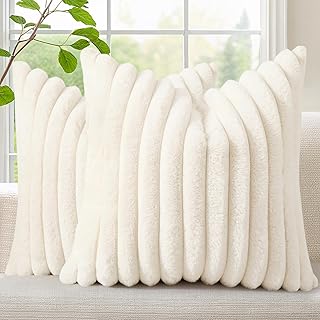
decorUhome Summer Cozy Faux Fur Throw Pillow Covers 18×18
decorUhome Summer Cozy Faux Fur Throw Pillow Covers 18×18 Set of 2 Dec punches above its price — 3 buyers rated it 4.5 stars. I would buy it again.
10. Incorporate Texture for Coziness

Layering textiles is the most efficient way to create a cozy living room without taking up floor space. You need tactile variety. Think chunky knit blankets, velvet lumbar cushions, and plush rugs. I use the Barefoot Dreams CozyChic Throw. It costs $147, which is steep, but the microfiber doesn’t pill or shed on my dark sofa. I drape it over the arm of the chair to break up the rigid lines of the furniture. You want to mix materials. If you have a leather sofa, you need linen pillows and a wool rug. If you have a velvet sofa, you need cotton canvas pillows and a jute rug. I learned this the hard way when I spilled a 16 oz blackberry smoothie on a highly textured, braided cream rug. The stain sank into the grooves and never came out. Now, I keep my heavy textures on my pillows and blankets, and I use flatter, washable rugs on the floor.
11. Utilize Smart Storage Solutions Beyond Shelves

Beyond floating shelves, you must integrate hidden storage to keep daily clutter out of sight. Visible clutter absorbs light and makes a room feel chaotic. Look for ottomans with hidden compartments or coffee tables with internal storage. I bought a simple faux-leather storage ottoman from Walmart for $45. It sits in the corner and holds three winter blankets and a stack of magazines. No one knows it’s a storage bin. A multifunctional TV stand with closed cabinet doors is also a requirement. Open shelving just displays ugly black cables and blinking lights. I spent an hour zip-tying all my television cords together and hiding them behind a solid wood door. The visual relief was immediate. If you have alcoves beside a fireplace, install custom-cut MDF boards to create built-in cabinets. Hiding your utility items—like chargers and mail—behind solid doors is the fastest way to make a small room look styled.
12. Choose Low-Profile Furniture to Enhance Perceived Height

Selecting furniture with a lower profile makes your 8-foot ceilings appear taller. When you lower the visual horizon line, the eye travels upward without obstruction. You want to opt for sofas with low backs and armrests. The seat height of your sofa should sit around 16 to 18 inches off the floor. The backrest shouldn’t exceed 32 inches in total height. I once bought a high-backed wing chair that measured 42 inches tall. It completely blocked the sightline from the kitchen to the window, acting like a wall that cut the room in half. I swapped it for a low-slung, mid-century modern lounge chair. Coffee tables should also sit 1 to 2 inches lower than the seat cushions of your sofa. This tiered arrangement keeps the center of the room feeling open. Keeping everything low to the ground creates a modern lounge aesthetic that works perfectly in tight apartments.

CwlwGO- Ceramic Vase Set of 3
A dependable everyday pick — CwlwGO- Ceramic Vase Set of 3 pulls in 19 ratings at 4.5 stars. Not flashy, just solid.
13. Don’t Shy Away from a Dark Accent Wall

While light colors make a room feel larger, a well-executed dark accent wall adds depth. It’s one of my favorite tricks for small rooms. Paint one wall, usually the one behind the sofa, in a deep, matte tone. I used Benjamin Moore Hale Navy (HC-154). It’s a saturated blue that recedes visually, making the wall look further away. You can also use Sherwin-Williams Evergreen Fog (SW 9130) for a muted, earthy green. Keep the other three walls in a lighter shade like Sherwin-Williams Alabaster. This creates a focal point. I was terrified to paint my wall navy. I thought it would turn my apartment into a cave. But because I positioned a table lamp right against the dark paint, the light washes up the wall and highlights the color without absorbing all the brightness. Just use a matte or eggshell finish. High-gloss dark paint reflects every drywall imperfection and looks terrible under artificial light.
14. Integrate Smart Home Devices Discreetly

Smart home features enhance your routine without adding visual clutter. I rely on smart lighting to control the mood. I use Philips Hue bulbs, which cost about $49 each. I sync them to an app, allowing me to dim all the lamps to 30 percent when I’m watching a movie. I don’t have to walk around clicking switches. I also keep an Amazon Echo Dot tucked away on my bottom bookshelf. It costs $49 and is barely larger than a hockey puck. I use it to play low-fi jazz or white noise, which masks the sound of my neighbors walking upstairs. In a small apartment, controlling the audio is as important as the visual. I used to have a massive stereo receiver with thick speaker wire running along my baseboards. It looked messy and collected dust. Switching to a discreet smart speaker freed up 24 inches of shelf space instantly.
15. Create Zones Without Walls Using Rugs and Furniture Placement

In open-concept small living rooms, you have to define zones for different activities without adding physical barriers like folding screens. Use area rugs to delineate the seating area. If the rug ends, the living room ends. I arrange my furniture in tight, conversational groupings. I place two slim armchairs facing my sofa, with the coffee table in the center. This creates an inviting social zone that turns its back on the kitchen, signaling a shift in function. I used to have my sofa floating awkwardly in the middle of the room with no rug to anchor it. It looked like a furniture showroom, not a home. By placing the front legs of the chairs and the sofa on the 8×10 rug, I drew a visible square on the floor. This organizes the space and makes it feel purposeful. A console table placed against the back of a floating sofa also acts as a great low barrier to separate a living zone from a dining zone.

Fumete Mid-Century Modern Wood Abstract Sculpture Wooden
If you want something that just works, Fumete Mid-Century Modern Wood Abstract Sculpture Wooden Mountain Tabl is a safe bet.
16. Hang Floor-to-Ceiling Drapes for the Illusion of Height

Window treatments are critical for manipulating the perceived size of a room. Hang your curtain rod as high and as wide as possible. I install my matte black curtain rods 2 inches below the ceiling line, not just above the window frame. I also extend the rod 10 to 12 inches past the edges of the window glass. I use the IKEA Ritva curtains, which cost $39.99 for a pair. They have a heavy, linen-like texture that looks custom. When you hang them high and wide, the fabric covers the blank drywall instead of blocking the glass. This tricks the eye into thinking the window is massive and the ceilings are towering. I lived with cheap plastic blinds for a year, and they made the room feel like a motel. The day I hung 98-inch long white drapes, the entire room softened. Just ensure the hem barely kisses the floor. If they puddle, they look messy and collect pet hair.
If you’re dealing with a frustrating floor plan, stop buying more decor and start focusing on the math. I recommend starting with your rug size and lighting plan before you buy a new sofa. Save this guide and pin these measurements for your next project. You won’t regret getting the dimensions right.
Frequently Asked Questions
How do you arrange furniture in a small living room?
Leave 18 to 24 inches of walkway space between your main pieces. Pull your sofa at least 3 inches away from the wall to create shadows, which makes the room look deeper. Don’t block your windows with tall furniture.
What paint colors make a small living room look bigger?
Warm whites and soft earthy tones work best. Sherwin-Williams Alabaster and Benjamin Moore White Dove reflect light beautifully. If you want dark colors, use them on a single accent wall to create depth without absorbing all the natural light.
What size rug is best for a small living room?
An 8×10 rug is usually the best choice. It’s large enough so the front legs of your sofa and accent chairs can sit on it, which ties the room together. A 5×8 rug often looks like a bathmat and chops up the floor space.
How can I add storage to a tiny living room?
Use multifunctional furniture like a storage ottoman or a lift-top coffee table. Install floating shelves 14 inches apart on your walls to use vertical space. A TV stand with solid cabinet doors hides ugly cables and internet routers perfectly.
