What’s Inside
- Size Your Art to the Table, Not the Wall
- Hang at the Actual Eye Level
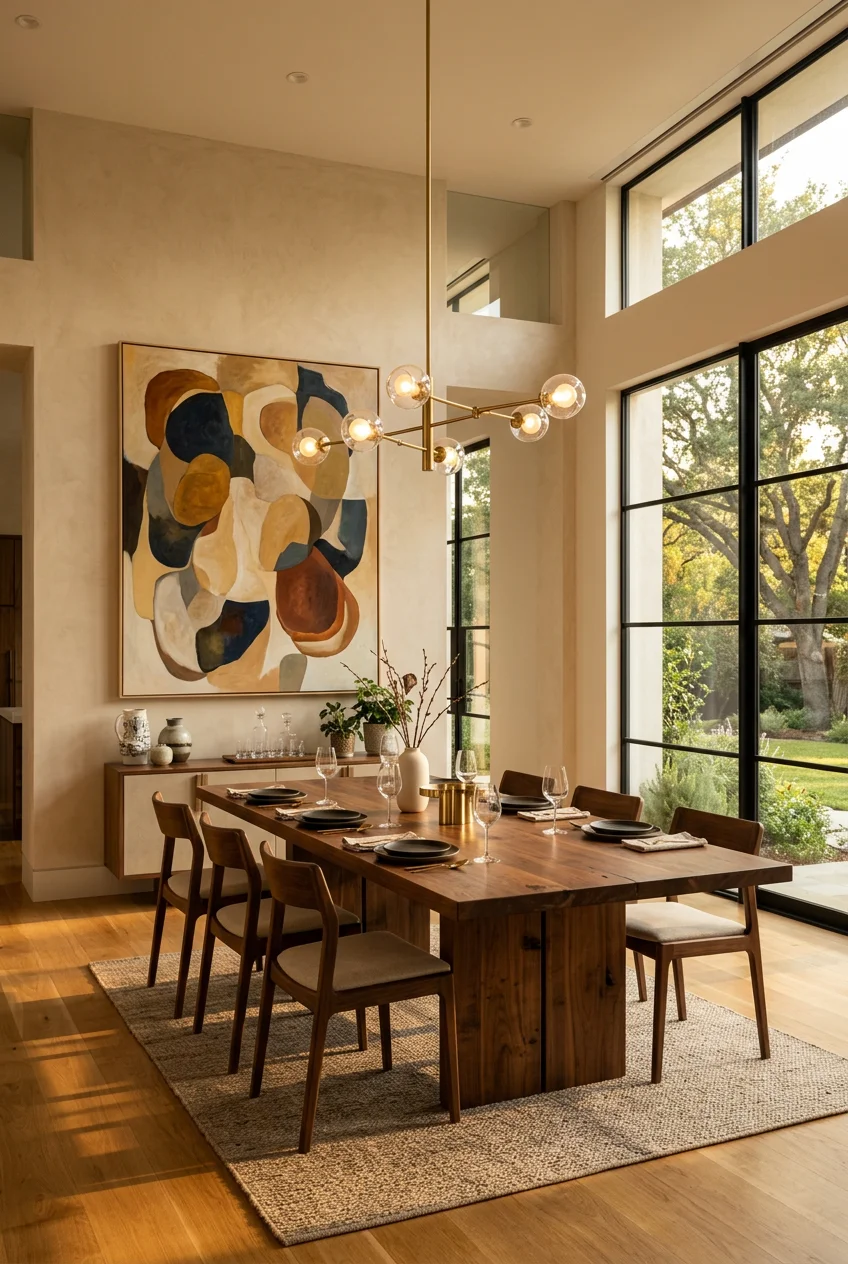
- Anchor with Oversized Canvas Dining Room Decor Wall Art
- Build a Looser, Asymmetrical Gallery Wall
- Bring in Woven and Plaster Textures
- Use Abstract Botanical Prints
- Fake a Window with an Oversized Mirror
- Mount 3D Sculptural Metal Pieces
- Install a Custom Wall Mural
- Stick to Warm, Earthy Clay Tones
- Frame Your Dining Room Decor Wall Art with Wireless Sconces
- Swap Out Seasonal Art with Magnetic Frames
- Center Everything to the Table (Not the Empty Wall)
- Add Peel-and-Stick Faux Paneling Underneath
- Source Vintage Plates for 3D Wall Decor
- Hang Meaningful Travel Prints Over Generic Filler
Last November, I sat at my table eating a slightly burnt Costco rotisserie chicken when I realized my dining room wall art was all wrong. I’d hung three tiny 5×7 frames spaced a foot apart on a massive blank wall. They looked like postage stamps on a giant envelope. The echo in the room bounced off the bare drywall. Every scrape of my fork sounded deafening. Getting your dining room wall art right is harder than throwing a random canvas above a table. It took me three years of measuring, patching drywall holes with $6.98 DAP spackle from Home Depot, and returning heavy mirrors before I figured out the exact math and textures required. Let’s fix your walls so you aren’t eating dinner in a space that feels like a sterile waiting room. Here is exactly what works, what costs too much, and the specific measurements you need to make the space feel intentional, warm, and finished.
1. Size Your Art to the Table, Not the Wall

Most people hang art that’s way too small for their dining space. I did this for months. I tried to center a tiny 16×20 inch print on a massive ten-foot wall. The room felt totally off. You need to size your artwork to the furniture beneath it, not the empty wall space above. The standard rule is choosing artwork that spans about two-thirds to three-quarters the width of your dining table or buffet. If your table is 72 inches wide, you need a piece or a gallery cluster that’s between 48 and 54 inches wide. I recently bought a large 48-inch abstract print from Minted for $228 to fix this. The heavy wood frame grounded the room immediately. When you use art that’s too narrow, the ceiling feels low and the table looks disconnected. Grab a $5 tape measure from Walmart and check your table width before you buy anything.
2. Hang at the Actual Eye Level

I can’t count how many times I’ve walked into a house and had to crane my neck to look at a painting. We tend to hang art based on where the ceiling meets the wall. You should hang it based on human sightlines. For most dining rooms, the center of your artwork should sit exactly 57 to 60 inches from the floor. This is the standard gallery height. It ensures comfortable viewing whether you’re standing with a glass of wine or seated for a meal. If you’re hanging a piece above a sideboard, leave about 6 to 12 inches of space between the furniture and the frame. Last Tuesday, I helped my sister rehang a heavy oak mirror she bought for $149 at Pottery Barn. She had it mounted 20 inches above her buffet. We lowered it to an 8-inch gap. The two pieces suddenly looked like a cohesive unit instead of floating objects.
3. Anchor with Oversized Canvas Dining Room Decor Wall Art

Instead of managing a dozen small frames, an oversized canvas cuts down on visual clutter. Large dining room decor wall art works well in open-concept spaces where the dining area needs its own boundaries. I ordered a 40×60 inch stretched canvas from Elephant Stock for $185 last spring. The matte finish means I don’t get annoying glare from the chandelier. That’s a major issue with large glass frames. Getting a piece this large through the front door was a pain. The box barely fit in my car, but the payoff is huge. A single large piece requires exactly one nail and one wall anchor. It saves you the headache of leveling multiple frames. If you have ceilings higher than nine feet, this is the most efficient way to fill the vertical space without making the room feel like a busy antique shop.

FAEKSUR Framed Abstract Neutral Wall Art for Living Room
A dependable everyday pick — FAEKSUR Framed Abstract Neutral Wall Art for Living Room pulls in 1 ratings at 4.5 stars. Not flashy, just solid.
4. Build a Looser, Asymmetrical Gallery Wall

Rigid, perfectly spaced grid gallery walls look like spreadsheets. They belong in a corporate hallway, not a place where you eat dinner. The current approach is a looser, asymmetrical arrangement that mixes different frame finishes. You still need structure. Keep a consistent spacing of about 2 to 3 inches between each frame. I tried the grid method three years ago with nine identical black frames from Target that cost $15 each. It looked stiff. I swapped them for a mix of vintage brass frames from Goodwill ($3.99 each) and modern light oak frames. I mixed horizontal landscapes with vertical portraits and even tossed in a small round mirror. The key is laying everything out on the floor first. I cut out craft paper in the exact sizes of my frames, taped them to the wall with blue painter’s tape, and lived with the layout for a week before hammering a single nail.
5. Bring in Woven and Plaster Textures

Flat walls painted in flat matte paint look dead. You need physical texture to make a dining room feel warm, especially if your color palette is neutral. I bought a heavy textured plaster art panel off Etsy for $85. The rough, chalky surface catches the morning light beautifully. Woven wall hangings and macramé pieces are also great at absorbing sound. They help dampen the echo in rooms with hardwood floors. Anthropologie sells a massive woven wall piece for $128 that I installed in a client’s home last month. It smells faintly of natural jute and immediately softened the harsh angles of her glass dining table. Skip the cheap, thin string hangings from discount sites. They look like tangled mops. You want thick, structural yarn or heavy ceramic elements. Mixing a soft, fibrous piece next to a hard, framed photograph creates visual tension that keeps the room interesting. You might also like: 18 Living Room Decor Indian Worth Trying
6. Use Abstract Botanical Prints

Literal photographs of trees and flowers can look like stock images from a dentist’s office. I prefer stylized, abstract interpretations of nature. Look for abstract botanical prints, moody moss photography, or minimalist plant sketches. I purchased a set of three moody, dark green botanical prints from Fine Art America for $65 each. The deep forest greens contrast sharply with my warm oak dining table. I originally bought bright, macro-photography floral prints, but they clashed horribly with the food on the table. You want the art to recede slightly. Don’t let it scream for attention while you’re trying to eat. Abstract botanical pieces bring the organic shapes of nature indoors without being overly literal. I frame these in thin, matte black metal frames ($22 at Walmart) so the artwork speaks for itself without heavy wooden borders competing with the organic subject matter. You might also like: 20 Cozy Aesthetic Cozy Home Decor That Make a Real Difference

Jexine 4 Pcs Hanging Planters with Artificial Eucalyptus
A dependable everyday pick — Jexine 4 Pcs Hanging Planters with Artificial Eucalyptus Metal Hanging pulls in 12 ratings at 4.5 stars. Not flashy, just solid.
7. Fake a Window with an Oversized Mirror

If your dining room lacks natural light, an oversized mirror acts as a secondary window. I lived in a dark, north-facing apartment for two years and ate dinner in what felt like a cave. I finally bought a 36-inch round brass mirror from West Elm for $299 and mounted it directly across from the only small window in the room. The mirror bounced the afternoon light directly onto the dining table. When buying a mirror for this space, avoid anything with a heavily distressed or warped reflection. You want high-quality glass. I once bought a cheap $40 plastic-framed mirror from a discount bin, and it made everyone at the table look like they were in a funhouse. Hang the mirror so it reflects something attractive, like a light fixture or a piece of art, rather than a messy kitchen counter or an open bathroom door.
8. Mount 3D Sculptural Metal Pieces

If you already have enough framed prints, sculptural wall art adds a three-dimensional element that casts actual shadows. I ordered the Belisa Metal Layered Abstract decor off Amazon for $115. The cold, industrial iron contrasts perfectly against the soft linen curtains in my dining room. These metal pieces often come in overlapping circles or geometric shapes. One negative I discovered: metal wall art is heavy and usually comes with terrible hanging hardware. Do not use the flimsy screws included in the box. I dropped a heavy brass sculpture on my foot last year because the provided drywall anchor snapped. Go to Home Depot and buy heavy-duty toggle bolts ($6.48 for a pack). Sculptural art works best when it has room to breathe, so mount it on a wall by itself rather than crowding it next to a bunch of flat picture frames. You might also like: 20 Black Couch Living Room Decor That Actually Work
9. Install a Custom Wall Mural

A custom wall mural covers the entire wall and eliminates the need for individual pieces of art. I ordered a custom-sized muted forest mural from Olive et Oriel for $350. The paper came in four massive panels tailored to my exact wall dimensions. I applied it behind my sideboard, and it completely changed the depth of the room. I will admit, installing traditional paste-the-wall wallpaper is a messy, frustrating process. The paste smells like wet flour, and smoothing out the air bubbles took me three hours of sweating and swearing. However, the result is a seamless, immersive aesthetic. If you go this route, choose a mural with a matte finish. Glossy murals reflect the dining room chandelier and look like cheap plastic wrap. A large-scale mural acts as the ultimate anchor for a room, meaning you can keep the rest of your decor minimal.

3D Wooden Floral Bathroom Wall Decor (Set of 4) Lightweight
Honestly, 3D Wooden Floral Bathroom Wall Decor (Set of 4) Lightweight surprised me — sturdier than it looks in the photos, and over 634 buyers gave it 4.5 stars.
10. Stick to Warm, Earthy Clay Tones

Cool gray interiors are stark and unappetizing. When choosing art for a space where you eat, you want warm, earthy colors like terracotta, muted olive greens, sandy beiges, and deep clay tones. These colors naturally complement the warm wood tones of most dining tables. I recently swapped out a stark black-and-white abstract canvas for a piece dominated by burnt orange and ochre. I found it at a local art fair for $150. The warmer tones literally make the food on the table look better. Cool blue and gray tones can cast a sterile, fluorescent-like shadow over the room. I tested this by bringing home a stack of $5 Benjamin Moore paint swatches in various grays and terracottas, taping them to the wall, and looking at them during dinner. The warm clay tones felt cozy, while the cool tones made the room feel like a cafeteria.
11. Frame Your Dining Room Decor Wall Art with Wireless Sconces

Nothing highlights dining room decor wall art quite like dedicated accent lighting. I didn’t want to hire an electrician to rip open my drywall and hardwire new lights. I bought a pair of rechargeable wireless wall sconces on Amazon for $45. I mounted them on either side of a large canvas. The sconces come with magnetic puck lights that you pop out and charge via USB every few weeks. The soft, warm light (make sure you set them to 2700K, not the harsh blue 5000K setting) washes over the artwork and creates an intimate mood for dinner. The only downside is remembering to charge them. I once had them die in the middle of a dinner party. Still, for under $50, they provide the high-end look of a custom art gallery without the $500 electrician bill. They’re the easiest way to make cheap art look expensive.
12. Swap Out Seasonal Art with Magnetic Frames

I get bored looking at the exact same prints all year, but I refuse to pull nails out of the drywall every time the seasons change. I started using a dedicated wall space for swappable art. I use adhesive photo tiles from Mixtiles, which cost about $15 per tile. They stick to the wall with a special adhesive strip that doesn’t rip the paint off when you remove them. In October, I snap on prints of moody autumn forests, and by May, I swap them for bright coastal photography. I keep the off-season tiles stacked in a drawer. I tried doing this with traditional frames by constantly opening the backs to change the paper prints, but the little metal tabs eventually snapped off my $20 Target frames. The magnetic or adhesive tile system is much faster and keeps the dining room feeling fresh without permanent commitment.

KHOYIME Large Macrame Wall Hanging Boho Woven Tapestry
If you want something that just works, KHOYIME Large Macrame Wall Hanging Boho Woven Tapestry is a safe bet (994 reviews, 4.5 stars).
13. Center Everything to the Table (Not the Empty Wall)

This is the most common layout mistake I see. People center their art on the exact middle of the physical wall, even if their dining table is pushed closer to a window or a doorway. I did this in my first house. The art was mathematically centered on the drywall, but because my table was offset to allow room for a walkway, the art looked completely disconnected from the dining setup. Always center your artwork directly over the dining table. The table is the functional center of the room. I laid down an 8×10 foot jute rug from Rugs USA ($180) to ground the table, and then I used a laser level ($19 at Home Depot) to shoot a straight line up from the center of the table to the wall. That is where your art belongs. Ignore the corners of the room. Anchor the visual weight to where you actually sit.
14. Add Peel-and-Stick Faux Paneling Underneath

If your art feels like it’s floating aimlessly on a giant blank wall, adding architectural interest to the bottom half of the wall grounds the space. Real wood wainscoting costs anywhere from $5 to $15 per square foot just for the materials, plus the hassle of miter saws and nail guns. I bypassed the sawdust entirely and bought three rolls of textured, peel-and-stick faux beadboard wallpaper from NuWallpaper for $34 a roll. I applied it to the bottom 36 inches of my dining room walls and capped it with a simple piece of pine trim painted to match. It took me one Saturday afternoon. The slight vertical texture of the faux paneling contrasts beautifully with the smooth glass frames of the art hung above it. It’s a cheap trick that makes the drywall look custom-built, providing a solid visual foundation for whatever artwork you choose to display.
15. Source Vintage Plates for 3D Wall Decor

Hanging plates on the wall sounds like something your grandmother would do, but when executed with modern spacing, it looks custom. I was tired of flat canvases and wanted something with a hard, glossy texture. I went to a local Goodwill and bought seven vintage stoneware plates for $2 each. They had a beautiful, reactive glaze in deep navy and cream. I bought wire plate hangers from Hobby Lobby for $3.99 each. The trick is avoiding a symmetrical, rigid layout. I hung them in a sweeping, curved line that mimics the shape of a branch. The glossy ceramic reflects the ambient light from the chandelier. One warning: make sure the wire hangers are clamped tightly. I had a plate slip out of a loose hanger last year and shatter on my hardwood floor. Squeeze the metal springs firmly with pliers before you hang them to ensure the ceramic is secure.
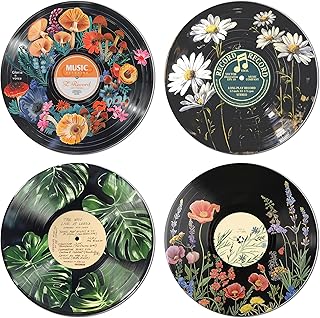
HK Studio Hippie Decor, Posters for Room Aesthetic
HK Studio Hippie Decor has been one of the most consistently praised picks in this category. 348 reviewers averaged 4.5/5.
16. Hang Meaningful Travel Prints Over Generic Filler

I spent years buying generic word art and mass-produced geometric prints just to fill empty wall space. It looked like a staged model home, completely devoid of personality. The ultimate goal is to hang art that actually means something to you. I finally threw away a generic “Gather” sign I bought for $25 at HomeGoods and replaced it with high-resolution digital downloads of places I’ve actually visited. I buy vintage-style travel posters from independent artists on Etsy for about $6 a download. I send the files to CVS photo printing, which costs me $12 for a large 16×20 poster, and frame them in solid oak. Right now, I have a stylized print of the Oregon coast hanging above my bar cart. It sparks actual conversations when guests come over, instead of just taking up space. Stop buying filler art. Wait until you find pieces that reflect your actual life and experiences.
Getting your dining room art right takes a bit of measuring and a lot of trial and error, but it’s worth the effort. I’ve wasted too much money on tiny frames and cheap canvases to let you make the same mistakes. Start by measuring your table, pick a piece that actually fits the scale of the room, and don’t be afraid to mix textures like plaster and canvas. If you found these specific measurements and tips helpful, pin this article to your home decor board so you have the exact sizing rules handy the next time you’re standing in the aisle at Target trying to guess which frame to buy.
Frequently Asked Questions
What size should dining room decor wall art be?
Your artwork should span about two-thirds to three-quarters the width of your dining table or sideboard. If your table is 72 inches wide, aim for a piece or gallery wall that is 48 to 54 inches wide.
How high should I hang art in my dining room?
Hang your artwork so the center is 57 to 60 inches from the floor, which is standard eye level. If hanging above a sideboard or buffet, leave a 6 to 12-inch gap between the furniture and the frame.
Should I center my wall art to the wall or the table?
Always center your art to the dining table, even if the table isn’t perfectly centered on the wall. The table is the focal point of the room, and aligning the art with it creates visual balance.
What kind of wall art works best in a dining room?
Warm, earthy tones and textured pieces like plaster or woven hangings work beautifully. Oversized canvases reduce visual clutter, while abstract botanical prints add organic shapes without looking like stock photography.
