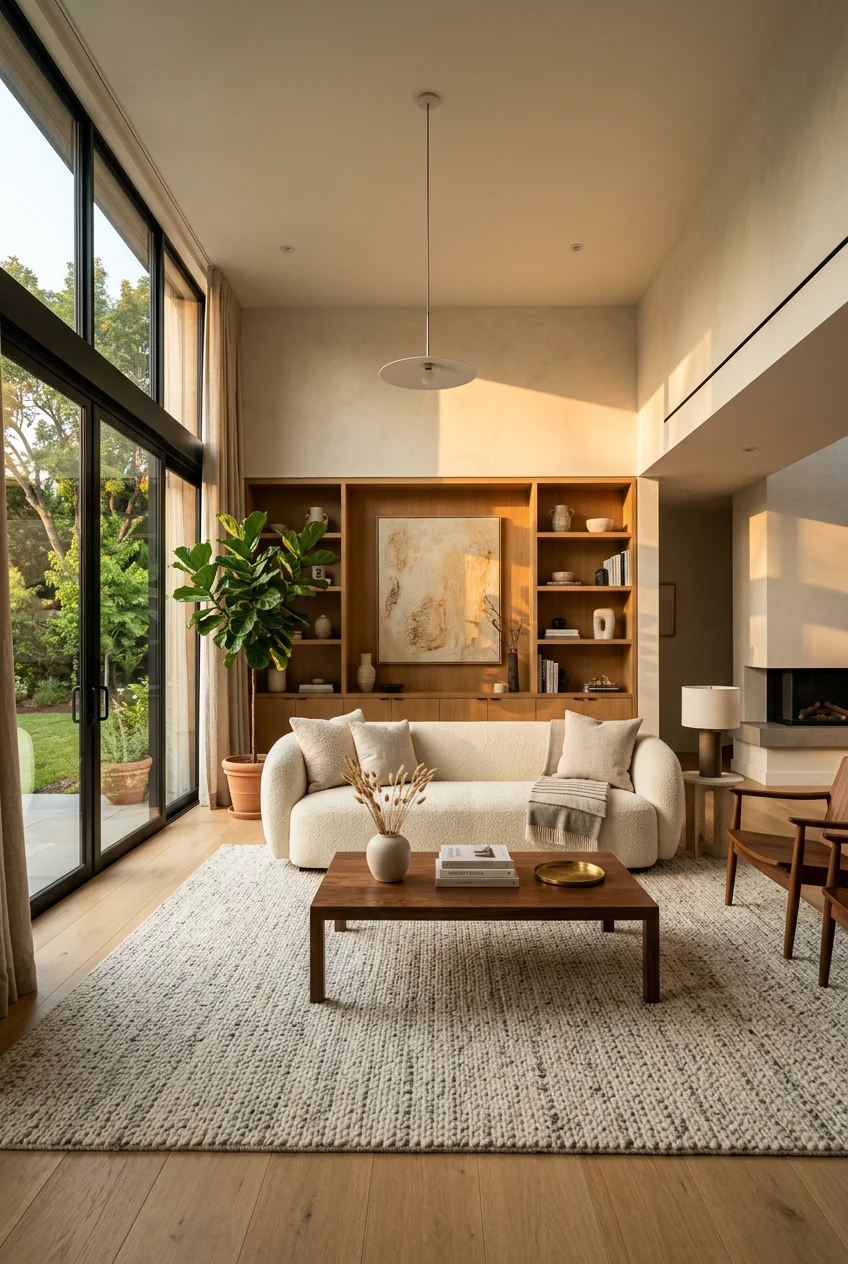
What’s Inside
- Embrace Soft Geometry For Living Room Decor Modern
- Prioritize Deep Seating Over Sleek Aesthetics
- Take Biophilic Design Past Basic Houseplants
- Stop Relying On Only Overhead Lighting
- Anchor The Space With A Massively Oversized Rug
- Nail Your Coffee Table Proportions
- Mix Wood, Metal, And Glass Unapologetically
- Skip The Showroom Matchy-Matchy Sets
- Float Your Furniture Away From The Walls
- Ground The Room With Walnut And Espresso Wood Tones
- Switch To Low-Profile Silhouettes For Living Room Decor Modern
- Lower Your TV To Actual Eye Level
- Use Slim Furniture Legs To Fake Square Footage
- Inject Pigment With Colored Glass And Saturated Tones
- Mix Investment Pieces With Target And IKEA Finds
- Add Tactile Warmth With Roman Clay Walls
- Hide Every Single Cord And Clutter Pile
Three years ago, I sat on my rigid, gray mid-century sofa and realized my space felt like a dentist waiting room. Getting living room decor modern right is tricky when you buy into trends that look great online but feel like concrete in real life. I spent thousands trying to make my first apartment look like a magazine cover, only to realize I was afraid to actually drink coffee in my own house. The aesthetic was completely sterile. I’m writing this because I’ve made almost every expensive mistake possible with furniture layouts and lighting choices. Let’s fix those awkward empty corners and harsh overhead shadows. It’s a process, trust me on this.
Embrace Soft Geometry For Living Room Decor Modern

I bought a sharp-edged rectangular coffee table from Target back in 2019, and my shins paid the price daily. Moving away from rigid lines completely changes how a room flows. You want pieces with gentle curves, softened corners, and asymmetrical outlines. I recently tested the HERNEST Brisa Sofa, which retails for $1,619. Its fluid frame immediately softens the hard angles of standard drywall. When you introduce curved furniture, you aren’t just making a stylistic choice. You’re creating a physical pathway that guides people without bumping into harsh corners. I pair curved sofas with rounded accent chairs. It breaks up the grid-like feeling that happens when you shove rectangular boxes into a square room. If you aren’t ready to drop a thousand dollars, start smaller. A round side table or a curved ceramic vase from a thrift store does the exact same job. The goal is to eliminate severe right angles that make spaces feel corporate.
Prioritize Deep Seating Over Sleek Aesthetics

Don’t sacrifice comfort for a thin, architectural profile. I tried a slim-seat tuxedo sofa for six months. It looked incredible in photos, but I couldn’t comfortably watch a movie on it without my legs dangling awkwardly. You need a sofa that actually supports lounging. I replaced it with the Crate & Barrel Lounge Deep 93″ Sofa, which costs $2,299. It offers 29.2 inches of usable seat depth. That measurement matters because anything under 24 inches feels like a waiting room chair. Performance fabrics are also non-negotiable if you actually live in your house. I spill things. My dog tracks in mud. You want a fabric rated for at least 50,000 double rubs. The Marlow Corduroy Modular Deep-Seat Sofa is another solid option with 27.5-inch seating depth. It handles everyday wear without pilling. Skip the delicate linens unless you plan to cover them with plastic. If your feet touch the floor when you sit all the way back, the seat isn’t deep enough.
Take Biophilic Design Past Basic Houseplants

Throwing a dying pothos in the corner doesn’t count as biophilic design. I used to buy cheap plastic planters at Walmart and wonder why my plant corner looked messy. Real biophilic design requires a holistic approach that incorporates natural textures and maximizes sunlight. I keep a 6-foot fiddle-leaf fig in a 14-inch heavy stone planter next to my south-facing window. The stone planter cost $85 at a local nursery, but the raw texture anchors the room in a way plastic simply can’t. I also bring in fresh eucalyptus branches from Sprouts. They cost $5.99 a bunch, and the natural oils release an earthy scent that makes the room feel alive. Use materials like raw clay, unpolished stone, and heavily grained wood to mimic an outdoor ecosystem. Even your textiles play a part. I drape a heavy, unbleached cotton throw over my reading chair. You want the space to feel connected to the outdoors, not just decorated with potted leaves.

UTTCMK Bookshelf Decor Thinker Statue
UTTCMK Bookshelf Decor Thinker Statue – Abstract Art Reading Thinker S has been one of the most consistently praised picks in this category. 809 reviewers averaged 4.5/5.
Stop Relying On Only Overhead Lighting

Relying solely on overhead lighting is the fastest way to make your home look like a DMV. I lived in an apartment with aggressive recessed lighting for a year. I rarely spent time in the living room after dark because the glare gave me headaches. You need to layer your light sources. I start with ambient light, add task lighting, and finish with accent lamps. I placed a West Elm Industrial Outline Floor Lamp, which runs $299, directly behind my reading chair. The downward beam provides exactly enough light for a book without washing out the room. The bulbs you choose are equally important. I strictly use warm white LED bulbs rated at 2700K. Anything above 3000K emits a blue-toned light that kills the cozy vibe. I learned this after buying 4000K daylight bulbs at Costco. The room looked like a surgical suite. Put overhead fixtures on dimmers, and always turn on at least two lamps when the sun goes down.
Anchor The Space With A Massively Oversized Rug

A rug that’s too small makes your furniture look like islands floating in a vast ocean. I made this mistake in my first house by buying a 5×8 rug for a massive open-concept room. The front legs of my sofa barely touched it, and the layout felt completely unbalanced. You need a rug large enough for the main furnishings to sit entirely on it, or at least for the front legs of the sofa and chairs to rest inside the border. A good rule of thumb is that your rug should extend at least 8 inches past the sides of your sofa. Before ordering anything, I map out the exact dimensions on my floor using blue painter’s tape. It takes five minutes and prevents a $500 mistake. An 8×10 or 9×12 rug usually works best for standard rooms. I currently use a 9×12 wool blend rug. It cost $650, but the thick pile absorbs sound and defines the seating zone perfectly.
Nail Your Coffee Table Proportions

Buying a coffee table without measuring your sofa first is a rookie error. I once bought a tiny 24-inch round table for a massive 100-inch sectional. It looked completely ridiculous, like a button on a winter coat. Your coffee table should measure approximately two-thirds the total length of your sofa. The height is just as critical. The ideal height sits between 16 and 18 inches, which should be roughly 1 to 2 inches lower than your sofa cushions. This exact proportion ensures you can reach your drink without straining your shoulder. Right now, I use the Brayden Studio Allrich 48.4-inch Cloud Coffee Table from AllModern. It costs $410 and features a sculptural, asymmetrical top. Round and organic shapes work exceptionally well with large, blocky sectionals because they improve the walking flow around the seating area. A 36-inch diameter is usually the sweet spot for a standard three-seater sofa. If you have a tight space, a glass top makes the table feel visually lighter. You might also like: 15 Clever DIY Cozy Home Decor That Make a Real Difference

Govee RGBIC Floor Lamp Basic
Honestly, Govee RGBIC Floor Lamp Basic surprised me — sturdier than it looks in the photos, and over 107 buyers gave it 4.5 stars.
Mix Wood, Metal, And Glass Unapologetically

A room filled with only one material feels flat and lifeless. I used to buy entirely matching wood pieces because I thought it was the safe choice. The result was a heavy, monotonous room that felt like a cabin. You need friction between your materials to create visual interest. I combine rough timber with textured glass and soft, matte metal details. My current setup features a glass-topped coffee table with a blackened steel base, sitting on a plush wool rug, next to a velvet armchair. The glass top reflects light and allows the pattern of the rug to show through, while the steel base adds an industrial edge. If you have a heavy leather sofa, balance it with a delicate marble side table rather than a chunky wooden one. I recently picked up a 12-inch travertine tray for $35 to corral my remotes. The porous texture of the stone contrasts sharply against the smooth glass underneath it. This layering gives the room an intentional atmosphere. You might also like: 20 Creative Modern Home Decor Ideas for a Fresh New Look
Skip The Showroom Matchy-Matchy Sets

Buying a complete 5-piece furniture set is the most common trap people fall into. I did it right out of college. I bought a matching sofa, loveseat, and recliner combo. It made my living room look like a cheap furniture liquidator commercial. You want your space to feel curated over time. Instead of buying the matching armchair that goes with your sofa, choose a completely different silhouette and fabric. If your sofa is a chunky linen sectional, pair it with a sleek leather sling chair with a metal frame. The contrast is what makes a room feel sophisticated. I mix vintage finds with modern staples. Last month, I found a mid-century teak side table at a flea market for $45. I placed it next to a very modern, low-profile modular sofa. The tension between the vintage wood and the contemporary fabric creates a much more interesting dynamic than two pieces manufactured on the same assembly line. You might also like: 20 Inspiring Cozy Cozy Living Room Home Decor Ideas Worth Trying This Year
Float Your Furniture Away From The Walls

Resist the urge to push all your furniture against the drywall. I did this in my old townhouse because I thought it would maximize floor space. Instead, it created a massive, awkward dance floor in the center of the room and made conversation impossible. You need to pull your pieces inward to create an intimate seating zone. In larger rooms, I leave exactly 30 to 36 inches of walkway space behind the sofa. This allows natural traffic flow without people squeezing past the furniture. Even in a tiny room, pulling the sofa forward just two inches creates a small shadow line that gives the illusion of deeper space. I currently have my main sofa floating directly in the middle of the room, anchored by a large rug. I placed a slim, 10-inch deep console table behind it to hold two ceramic table lamps. This setup instantly makes the room feel architectural. Don’t treat your walls like a perimeter fence for your furniture.

Farmhouse White Fake Decorative Books for Home Office Decor
Honestly, Farmhouse White Fake Decorative Books for Home Office Decor – Religion surprised me — sturdier than it looks in the photos, and over 10 buyers gave it 4.5 stars.
Ground The Room With Walnut And Espresso Wood Tones

Light blonde oak dominated the last decade, but it’s time to bring back depth. I decorated my entire previous apartment in pale ash wood, and it eventually felt incredibly washed out. The current shift leans heavily into richer, darker wood finishes like espresso, walnut, and smoked oak. These deeper tones add a necessary visual weight that anchors light-colored upholstery. I recently swapped out my pale pine media console for a 72-inch solid walnut cabinet that cost $899. The rich, chocolatey grain immediately grounded the entire wall. Dark woods pair exceptionally well with warm, creamy wall colors and heavily textured fabrics like bouclé or corduroy. You don’t need to replace everything at once. Start by introducing a single dark wood element, like a walnut side table or a smoked oak picture frame. I bought three 18×24 inch dark espresso frames from Target for $20 each to hang above my sofa. The dark borders draw the eye upward and provide a sharp contrast.
Switch To Low-Profile Silhouettes For Living Room Decor Modern

Furniture with low, architectural lines completely changes the spatial perception of a room. I used to own a massive, overstuffed rolled-arm sofa that swallowed half my living room visually. I swapped it for a low-profile sculptural sofa, and the ceiling instantly felt two feet taller. The current trend focuses on disciplined proportions and bases that appear seamlessly integrated into the floor. You want pieces that sit closer to the ground, usually with a back height around 28 to 30 inches. This low horizontal line allows your eye to travel across the room uninterrupted. I paired my low sofa with a monolithic, armless lounge chair. It lacks excessive ornamentation, relying entirely on its geometric shape for impact. When furniture doesn’t block the sightlines, the entire room breathes better. Just be mindful of the seat height. A seat height of 15 inches looks incredibly sleek, but it can be difficult for older guests to get up from. I compromise with a 17-inch seat height.
Lower Your TV To Actual Eye Level

Mounting a television too high is a hill I will gladly die on. I once rented a house where the previous owner installed the TV mount above a 60-inch mantel. I spent a year watching movies with my neck craned backward, and it was miserable. Your television needs to sit at seated eye level. For most standard sofas, this means the center of your screen should be exactly 42 inches from the floor. I use a low-profile media console that sits 20 inches high, and I placed my 55-inch TV directly on it using the factory stand. If you absolutely must mount it on the wall, measure the 42-inch center point before drilling any holes. Avoid the space over the fireplace entirely unless you have a specialized pull-down mount. A TV placed at the correct height integrates into the room’s decor much better than a black rectangle hovering near the ceiling. It anchors the media zone and prevents the room from feeling like a sports bar.

Homedics Tabletop Water Fountain
If you want something that just works, Homedics Tabletop Water Fountain is a safe bet (44 reviews, 4.5 stars).
Use Slim Furniture Legs To Fake Square Footage

Heavy, blocky furniture shrinks a small room instantly. I bought a massive, skirted armchair a few years ago, and it looked like a boulder sitting in my corner. To make a tight living room feel airy, you need furniture that sits high off the ground on slim legs. When you can see the floor underneath a piece, your brain registers the room as larger than it actually is. I replaced that heavy armchair with a mid-century inspired accent chair featuring thin, tapered metal legs. The difference was immediate. I also utilize vertical space to draw the eye upward. I installed two brass wall sconces flanking my window. They cost $45 each and completely freed up the floor space that a bulky floor lamp would have consumed. If your sofa has a heavy, solid base, ensure your coffee table and accent chairs have open, leggy bases. This balance prevents the room from feeling weighed down. Creating negative space underneath your furniture fakes extra square footage.
Inject Pigment With Colored Glass And Saturated Tones

Neutral rooms are safe, but they can easily become boring. I lived in an all-beige apartment for two years and found myself completely uninspired by the space. You need a deliberate use of pigment to bring a room to life. I don’t mean painting every wall fire-engine red. I mean incorporating complex, saturated hues like electric blue, acid green, or deep burnt orange in small, impactful doses. I bought a set of three heavy amber glass vases from a local boutique for $65. When the afternoon sun hits them, they cast a warm, tinted light across my coffee table that completely animates the room’s palette. Colored glass in lighting fixtures works beautifully, too. A pendant lamp with an emerald or cobalt glass shade acts as a piece of suspended art. If you prefer textiles, a single electric blue velvet lumbar pillow on a cream sofa provides enough visual punch to wake up the entire arrangement. You don’t need a lot of color, just a few highly saturated moments.
Mix Investment Pieces With Target And IKEA Finds

You don’t need to spend luxury prices on every single item in your room. I used to think a beautiful space required a massive budget, but blowing your savings on expensive throw pillows is a mistake. You need to allocate your budget strategically. I invest heavily in the key pieces that take a beating. My sofa cost over two thousand dollars because a high-quality frame and dense foam cushions will actually last 10 to 20 years. But I refuse to overspend on accessories. I buy my decorative objects from affordable brands. Last Tuesday at Target, I picked up two textured ceramic bowls from their Threshold line for $15 each. They look identical to pieces I’ve seen in high-end design boutiques. I also use IKEA for basic foundational items. Their RIBBA frames are incredibly cheap, usually under $20, and look fantastic when filled with custom-cut mats and inexpensive digital art prints. Mix the high and the low. A cheap linen throw pillow looks expensive sitting on a premium sofa.

GODONLIF Candle Warmer Lamp with Timer Dimmable
GODONLIF Candle Warmer Lamp with Timer Dimmable punches above its price — 77 buyers rated it 4.5 stars. I would buy it again.
Add Tactile Warmth With Roman Clay Walls

Standard flat drywall feels cold and unfinished to me. I spent weeks staring at my plain white walls, trying to figure out why the room felt so stark despite having good furniture. The answer was the lack of wall texture. I decided to apply a Roman Clay finish to my focal wall. I bought a gallon of Portola Paints Roman Clay in a warm taupe shade for around $45. The application process is messy. I definitely ruined a pair of jeans doing it, and my first few strokes looked like a toddler smeared mud on the wall. But once I figured out the cross-hatch technique with a putty knife, the result was incredible. The clay dries with a subtle, suede-like mottling that catches the light differently throughout the day. It adds a layer of tactile warmth that basic latex paint simply can’t achieve. If you don’t want to tackle a plaster project, heavy linen-textured wallpaper offers a similar effect. The goal is to give your walls a physical presence. Learned that the hard way.
Hide Every Single Cord And Clutter Pile

Visual noise destroys a good design instantly. I used to have a tangle of six different black power cords dangling from my TV down to the baseboard. It completely ruined the aesthetic of my expensive media console. You can’t have a modern, sophisticated space if your router and power strips are on full display. I bought a simple plastic cable management box on Amazon for $24.99. It hides the entire power strip and all the excess cord length inside a clean, white enclosure. I also use zip ties to bundle any remaining wires directly against the metal legs of my furniture so they vanish from sight. For general clutter, I keep three large woven baskets tucked under my console table. I bought them at Kroger of all places for $18 each during a seasonal sale. They hold dog toys, extra blankets, and video game controllers. When the room feels chaotic, I just toss everything into the baskets. A clean, cordless sightline is the cheapest way to make your living room feel expensive. No exaggeration.
Honestly, getting your living room to feel right takes a bit of trial and error. I rearranged my own space at least five times before I stopped bumping into things and finally felt relaxed. Focus on the layout, hide those ugly cords, and don’t be afraid to mix a cheap Target vase with your investment sofa. If you found these tips helpful, definitely save or pin this article so you can reference the measurements next time you’re shopping for a rug or coffee table.
Frequently Asked Questions
How do I make my modern living room feel cozy?
Layering textures is key. Mix cold materials like glass and steel with warm, tactile elements like a chunky wool rug, corduroy upholstery, and dark walnut wood tones. Avoid matching furniture sets and use 2700K warm white bulbs for ambient lighting.
What size coffee table do I need for my sofa?
Your coffee table should be roughly two-thirds the length of your sofa. The height should sit between 16 and 18 inches, which is typically 1 to 2 inches lower than your seat cushions so you can easily reach your drink.
How far should furniture be from the wall?
You should float your furniture away from the walls to create an intimate conversation zone. In larger rooms, leave 30 to 36 inches of walkway space behind the sofa. Even in small rooms, pulling pieces forward by two inches creates a shadow line that makes the room feel larger.
How high should I mount my TV in the living room?
Your television should sit at seated eye level to prevent neck strain. For most standard sofas, this means the exact center of your screen should be 42 inches from the floor. Avoid mounting it high above a fireplace whenever possible.
