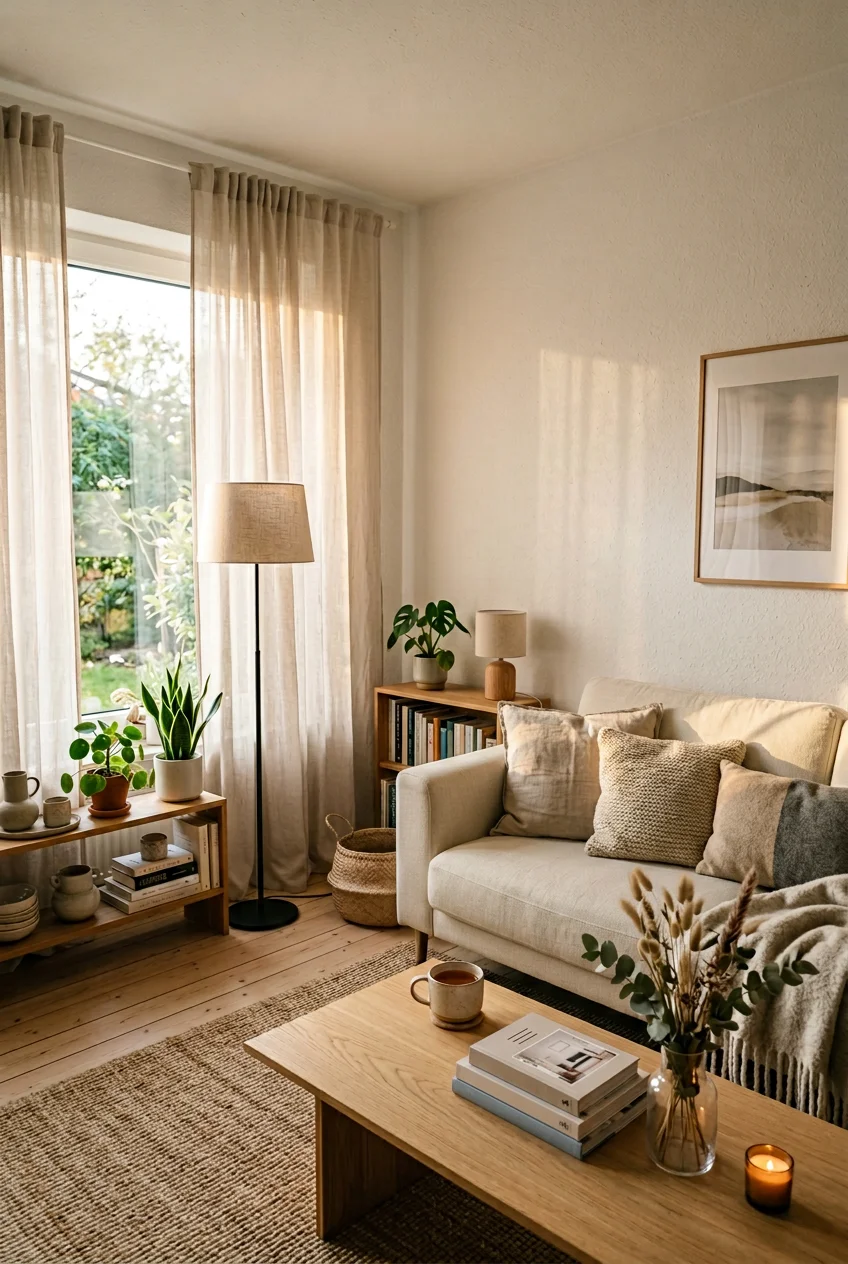
What’s Inside
- Swap Pale Pine for Warm Wood Tones in Your Cozy Scandinavian Living Room
- Layer Heavy, Tactile Textures Over Basic Upholstery
- Introduce Muted, Earthy Accent Colors
- Filter Natural Light With Sheer Linen Panels
- Invest in Modular Sofas for Adaptable Seating
- Practice Warm Minimalism to Avoid the Showroom Look
- Mix Travertine and Metal With Your Wood
- Anchor the Space With Architectural Houseplants
- Curate Personal Ceramics Instead of Mass Art
- Layer Three Distinct Sources of Warm Lighting
- Embrace Wabi-Sabi Through Slub Linen and Uneven Clay
- Pull Furniture 6 to 12 Inches Away From the Walls
- Choose Matte Wall Paint Over High-Gloss Finishes
- Prioritize FSC-Certified Wood and Heavy Materials
- Soften the Room With Curved and Fluid Silhouettes
- Anchor Your Cozy Scandinavian Living Room With a 9×12 Wool Rug
- Hide Visual Clutter in Closed Wood Sideboards
I spent $1,200 on a stark white sectional back in 2021. Within three months, my apartment looked like a sterile dentist’s waiting room. I thought I was creating a cozy Scandinavian living room, but I just built a cold, uninviting box. I sat on that stiff, bright white cushion last Tuesday evening, freezing under the AC, and realized I’d completely misunderstood the assignment. The modern Nordic aesthetic isn’t about stripping away all personality until you’re left with a white cube. It’s about intentional warmth, layered textures, and pieces that actually function for daily life. I tried the minimalist extreme, and I hated it. Now, I’m focusing on rich woods, tactile fabrics, and subtle earthy tones that actually hide a coffee spill. If you’re tired of living in a space that feels too precious to touch, you need to rethink your materials. Skip the high-gloss finishes and stark whites. Let’s look at the specific, measurable changes that actually make a room feel lived-in and comfortable.
1. Swap Pale Pine for Warm Wood Tones in Your Cozy Scandinavian Living Room

In 2026, the harsh, bleached pine look is dead. I tried the pale wood trend with a $399 IKEA coffee table, and it made my space feel like a commercial sauna. Now, I’m shifting to richer, warmer woods like honey oak, beech, and mid-tone walnut. A solid oak sideboard or a walnut coffee table anchors your cozy Scandinavian living room with genuine visual weight. I recently bought a honey oak coffee table from HAY for €450, and the way the 4 PM light hits the grain makes the room feel grounded. Skip the yellow-toned stains and cheap veneers. You want raw, matte finishes that show the natural pores of the wood. Veneer peels at the edges after just a year, especially if you rest wet glasses on it. I learned that the hard way when my old particleboard table bubbled up. Real wood dents and scratches, but those marks just add to the lived-in texture. Trust me on this.
2. Layer Heavy, Tactile Textures Over Basic Upholstery

Texture fixes a boring room faster than paint. I used to buy flat, cheap cotton pillows because they were $15, but they looked thin and sad on my sofa. You need heavy, dimensional fabrics like bouclé, woven cotton, and raw linen. I drape a chunky knit throw from Svenskt Tenn’s Re-Woven program over the back of my sofa. Yes, their throws range from €100 to €400, but the weight of the recycled wool physically holds you down when you sit under it. It doesn’t slide off the couch like cheap acrylic does. If you’re mixing textures, start with a flat linen base on the sofa cushions, add a nubby bouclé lumbar pillow, and finish with a heavy wool blanket. The contrast between the smooth linen and the rough wool creates depth. Don’t match your textures. A room full of just velvet or just cotton looks completely flat.
3. Introduce Muted, Earthy Accent Colors

Grey on grey on grey is depressing. While neutrals are the foundation, 2026 demands subtle infusions of color. I’m adding muted greens, clay-pink, ochre, and subtle navy through small, heavy decor items. I bought an ochre ceramic vase from Muuto’s collection for €85, and that single pop of mustard-yellow warms up the entire grey shelving unit it sits on. You don’t need an accent wall. Just bring in color through organic objects. I grab $4.99 bundles of fresh silver dollar eucalyptus from Sprouts every Sunday and drop them into that ochre vase. The dusty green leaves against the yellow ceramic give the room life without overwhelming the calm base. Avoid bright jewel tones or neon. You want colors that look like they were dug out of the dirt: terracotta, sage, slate, and mustard.
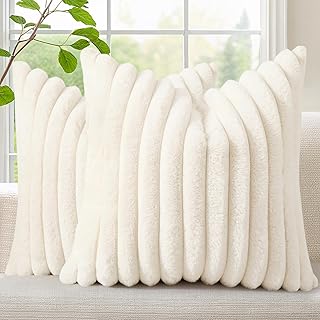
decorUhome Summer Cozy Faux Fur Throw Pillow Covers 18×18
decorUhome Summer Cozy Faux Fur Throw Pillow Covers 18×18 Set of 2 Dec has been one of the most consistently praised picks in this category. 3 reviewers averaged 4.5/5.
4. Filter Natural Light With Sheer Linen Panels

Heavy blackout curtains ruin the airy feel of Nordic design. I bought thick velvet drapes for my living room in my twenties, and they made the space feel like a moody theater instead of a home. You need abundant natural light, but you also need privacy. I swapped my heavy drapes for 96-inch sheer linen curtains. I hung the rod four inches from the ceiling to make the windows look taller. The sheer linen diffuses the harsh afternoon sun into a soft, glowing light that makes the wood furniture look incredible. Don’t buy the shiny polyester sheers. They look cheap and reflect light weirdly. Look for 100% linen or a linen-cotton blend. The fabric should have a slightly rough, irregular weave that catches the light. If you need darkness for a TV glare, install a hidden light-filtering roller blind behind the linen.
5. Invest in Modular Sofas for Adaptable Seating

I bought a massive, rigid three-seater sofa five years ago, and when I moved apartments, it wouldn’t fit around the stairwell corner. I had to sell it for a massive loss. Now, I strictly buy modular furniture. Adaptable seating is mandatory. I look at the HAY Mags series, which starts around €2,000 to €4,000 for a basic configuration. You can pull the chaise off, separate the middle sections to create two chairs, or push it all together into a massive pit for movie nights. The low profile and deep seats (usually around 28 inches deep) force you to lounge rather than sit stiffly. When shopping for a modular piece, check the locking mechanisms underneath. Cheap modular sofas drift apart on hardwood floors, leaving a gap that swallows your phone and remote. Ensure the brackets are heavy steel.
6. Practice Warm Minimalism to Avoid the Showroom Look

Stark minimalism is hostile. Interior designer Deborah Bass notes that neutrals need to be paired with other materials to actually sing. I used to clear every single item off my coffee table to make it look clean, but it just looked abandoned. Warm minimalism means keeping functional, beautiful items out in the open. I keep a curated stack of three large photography books on the table, topped with a heavy brass wick trimmer. I buy the 12-inch pure beeswax taper candles from Whole Foods for $6.99 a pair and stick them in raw concrete holders. The yellow beeswax and the brass trimmer serve a purpose, but they also add warmth and visual interest. Don’t hide the things you use daily if they are made of good materials. A wool rug, a stack of firewood, and a thrown blanket are decor. You might also like: 18 Living Room Decor Indian Worth Trying
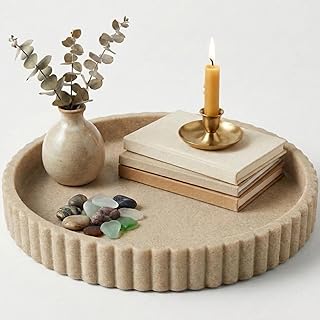
OAKOA Decorative Tray for Decor
A dependable everyday pick — OAKOA Decorative Tray for Decor – Coffee Table Tray for Living Room – pulls in 429 ratings at 4.5 stars. Not flashy, just solid.
7. Mix Travertine and Metal With Your Wood

If you put a wood coffee table on a wood floor next to a wood TV stand, your living room will look like a lumberyard. You have to break up the materials. I pair my solid oak coffee table with a side table made of completely different materials. I use the Ferm Living Distinct Side Table in Travertine, which costs around €1,455. The porous, beige stone adds a cold, hard texture that perfectly balances the warm, soft grain of the oak. If travertine is too expensive, use matte black metal. A thin, black steel magazine rack or a raw iron side table cuts through the heaviness of the wood furniture. I tried matching all my wood tones once, and the room felt entirely one-dimensional. The friction between different natural materials—stone, metal, wood, leather—is what makes a room look professionally designed. You might also like: 20 Apartment Bedroom Decor Worth Trying
8. Anchor the Space With Architectural Houseplants

Tiny, cluttered pots of succulents on a windowsill look messy. You need large, architectural plants with simple shapes and clean structures. I stopped buying dozens of tiny plants and invested in two massive ones. I picked up a 4-foot tall Snake Plant (Dracaena Trifasciata) at Trader Joe’s for just $14.99 last month. I dropped the plastic nursery pot straight into a heavy, matte beige ceramic planter. The stark, vertical lines of the snake plant draw the eye up toward the ceiling. I also keep a Fiddle Leaf Fig in the corner near the window. The massive, leathery leaves add organic curves to a room full of straight lines. Don’t use plastic pots. The pot is half the visual impact. Stick to neutral tones like white, grey, or terracotta, and make sure they have a drainage tray so you don’t ruin your wood floors. You might also like: 19 Living Room Decor Apartment Worth Trying
9. Curate Personal Ceramics Instead of Mass Art

I used to buy generic abstract canvas prints from big box stores because I wanted to fill blank wall space quickly. It made my living room look like a hotel lobby. Designer Fran Hickman suggests that bespoke joinery and personal items add necessary character. Now, I display things that actually matter. I print candid family photos at Costco for $1.99 each and frame them in oversized, thin oak frames with massive white mats. I also collect ceramic vases. I have a few from Muuto’s collection, but I mix them with weird, lopsided bowls I bought at local craft fairs. A shelf with three unique, handmade clay pieces looks infinitely better than a generic framed quote. Don’t buy decor just to fill a gap. Leave the shelf empty until you find a heavy, textured object that you actually want to look at every day.

FAEKSUR Framed Abstract Neutral Wall Art for Living Room
FAEKSUR Framed Abstract Neutral Wall Art for Living Room has been one of the most consistently praised picks in this category. 1 reviewers averaged 4.5/5.
10. Layer Three Distinct Sources of Warm Lighting

Harsh overhead lighting is a crime against coziness. I haven’t turned on my ceiling fan light since 2022. You need layered lighting from various heights. I use a slim Nordlux Adrian floor lamp (around €150) right behind my reading chair. The metal shade directs the light straight down onto my book, creating a small pool of light. Over the main seating area, a paper pendant light, like those from Louis Poulsen or Secto Design (which run €300 to €1000+), diffuses the bulb into a soft, ambient glow. Finally, I keep a small, battery-operated table lamp on the media console. Every single bulb in my house is 2700K. Anything higher than 3000K looks like a hospital waiting room. You want that warm, amber glow that makes the wood tones in the room look rich and inviting.
11. Embrace Wabi-Sabi Through Slub Linen and Uneven Clay

The Japanese concept of wabi-sabi—finding beauty in imperfection—is heavily influencing Nordic design right now. Stop ironing your linen throw pillows. The wrinkles are the point. I buy textiles with natural slubs, which are those little irregular, thick threads in the weave. I found a great slub cotton throw pillow at Target for $25, and the rough, uneven texture makes it look like a vintage piece. I also stopped buying perfectly symmetrical, factory-molded mugs. I drink my coffee out of a hand-thrown ceramic mug that is slightly lopsided. The glaze drips unevenly down the side. These tiny irregularities create a lived-in, authentic feel. If everything in your room is laser-cut and perfectly smooth, the space feels anxious. You want materials that show the human hand that made them.
12. Pull Furniture 6 to 12 Inches Away From the Walls

I used to shove my sofa tight against the drywall to maximize floor space in my tiny apartment. It was a huge mistake. It made the room look cramped and pushed all the visual weight to the perimeter. Now, I strategically use negative space. I pull my sofa exactly 8 inches away from the wall. This tiny gap creates a shadow line behind the furniture, allowing the piece to breathe and giving the illusion of a grander, more open space. I do the same with my media console and side chairs. To fill the visual gap, I grab cheap, tall glass vases from Kroger for $8, fill them with dry branches, and place them in the negative space in the corners. The room instantly feels less like a storage unit and more like an intentional, curated gallery. No exaggeration.

Dorlicecass Irregular Wall Mirror
Dorlicecass Irregular Wall Mirror – Wall Mirrors Decorative 22″x 36″ A punches above its price — 188 buyers rated it 4.5 stars. I would buy it again.
13. Choose Matte Wall Paint Over High-Gloss Finishes

High-gloss paint shows every single drywall flaw, nail pop, and bad tape job in your house. I painted my living room trim with a semi-gloss white a few years ago, and the glare from the window made it look cheap and plastic. Matte finishes are the only way to go for this aesthetic. I repainted my walls in a flat, warm ivory paint ($55 per gallon). Matte paint absorbs light rather than reflecting it aggressively. It softens the edges of the room and makes the walls look almost like suede. Yes, flat paint is slightly harder to clean if you have kids or dogs, but you can buy washable matte formulas now. The gentle way a matte wall diffuses the light from your paper pendant lamp is worth the extra effort it takes to wipe down a smudge.
14. Prioritize FSC-Certified Wood and Heavy Materials

Fast furniture is a plague. I bought a cheap particleboard TV stand in college, and it sagged in the middle under the weight of a 40-inch TV within six months. The Scandinavian ethos demands sustainability and durability. I only buy furniture made from FSC-certified wood now. Brands like HAY use this certification to ensure the wood is harvested responsibly. I’d rather spend $800 on a solid oak sideboard that will last forty years than $150 on a flat-pack laminate piece that will end up in a landfill by 2028. Look for heavy materials. If you can lift a coffee table with one hand, it’s not dense enough. You want solid joints, thick cuts of wood, and textiles crafted from recycled materials. Heavy furniture grounds the room and physically feels better to interact with daily.
15. Soften the Room With Curved and Fluid Silhouettes

Nordic design used to be all sharp angles and rigid lines. It felt a bit aggressive. Now, the trend is shifting toward organic, free-flowing shapes. I swapped my sharp, square coffee table for a kidney-bean shaped one. The curved edges soften the entire seating area and make it much easier to navigate around in a tight space. You don’t bang your shins on a curved table. Look for rounded armrests on chairs, circular rugs, and globes or domed lampshades. You don’t want the room to look like a funhouse, so keep the structural pieces (like the sofa frame or the shelving) straight, but introduce curves through the accent furniture and decor. A heavy, round marble tray on a square ottoman is the perfect balance of geometry.

Jexine 4 Pcs Hanging Planters with Artificial Eucalyptus
Jexine 4 Pcs Hanging Planters with Artificial Eucalyptus Metal Hanging has been one of the most consistently praised picks in this category. 12 reviewers averaged 4.5/5.
16. Anchor Your Cozy Scandinavian Living Room With a 9×12 Wool Rug

A rug that is too small ruins the scale of the entire room. I used to buy 5×8 rugs because they were cheaper, and my furniture just floated awkwardly around the edges. For a cozy Scandinavian living room, you need a massive, thick wool rug. I use a 9×12 foot plush wool rug from Nordic Knots that cost $895. It’s an investment, but it completely transformed the acoustics and the warmth of the room. The front legs of the sofa, the accent chairs, and the entire coffee table must sit on the rug. The wool adds a crucial layer of tactile comfort underfoot, especially if you have bare hardwood floors. Skip the thin, printed polyester rugs. They bunch up under furniture legs and curl at the corners. You need a rug with actual pile and weight.
17. Hide Visual Clutter in Closed Wood Sideboards

Open shelving is great for ceramics and books, but it’s terrible for routers, stray charging cables, and dog toys. I used to keep my router on an open bookshelf, and the blinking green lights drove me crazy. You need functional, closed storage to maintain the calm aesthetic. I bought a woven-door wood cabinet from Walmart’s Better Homes & Gardens line for $249. It looks surprisingly high-end. I drilled a hole in the back panel and hid the router, the power strips, and all the messy cords inside. The woven doors allow the remote signal to pass through to the Apple TV, but completely hide the plastic electronics. Visual clutter translates to mental clutter. If an item isn’t beautiful, it goes behind a solid wood or woven rattan door. Keep your surfaces clear for the things that actually matter. Took me years to figure out.
Building this look takes patience. Don’t rush out and buy a matching set of furniture from one catalog. Take your time sourcing heavy, real materials that feel good to touch. I’m still swapping out cheap pieces I bought years ago for better, solid wood alternatives. If you found these tips helpful, pin this article to your home decor board so you can reference the specific measurements and brand names when you’re out shopping. Let’s make our living spaces actually livable again.
Frequently Asked Questions
What colors are best for a cozy scandinavian living room?
Stick to a warm neutral base of ivory, beige, and soft grey. Add depth with muted, earthy accent colors like clay-pink, ochre, terracotta, and soft sage green through ceramics and textiles.
How do I make my minimalist living room feel warmer?
Swap pale pine for richer woods like walnut or honey oak. Layer heavy textures like bouclé, chunky wool, and slub linen. Add warm 2700K layered lighting instead of harsh overhead bulbs.
What kind of lighting works for Nordic design?
Avoid single overhead fixtures. Layer three distinct sources: a metal floor lamp for reading, a paper pendant light over the seating area, and a small table lamp. Always use warm amber bulbs.
Can I use color in Scandinavian design?
Yes, modern Nordic style embraces color. Avoid bright neon or jewel tones. Instead, use muted, nature-inspired hues like mustard yellow, slate blue, or dusty green in small doses via vases and pillows.
