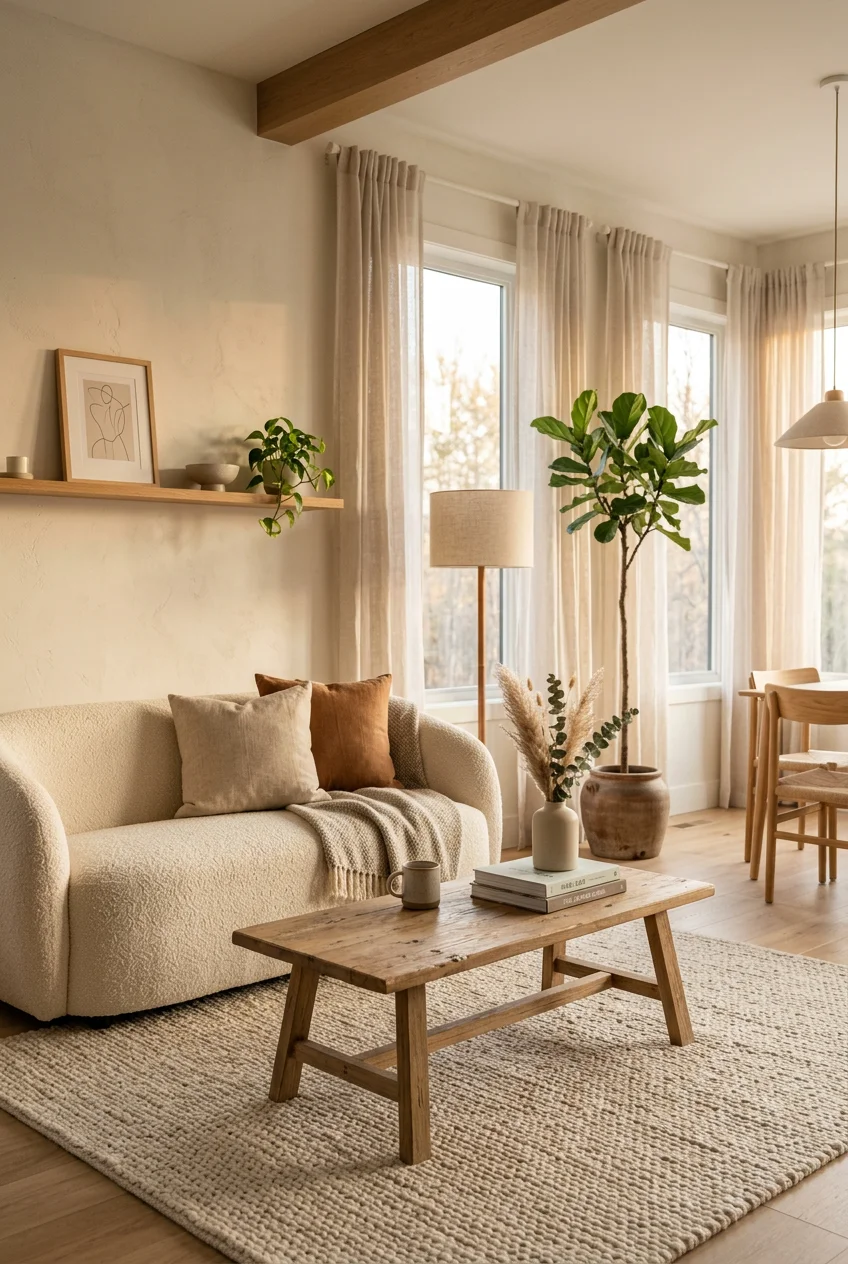
What’s Inside
- Embrace Layered Textures For Cozy Living Room Decor Ideas
- Optimize Rug Sizing For Cohesion
- Implement Layered, Warm Lighting
- Integrate Biophilic Design Elements
- Choose Comfortable, Proportionate Furniture
- Define Zones With Furniture Placement
- Incorporate Warm, Earthy Color Palettes
- Add Strategic Scent With Diffusers
- Avoid Matchy-Matchy Furniture Sets
- Utilize Oversized Ottomans As Multifunctional Coffee Tables
- Layer Window Treatments For Softness And Privacy
- Curate Personal Touches And Art
- Embrace Quiet Luxury With Artisan Pieces
- Consider A Wellness-Centered Space Approach
- Don’t Underestimate Warm Wood Tones For Cozy Living Room Decor Ideas
Last November, I sat on my stiff gray sofa shivering, realizing my living room felt exactly like a dentist’s waiting area. I’d spent three months pinning cozy living room decor ideas, only to end up with a space that looked sterile and sounded hollow when I walked through it. I tried fixing it by buying a $20 faux fur pillow from Target, but one pillow doesn’t fix bad lighting and floating furniture. Creating a genuinely warm space requires actual structural changes, not just tossing a blanket over a chair. I’m going to break down the exact formulas, measurements, and specific pieces that actually work. Trust me on this.
1. Embrace Layered Textures For Cozy Living Room Decor Ideas

I bought a scratchy wool blanket from Walmart two years ago because it looked rustic. It felt like sandpaper. No one ever used it. Texture dictates how a room actually feels when you sit in it. The 2026 design trend emphasizes tactile layering. This means mixing bouclé, chenille, washed linen, and soft leathers in a single space. You need a mix of visual weight. I drape a Barefoot Dreams Cozychic Throw over the back of my sofa. It costs around $147 to $180 depending on the retailer, but the microfiber material holds up to weekly washing without pilling. Pair a chunky knit like that with velvet cushions in rich, earthy tones like rust or moss green. The contrast between the smooth velvet and the chunky knit gives the eye something to process. If everything in your room is cotton canvas, the space feels flat. Add a leather lumbar pillow or a ribbed corduroy floor cushion. The goal is making the room look soft before you even touch anything.
2. Optimize Rug Sizing For Cohesion

A floating rug is the most common layout mistake I see in client homes. I’ve done this myself in my first apartment. I bought a 5’x7′ rug from Costco because it was on sale for $99. I put it under my coffee table, leaving my sofa and chairs entirely on the bare wood floor. The furniture looked disconnected, like islands in a sea of hardwood. For most standard living rooms, you need an 8’x10′ or 9’x12′ area rug. The rule is simple. The rug must extend at least 6 to 8 inches wider than your sofa on both sides. More importantly, the front legs of your main seating pieces must rest on the rug. This anchors the furniture and unifies the space. If you have a massive room, you might even need a 10’x14′ rug so all four legs of every piece fit on it. A properly sized rug absorbs sound and provides a soft landing pad for your feet. It’s the foundation of a warm room.
3. Implement Layered, Warm Lighting

Relying solely on harsh overhead lighting makes your living room feel cold and interrogative. I call it the big light syndrome. You flip the wall switch, and suddenly you’re sitting in a high school cafeteria. You need layered light sources. This means combining floor lamps, table lamps, and wall sconces. The most critical detail is your bulb temperature. Only buy LED bulbs in the 2700K to 3000K range. This specific temperature emits a warm, yellow glow that mimics firelight. Anything over 3500K starts looking blue and clinical. I use the Philips Hue White Ambiance system. A starter kit costs around $199 and includes three bulbs plus a bridge. You can adjust the color temperature and brightness right from your phone. I set mine to automatically dim and shift warmer at 7:00 PM. It mimics natural light cycles and signals to your brain that it’s time to relax. Put a small table lamp on a console behind the sofa, a floor lamp in a dark corner, and turn the ceiling light off completely after dinner.

Farmhouse White Fake Decorative Books for Home Office Decor
Farmhouse White Fake Decorative Books for Home Office Decor – Religion has been one of the most consistently praised picks in this category. 10 reviewers averaged 4.5/5.
4. Integrate Biophilic Design Elements

Biophilic design is a major 2026 trend. It goes beyond just sticking a potted plant in a corner. The concept focuses on creating immersive ecosystems indoors to enhance well-being. I used to buy cheap, half-dead plants from the floral section at Sprouts on grocery runs, hoping they’d survive my dark apartment. They always died within a month, leaving behind sad, empty pots. I learned that the hard way. Now, I invest in large, healthy indoor plants from actual nurseries. A mature Monstera Deliciosa or a Fiddle-leaf Fig instantly breathes life into a stagnant corner. A 4-foot Fiddle-leaf usually costs around $85 to $120. Place them in natural material planters like woven rattan or terracotta, not shiny plastic. If you lack floor space, consider a vertical garden. Modern living walls feature self-watering systems and grow lights. The visual presence of large-scale greenery softens hard architectural lines and brings organic, irregular shapes into a room full of right angles. It makes the air feel fresher and the room look intentionally styled.
5. Choose Comfortable, Proportionate Furniture

Stiff furniture ruins a room, no matter how beautiful it looks. You can’t relax if you’re sitting bolt upright on a rigid mid-century reproduction. For 2026, curved and sculptural furniture is trending heavily, alongside low-profile silhouettes with architectural purity. These shapes offer visual softness while maintaining modern aesthetics. However, you must measure your space carefully. I once ordered a massive modular sofa with a deep seat of exactly one meter. I didn’t tape out the dimensions on my floor first. When it arrived, it completely swallowed my small living room and blocked the pathway to the kitchen. You need deep-cushioned sofas that invite lounging, but they must fit the room’s scale. A standard sofa depth is around 35 inches. If you want that sink-in feeling, look for cushions with a down-blend wrap over a high-density foam core. A great example is the Crate & Barrel Lounge Sofa, starting around $1,899. It provides the depth needed for curling up without looking sloppy. You might also like: 20 Cozy DIY Farmhouse Decor Ideas That Are Totally Worth It
6. Define Zones With Furniture Placement

Pushing all your furniture against the walls creates a dead zone in the center of the room. It feels like a high school dance where everyone is afraid to step onto the floor. Instead, pull your pieces inward to create intimate conversation areas. Group a sofa with two armchairs and a coffee table in the center of the rug. This arrangement forces people to face each other, rather than staring blankly at a television screen. When setting up these zones, maintain a strict 18 to 24 inches of walkway space between larger pieces. If your coffee table is closer than 18 inches to the sofa, you’ll bang your shins every time you sit down. If it’s further than 24 inches, you can’t reach your drink. I learned this the hard way after bruising my knees for weeks on a heavy oak table. If your room is long and narrow, create two separate zones. Put a reading chair and a small side table in one corner, and your main seating arrangement in the other. You might also like: 20 Creative Cozy Farmhouse Decor Ideas That Actually Work

UTTCMK Bookshelf Decor Thinker Statue
A dependable everyday pick — UTTCMK Bookshelf Decor Thinker Statue – Abstract Art Reading Thinker S pulls in 809 ratings at 4.5 stars. Not flashy, just solid.
7. Incorporate Warm, Earthy Color Palettes

Stark white and cool gray interiors are out. They reflect light harshly and feel clinical. The 2026 color trends lean heavily into warm, earthy palettes. Start with neutral colors like warm beiges, soft taupes, and creamy whites as your base. These shades create a calm, fresh background that absorbs light gently. Then, introduce accents in muddy greens, sage, and terracotta. You’ll also see a lot of caramelised neutrals, mocha mousse, olive-gray hybrids, and soft clay. I recently repainted my living room walls using Farrow & Ball’s Setting Plaster, which costs about $140 per gallon. It looks like a dusty pink in the morning and a rich terracotta at night. It completely changed the room’s temperature. If you can’t paint, bring these colors in through textiles. A rust-colored linen throw pillow or an olive-green ceramic vase adds immediate warmth. Avoid primary colors or anything neon. Earth tones ground the space, making it feel like a natural extension of the outdoors rather than a synthetic box. You might also like: 15 Inspiring DIY Boho Bohemian Style Home Decor Ideas Worth Trying This Year
8. Add Strategic Scent With Diffusers

Engaging the sense of smell is a highly underrated design tactic. A room isn’t truly finished until it smells good. I used to buy cheap vanilla candles from Kroger, but they left black soot on my walls and smelled like artificial frosting. Now, I use high-quality diffusers. The Vitruvi Stone Diffuser costs exactly $88 and doubles as a piece of minimalist ceramic art on my console table. I drop in 15 drops of cedarwood and bergamot essential oils I pick up from Whole Foods for about $9.99 a bottle. If you prefer a hands-off approach, the Pura 4 Smart Home Fragrance Diffuser is also around $88. It plugs into the wall and allows app-controlled scent intensity and scheduling. You can set it to diffuse a warm amber scent right before you get home from work. Brands like Nest, Boy Smells, and Apotheke offer incredible, complex scent pods for the Pura system. Layering a subtle, woody fragrance makes the environment feel expensive and deeply comforting.
9. Avoid Matchy-Matchy Furniture Sets

Buying a complete matching living room set from a big-box furniture store is a massive mistake. When your sofa, loveseat, and armchair all feature the exact same gray polyester fabric, your room looks like a catalog showroom. It lacks a collected, personal feel. A space needs friction to be interesting. You have to mix different textures, eras, and styles for depth. If you have a sleek, modern leather sofa, pair it with a vintage wooden armchair or a nubby bouclé accent chair. I bought a matching mid-century set years ago. Within a week, the room felt incredibly flat and boring. I ended up selling the matching chairs on Facebook Marketplace and replacing them with mismatched vintage finds. If your coffee table is smooth glass and metal, make sure your side tables are warm wood or carved stone. This contrast gives the eye a reason to travel around the room. It makes the space look curated over time, rather than purchased all at once on a Tuesday afternoon.

Govee RGBIC Floor Lamp Basic
A dependable everyday pick — Govee RGBIC Floor Lamp Basic pulls in 107 ratings at 4.5 stars. Not flashy, just solid.
10. Utilize Oversized Ottomans As Multifunctional Coffee Tables

Swapping a traditional hard coffee table for an oversized, plush ottoman is a brilliant structural change. Hard wooden or glass tables have sharp corners that break up the visual softness of a seating area. A large fabric or leather ottoman provides a massive, comfortable footrest for anyone sitting on the sofa. I swapped my heavy iron table for a 40-inch round tufted velvet ottoman from West Elm that cost around $499. It instantly made the room feel safer and softer, especially when my nieces visit. To make it functional for drinks, simply place a large, heavy wooden or brass tray in the center. You get the soft edges for your legs and a stable surface for your coffee mug. Many oversized ottomans also offer hidden storage inside. You can lift the top and hide away bulky winter blankets, board games, or extra pillows. This keeps visual clutter out of the room while keeping cozy elements within arm’s reach.
11. Layer Window Treatments For Softness And Privacy

Bare windows make a room feel unfinished and drafty. Heavy, dark curtains that block all natural light make it feel like a cave. The solution is layered window treatments. You need light-filtering shades or sheer panels closest to the glass, paired with heavier drapes on the outside. I used to hang single panels of cheap blackout curtains from Target right above the window frame. It made my ceilings look low and the room feel cramped. The correct method is extending your curtains floor to ceiling. Mount your curtain rod just two inches below the ceiling line, and let the fabric barely kiss the floor. This draws the eye upward and makes the room feel taller and more luxurious. During the day, keep the heavy drapes open and let the sheer panels diffuse the harsh sunlight. In the evening, draw the heavy drapes for warmth and privacy. A set of custom-look linen drapes from a brand like Quince costs around $119 per panel and adds incredible acoustic dampening to the room.
12. Curate Personal Touches And Art

Leaving walls bare makes a room feel transient, like you’re just waiting to move out. Conversely, cluttering every shelf with random trinkets creates visual anxiety. You want to create a collector’s paradise by displaying beloved items, heirlooms, and artwork that actually mean something to you. Most people hang their art entirely wrong. They place it way too high. You must hang art so its exact center is approximately 60 inches from the floor, which is standard eye level. If you’re hanging a piece above a sofa or console, the bottom edge of the frame should sit exactly 4 to 8 inches above the furniture. I once hung a gallery wall where the pieces were a full 18 inches above the sofa. It looked like the art was floating away into the ceiling. Anchor your pieces properly. Frame a menu from a memorable dinner, display a ceramic bowl you bought on a trip, or stack a few large coffee table books. These specific details give the room a soul.

Homedics Tabletop Water Fountain
A dependable everyday pick — Homedics Tabletop Water Fountain pulls in 44 ratings at 4.5 stars. Not flashy, just solid.
13. Embrace Quiet Luxury With Artisan Pieces

The 2026 design scene is heavily influenced by the concept of Quiet Luxury. This trend completely rejects flashy logos, mass-produced plastic decor, and disposable fast-furniture. Instead, it focuses on understated elegance and high-quality, artisan, handcrafted pieces. You don’t need forty small knick-knacks from a discount store. You need three or four substantial, beautifully made items. Invest in a hand-thrown ceramic vase with visible fingerprints from the maker, or a unique wooden sculpture carved from a single block of ash. I stopped buying seasonal decor hauls a few years ago. Instead, I saved up and spent $250 on a massive, handcrafted stoneware bowl from a local potter. It sits empty on my entryway table and looks stunning just by existing. When you touch these items, you feel the weight and the texture of the raw materials. Quiet luxury is about restraint. It’s choosing a heavy, solid brass candle snuffer over a cheap plastic lighter. These small tactile upgrades make the entire living room feel grounded and expensive.
14. Consider A Wellness-Centered Space Approach

Designing a living room shouldn’t just be about aesthetics. It needs to actively support your physical and mental well-being. A wellness-centered space approach is becoming standard in high-end design. This involves managing light, air, and sound. Circadian-syncing light is a huge part of this. The Dyson Lightcycle Morph floor lamp is a hefty investment at $899, but it tracks local daylight and automatically adjusts its color temperature and brightness throughout the day. It prevents eye strain and stops blue light from ruining your sleep cycle. If that’s out of budget, the Philips Hue bulbs I mentioned earlier do a similar job for much less. You also need to address acoustic comfort. Hardwood floors, flat drywall, and glass windows bounce sound waves around, creating a subtle echo that causes background stress. Layered textiles, thick rugs, and heavy curtains absorb this sound. When I finally added thick velvet drapes and a dense wool rug to my space, the room went acoustically dead in the best way possible. It felt like stepping into a quiet sanctuary.
15. Don’t Underestimate Warm Wood Tones For Cozy Living Room Decor Ideas

An entirely painted or upholstered room feels artificial. You desperately need warm wood tones to ground the space and connect it to nature. Wood brings an organic, irregular grain pattern that synthetic materials simply can’t replicate. Integrating a reclaimed wood coffee table, a solid oak side chair, or a vintage walnut cabinet instantly adds warmth and character. I used to have a living room filled entirely with painted white MDF furniture and a glass table. It felt cold, brittle, and uninviting. I replaced the glass table with a solid mango wood coffee table I found for $399. The rich, amber tones of the wood completely shifted the room’s energy. It made the space feel lived-in and solid. When selecting wood pieces, don’t worry about matching the stains perfectly. Mixing a light white oak floor with a dark walnut media console looks fantastic as long as both woods have a warm undertone. The organic texture of real wood provides a visual anchor that makes all your soft textiles pop.
Creating a warm space isn’t about buying a specific blanket. It’s about layering light, texture, and scale correctly. I highly recommend starting with your lighting and rug size before you buy a single decorative pillow. Those foundational elements dictate everything else. If you fix the big light syndrome and anchor your furniture properly, the room will immediately feel different. Pin this guide to your home decor boards so you have these exact measurements and brand names handy the next time you’re shopping for your home. You won’t regret getting the scale right the first time. No exaggeration.

Lwenki Key Holder for Wall
A dependable everyday pick — Lwenki Key Holder for Wall pulls in 86 ratings at 4.5 stars. Not flashy, just solid.
Frequently Asked Questions
What are the best colors for cozy living room decor ideas?
Warm, earthy tones are best. Stick to warm beiges, soft taupes, and creamy whites for your base. Add accents in muddy greens, terracotta, and caramelised neutrals. Avoid stark whites and cool grays, which make a space feel clinical and cold.
How do I arrange furniture for a cozy living room?
Pull your furniture away from the walls to create intimate conversation zones. Group a sofa and two armchairs around a central coffee table. Ensure you leave exactly 18 to 24 inches of walkway space between the seating and the table.
What kind of lighting makes a living room feel cozy?
Layered lighting is essential. Turn off harsh overhead lights and use a mix of floor lamps, table lamps, and wall sconces. Always use LED bulbs with a color temperature between 2700K and 3000K to create a warm, fire-like glow.
How big should a rug be in a cozy living room?
A rug should be large enough that the front legs of all your main seating pieces rest on it. For most rooms, an 8’x10′ or 9’x12′ rug works perfectly. It should extend at least 6 to 8 inches wider than your sofa.
