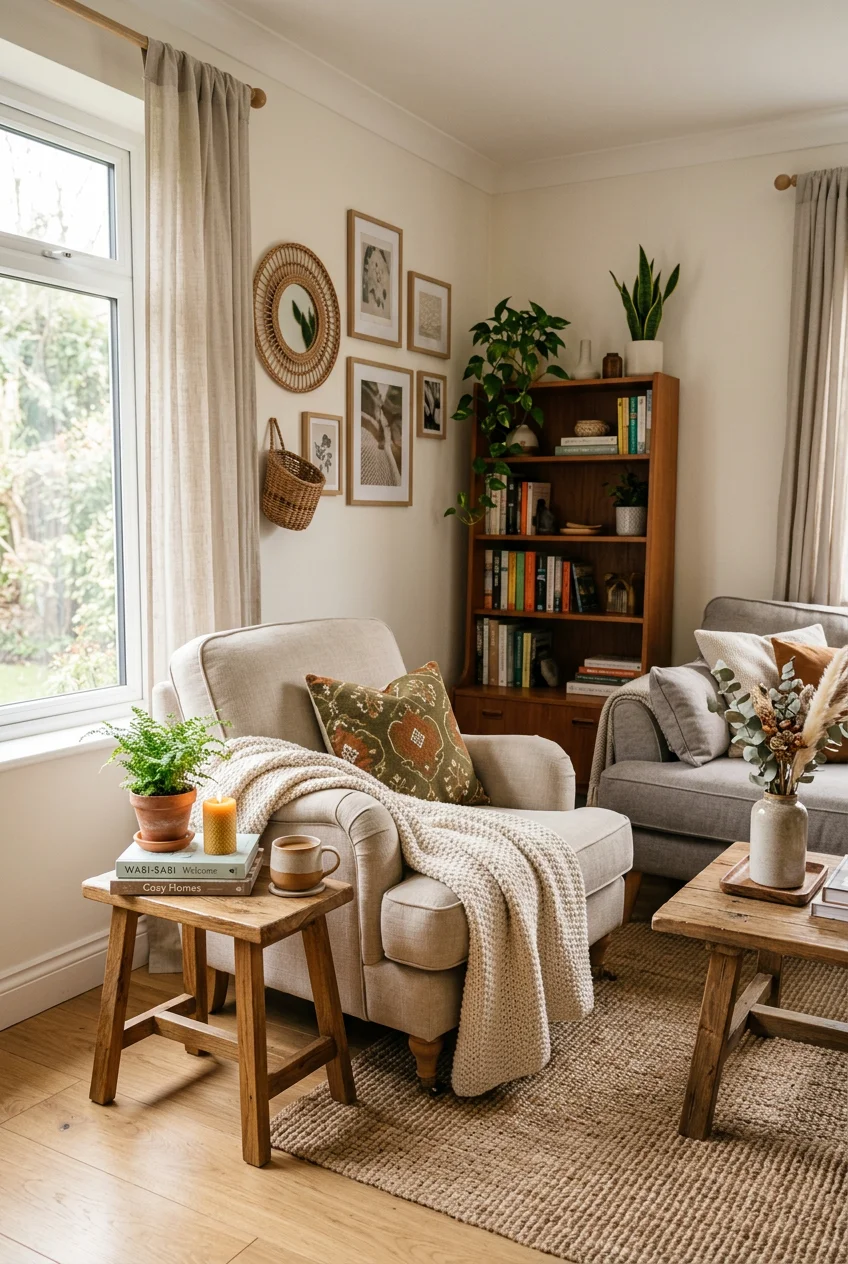
What’s Inside
- Embrace Warm Color Palettes for Living Room Designs Cozy and Inviting
- Layer Textiles with Intent
- Choose the Right-Sized Rug to Anchor Your Space
- Incorporate Layered, Warm Lighting
- Opt for Low-Slung and Deep-Seated Furniture
- Integrate Biophilic Design Elements
- Avoid Pushing All Furniture Against Walls
- Add a Fireplace Alternative for Instant Ambiance
- Curate with High-Quality Scented Candles
- Mix Materials to Keep Living Room Designs Cozy
- Personalize with Vintage and Collected Pieces
- Embrace Soft Geometry in Your Furniture
- Avoid Overcrowding the Floor Plan
- Consider Wood Paneling for Added Warmth
- Create a Dedicated Nature Nook
- Swap Out Harsh Window Treatments
Last November, I sat on my gray polyester sofa under a harsh overhead light, shivering in a space that felt more like a dentist’s waiting room than a home. Figuring out how to make living room designs cozy enough to actually relax in took me three years of expensive trial and error. I bought the wrong rugs, painted walls the color of wet cement, and wasted money on trendy accessories that just collected dust. I even tried those cheap plastic blinds from Walmart, which clattered loudly every time the heater kicked on. It was a disaster. Learned that the hard way.
You don’t have to repeat my mistakes. Creating a warm, inviting space isn’t about buying a matching furniture set or perfectly replicating a magazine cover. It’s about intentional layers, tactile textures, and lighting that doesn’t blind you. I’ve broken down the specific, actionable steps I took to fix my space. Here are sixteen practical ways to bring warmth and personality into your home right now.
1. Embrace Warm Color Palettes for Living Room Designs Cozy and Inviting

Getting a room to feel inviting requires ditching the sterile grays that dominated the last decade. I painted my walls a cool gray back in 2019, and it felt like living inside a concrete bunker. The space felt physically cold, no matter how high I turned up the thermostat. Now, the 2026 trend focuses on warm, comforting shades that wrap around you. Skip the stark whites. They look great in photos but feel clinical in person. I repainted my space using Sherwin-Williams Alabaster (SW 7008), which costs about $72 per gallon. It’s a soft, creamy off-white that shifts beautifully depending on the sunlight. If you want something moodier, Benjamin Moore Forest Green (2047-10) runs about $75 per gallon and creates a rich, sophisticated accent wall. These colors create a cocoon effect. They ground the room and make it feel intimate. I spent an entire weekend taping and rolling that green onto my focal wall, and the depth it added was immediate. The room finally feels like a place to rest. Trust me on this.
2. Layer Textiles with Intent

Texture does the heavy lifting when you want to make a room inviting. I used to buy cheap, thin polyester blankets that sparked with static electricity every time I moved. They looked okay folded on the chair, but they felt awful against my skin. Now, I focus on tactile quality. The Barefoot Dreams CozyChic Throw is a prime example. It costs around $147 and features a buttery polyester microfiber that feels like a warm hug. It doesn’t pill after three washes, which matters when you’re using it every single night. For a layered aesthetic, I mix that plushness with a structured cotton herringbone throw from The Company Store, which usually runs $79. Drape the chunky knits over the arms of your sofa and layer velvet cushions in the corners. I picked up two heavy velvet pillow covers from Target for $15.99 each last Tuesday, and the smooth fabric contrasts perfectly against the rougher knits. This intentional mixing prevents the room from looking flat. You need those varied textures to create shadows and depth, which ultimately makes the space feel rich and welcoming.
3. Choose the Right-Sized Rug to Anchor Your Space

Most people buy rugs that are entirely too small. I did this for years. I had a tiny 5×7 rug floating in the middle of my floor, and it made my furniture look like it was shrinking away from the center. It’s a classic mistake that ruins the scale of the room. For most spaces, an 8×10 or 9×12 rug is the minimum size you need. You want the rug to extend at least six to eight inches wider than your sofa on both sides. The front legs of your chairs and sofa must sit comfortably on the fibers. I eventually bought a dense, 9×12 woven wool rug from Costco for $199.99. The moment I unrolled it, the room suddenly made sense. The furniture felt anchored instead of randomly scattered. If you’ve got a massive open floor plan, you might even need a 10×14 rug to define the seating zone. Just make sure to leave about 18 inches of bare floor between the edge of the rug and your baseboards.

UTTCMK Bookshelf Decor Thinker Statue
Honestly, UTTCMK Bookshelf Decor Thinker Statue – Abstract Art Reading Thinker S surprised me — sturdier than it looks in the photos, and over 809 buyers gave it 4.5 stars.
4. Incorporate Layered, Warm Lighting

Overhead lighting is the enemy of relaxation. If you flip on a bright ceiling fixture, you instantly kill the mood. I learned this the hard way after installing 5000K daylight bulbs in my ceiling fan. My living room looked like a surgical theater, and it gave me a headache after twenty minutes. You need warm, layered light instead. Swap your bulbs for a color temperature between 2700K and 3000K. I buy the 4-packs of GE Relax LED bulbs from Walmart for $9.98. They cast a soft, amber glow that mimics old incandescent lights. You also need physical layers. Combine a floor lamp with a table lamp that has a fabric shade to diffuse the glare. The BenQ e-Reading Floor Lamp costs $229 and lets you adjust the color temperature from 2200K all the way to 6500K. I keep mine dialed down to a warm 2500K in the evenings while reading. It provides enough task lighting without overpowering the ambient glow of the room. You might also like: 20 Charming Cozy Inspo Home Decor You Haven’t Thought Of
5. Opt for Low-Slung and Deep-Seated Furniture

The stiff, upright sofas of the mid-century modern craze are finally rotating out. The 2026 trend heavily favors low-slung, deep-seated furniture that practically forces you to recline. You want pieces that offer a hug-like feeling. I used to own a rigid linen sofa with a shallow 21-inch seat depth. My knees awkwardly hovered above the floor, and I could never get comfortable watching a movie. I replaced it with a modular piece featuring a 28-inch seat depth. You can find excellent deep-seated options like the Albany Park Kova Sofa, which starts around $1,149, or check out the modular bouclé sections at Walmart for about $898. The textured fabrics like chenille and bouclé add to the tactile comfort. When you sit down, you sink in just enough to feel supported but relaxed. The lower profile also makes your ceilings feel taller, which opens up the room visually while maintaining that grounded, heavy comfort you need for proper lounging. You might also like: 15 Stunning Aesthetic Home Decor Ideas You Need to See
6. Integrate Biophilic Design Elements

Bringing nature indoors does incredible things for your mental state. I used to think fake plants were fine until I realized they just collected a thick layer of dust and looked depressing in the afternoon sun. Real plants introduce organic shapes and vibrant life. You don’t need a massive greenhouse. A large Monstera Deliciosa or a Fiddle Leaf Fig serves as a beautiful living sculpture. I bought a healthy, two-foot Monstera from Trader Joe’s for just $14.99 last month. I placed it in a woven rattan basket in the corner, and the glossy green leaves instantly softened the hard angles of my walls. Pair your plants with natural materials. A solid teak wood coffee table or a cork side stool brings warmth that manufactured laminates simply can’t match. Keep your windows clear of heavy drapes during the day. The sunlight feeds the plants and highlights the natural grain of your wooden furniture, bridging the gap between your indoor space and the outside world. You might also like: 15 Inspiring DIY Boho Bohemian Style Home Decor Ideas Worth Trying This Year

Farmhouse White Fake Decorative Books for Home Office Decor
A dependable everyday pick — Farmhouse White Fake Decorative Books for Home Office Decor – Religion pulls in 10 ratings at 4.5 stars. Not flashy, just solid.
7. Avoid Pushing All Furniture Against Walls

This is the most common layout error I see. When you shove every sofa and chair hard against the perimeter of the room, you create a dead zone in the middle. It makes conversation difficult because everyone is shouting across a vast expanse of empty rug. I did this in my first apartment because I thought it made the room look bigger. It didn’t. It just looked like a waiting area. Pull your furniture at least 12 to 18 inches away from the walls. This simple shift allows the pieces to breathe. It creates cozy, intimate zones meant for actual human interaction. If you’ve got the square footage, float your sofa right in the middle of the room. You can place a slim console table behind it. I bought a narrow wood console from Target for $130 specifically to anchor the back of my floating sofa. It completely changed the traffic flow and made the seating area feel deliberate and contained.
8. Add a Fireplace Alternative for Instant Ambiance

Nothing says comfort quite like a flickering flame, but not everyone has a built-in chimney. My current house lacks a fireplace, and I missed that hypnotic glow during the winter months. Fortunately, modern alternatives look incredibly realistic without the smoke or ash. Bio-ethanol tabletop fireplaces are brilliant. The Flaemme indoor fire pit costs about $350 and burns clean liquid ethanol. You get a real, dancing flame that warms the immediate area without requiring any ventilation. If you want something larger, the Modern Flames Orion Multi Smart Virtual Electric Fireplace runs around $1,200. It uses LED technology to project highly realistic flames and includes a built-in heater. I opted for a budget-friendly route first. I arranged a cluster of seven pillar candles inside a wide, fire-safe decorative bowl on my coffee table. A pack of unscented 3×6 pillar candles from Costco costs $24.99. Lighting them all at once provides a surprising amount of visual warmth and instantly softens the room’s energy.
9. Curate with High-Quality Scented Candles

Scent is heavily tied to our perception of comfort. A room can look perfect, but if it smells like stale cooking oil, the illusion shatters. I used to buy cheap, sugary-smelling candles that gave me a headache and left black soot all over my walls. The wax burned unevenly, tunneling straight down the middle. Now, I invest in complex, sophisticated fragrances. Diptyque is a classic for a reason. Their Baies candle, which smells like blackcurrant berries and roses, costs $74 for the 6.7 oz jar. It burns cleanly and the scent lingers long after you blow out the flame. For a woody, smoky vibe, Le Labo Santal 26 runs about $82. If you want something more accessible for everyday burning, I found a fantastic cedar and amber essential oil candle at Whole Foods for $12.99. The key is choosing scents with grounding notes like sandalwood, amber, or vetiver. They make the air feel heavy and warm, adding an invisible layer of texture to the room.

Homedics Tabletop Water Fountain
A dependable everyday pick — Homedics Tabletop Water Fountain pulls in 44 ratings at 4.5 stars. Not flashy, just solid.
10. Mix Materials to Keep Living Room Designs Cozy

The matched furniture set is completely dead for 2026. Buying a sofa, loveseat, and chair in the exact same fabric makes a room look like a cheap furniture showroom. It lacks personality. To get those living room designs cozy, you have to mix materials. Combine rough stone, smooth ceramic, and embroidered textiles. I learned to embrace pattern clashing. You just need one hero pattern, like a bold floral rug, supported by smaller, geometric companions. I pair a heavy, textured bouclé chair with a sleek, polished marble side table. Last week, I found a beautiful, irregular ceramic bowl at Kroger for $8.99 and placed it on top of a smooth glass coffee table. The contrast is what makes it interesting. Don’t be afraid to mix wood tones, either. A dark walnut floor looks incredible against a light white oak media console. This layered, collected approach creates a lived-in environment. It shows that the room evolved over time rather than being unboxed all at once.
11. Personalize with Vintage and Collected Pieces

A room full of brand-new items often feels sterile. You need pieces with history to ground the space. I used to buy all my decor from the same big-box store, and my living room ended up looking like a catalog page, completely devoid of my actual personality. Integrating vintage elements changes the entire frequency of the room. You don’t have to spend a fortune at high-end antique dealers. I found an incredible brass table lamp with a pleated silk shade at a local flea market for $45. I rewired it myself for another $10. It sits next to a modern Crate & Barrel sofa, and the tension between the old metal and the new fabric is perfect. Look for unique side tables, tarnished silverware to use as catch-alls, or vintage oil paintings. Even a small, weathered wooden stool tucked into a corner adds soul. These items bring a sense of permanence. They tell a story, making your space feel authentically yours instead of highly manufactured. Took me years to figure out.
12. Embrace Soft Geometry in Your Furniture

Sharp, aggressive angles are exhausting to look at. If your coffee table, sofa, and rug are all strict rectangles, the room feels rigid. The 2026 trend focuses heavily on soft geometry. You want organic, rounded shapes that look like they were formed by hand rather than cut by a laser. I swapped my harsh, square glass coffee table for a round, solid oak piece with a soft bullnose edge. I immediately stopped bruising my shins, and the room felt less severe. Look for sofas with curved backs or kidney-shaped accent chairs. A great example is the curved bouclé sofa from West Elm, which usually sits around $1,299. Even small changes help. I bought a circular jute rug from Sprouts for $39.99 to place under my reading chair. The curved lines guide your eyes smoothly around the space instead of trapping them in sharp corners. This natural flow drastically reduces visual tension, making it much easier to unwind at the end of the day.

Govee RGBIC Floor Lamp Basic
Govee RGBIC Floor Lamp Basic punches above its price — 107 buyers rated it 4.5 stars. I would buy it again.
13. Avoid Overcrowding the Floor Plan

There’s a fine line between cozy and cluttered. I crossed that line two years ago when I tried to cram a bulky sectional, two armchairs, a massive coffee table, and three floor poufs into a 12×15 room. I had to turn sideways just to walk to the window. It wasn’t relaxing. It was an obstacle course. If you’ve got too much furniture, your brain can’t rest. You need negative space. Opt for a few larger, cohesive pieces that actually fit the scale of the room. If your square footage is tight, choose furniture with slim, elevated legs. Being able to see the floor underneath the sofa creates the illusion of a much larger room. I eventually sold the bulky armchairs and bought a sleek, spindle-back chair from Target for $150. I also utilized vertical space by installing floating shelves for my books instead of keeping a heavy bookcase on the floor. The room finally opened up, allowing me to actually breathe.
14. Consider Wood Paneling for Added Warmth

Wood paneling is back, but we aren’t talking about the cheap, glossy knotty pine from the 1970s. The 2026 approach uses rich, matte varieties like walnut, white oak, or even painted beadboard to add textural depth. Bare drywall can feel cold and echoey. Adding wood introduces a natural, acoustic dampening effect that literally quiets the room. I installed a vertical slat wood accent wall behind my television last spring. I bought acoustic wood veneer panels from Home Depot for about $45 per section. The installation took one afternoon with a brad nailer. The result was ridiculous. The room immediately felt like a boutique hotel lounge. Be careful with the stain, though. If you go too dark in a room with small windows, it feels like a cave. Stick to medium or light tones to maintain a bright but grounded atmosphere. The texture of the wood grain adds a traditional, cosseting feel that paint alone simply can’t achieve.
15. Create a Dedicated Nature Nook

You don’t need a massive sunroom to benefit from nature. Even in a small apartment, carving out a specific corner for biophilic design works wonders. I created a dedicated refuge in the darkest corner of my living room. I placed a comfortable, deep-seated armchair there and surrounded it with low-light tolerant plants. I picked up a tall Snake Plant for $19.99 and a ZZ Plant for $15.99 from Trader Joe’s. Both are nearly impossible to kill and thrive away from the windows. I added a small, amber-glass table lamp to cast a warm glow on the leaves at night. This little nature nook became my favorite spot to drink coffee in the morning. It proves you don’t have to overhaul your entire floor plan to change how a room feels. Just clustering a few air-purifying plants around a comfortable seat creates a micro-environment meant entirely for mental restoration.

Lwenki Key Holder for Wall
Lwenki Key Holder for Wall has been one of the most consistently praised picks in this category. 86 reviewers averaged 4.5/5.
16. Swap Out Harsh Window Treatments

Naked windows make a room feel unfinished and exposed, especially at night when the glass turns into a black mirror. I used to have cheap plastic vertical blinds that clattered every time the AC kicked on. They were hideous and offered zero insulation. Window treatments are crucial for softening the hard edges of your architecture. I removed the plastic blinds and installed matte black curtain rods high and wide above the window frame. Then, I hung heavy linen-blend curtains. The Threshold linen panels from Target cost about $25 each, and they drape beautifully. Hanging them close to the ceiling draws the eye up, making the room feel taller. The fabric absorbs sound and adds a vital layer of softness against the rigid glass. In the winter, they actually block drafts, keeping the room physically warmer. Skip the stiff, shiny polyester drapes. You want fabrics that look natural, move gracefully in the breeze, and filter the afternoon sunlight into a soft, hazy glow. No exaggeration.
Building a comfortable home takes time, so don’t feel pressured to buy everything this weekend. I’d start with the lighting and the textiles, as those make the most immediate impact on how a room feels. If you found these living room designs cozy and helpful, save this page or pin your favorite ideas to your Pinterest boards for your next weekend project. You’re going to love how your space feels once you add a few of these warm, intentional layers.
Frequently Asked Questions
How can I make my living room look cozy on a budget?
Focus on warm lighting and layered textiles. Swap out daylight bulbs for 2700K LEDs, which cost under $10. Then, drape a textured throw blanket over your sofa and add a few velvet pillows. These small changes instantly warm up the space.
What colors make a living room feel cozy?
Earth tones and warm neutrals work best. Skip stark whites and cool grays. Instead, opt for creamy off-whites like Sherwin-Williams Alabaster, deep forest greens, or warm terracotta. These shades create a comforting, cocoon-like atmosphere.
How do I arrange furniture for a cozy living room?
Pull your furniture away from the walls. Floating your sofa and chairs 12 to 18 inches toward the center of the room creates an intimate conversation zone. Anchor the arrangement with a large rug, ensuring the front legs of all seating rest on it.
What is the best lighting for a cozy living room?
Layered, warm lighting is essential. Avoid harsh overhead ceiling lights. Instead, use a combination of floor lamps, table lamps with fabric shades, and maybe a few candles. Use bulbs with a color temperature between 2700K and 3000K for a soft, inviting glow.
