What’s Inside
- Establish a Warm, Neutral Base with Paint
- Layer Textures Extensively for Depth
- Invest in a Versatile, Comfortable Sectional
- Master Layered Lighting with Warm Tones
- Select the Right-Sized Area Rug
- Hang Curtains High and Wide
- Curate Throw Pillows with Purpose
- Embrace “Less Is More” to Avoid Clutter
- Incorporate Natural Wood Tones
- Add Subtle Metallic Accents
- Prioritize Quality Over Quantity
- Integrate 2026 Trends: Sustainable Textures
- Pull Furniture Away from Walls
- Utilize Cozy TV Screensavers
- Avoid the Mistake of Poor Scaling and Circulation
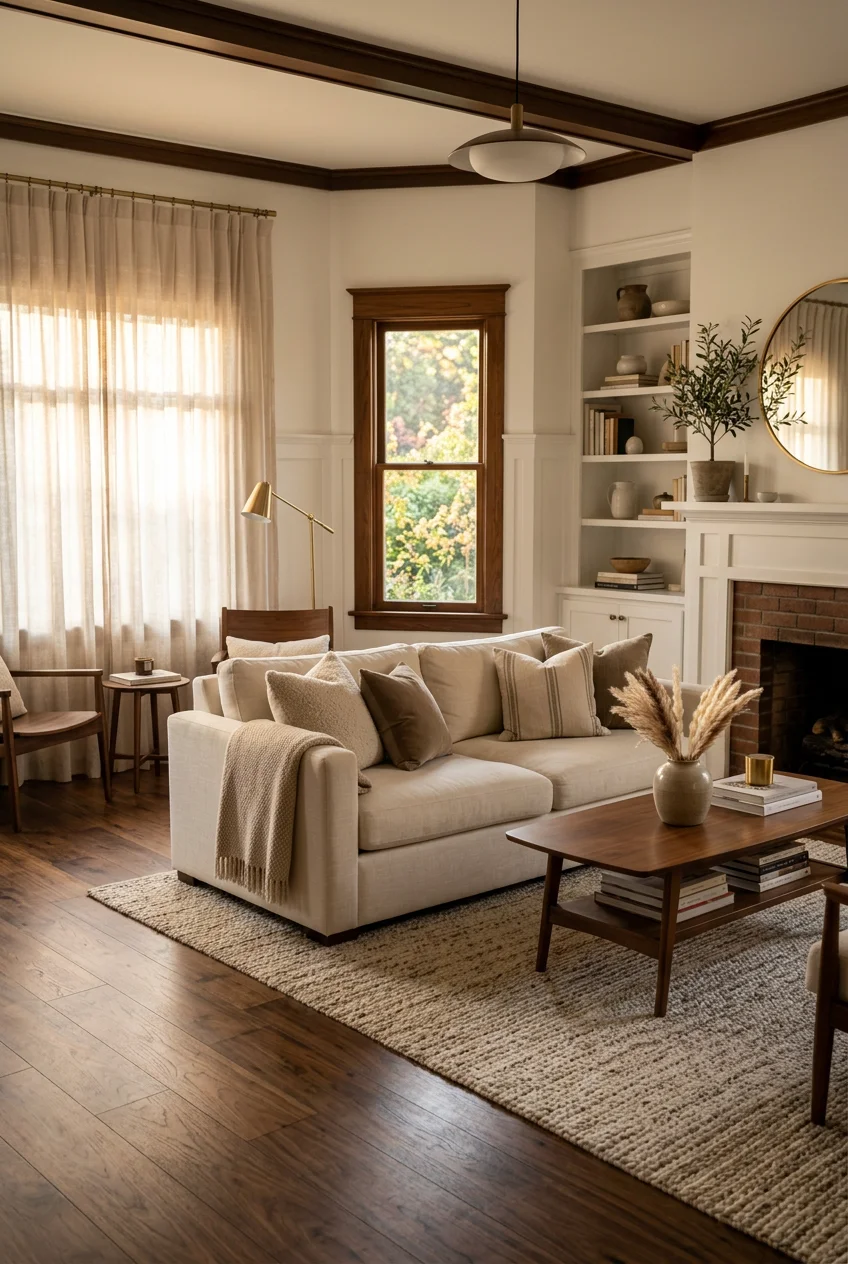
Last November, I sat on my bare floor surrounded by paint swatches, crying because my attempt at a cozy transitional living room looked like a sterile doctor’s waiting area. The stark white walls I picked made the room feel freezing cold, and the cheap, rigid sofa I bought felt like sitting on concrete. The echo in the empty room was awful. It took me six months and a lot of wasted money to realize that achieving the perfect cozy transitional living room requires a specific formula of warm tones, layered textures, and exact measurements. I’m Olivia Bennett, and I’m sharing exactly how I fixed my space so you don’t repeat my expensive mistakes. Let’s fix your layout, pick the right fabrics, and make your home actually comfortable.
1. Establish a Warm, Neutral Base with Paint

I tried a stark, cool white first and hated it. It made my space feel like a hospital cafeteria. You need a warm neutral base to start. I eventually went to my local Ace Hardware and bought two gallons of Benjamin Moore Swiss Coffee for $65.99 each. This shade is a warm white that completely avoids those terrible yellow undertones that make walls look dirty. If you want something slightly darker, Sherwin-Williams Repose Gray is a fantastic greige option that usually runs around $45.00 a gallon. If your room faces north, the light coming in is naturally cooler, so you absolutely need these warm undertones to counteract the chill. I spent three days repainting my walls, and the shift from sterile to inviting was immediate. Don’t skip testing swatches on your wall first. I skipped that step initially and wasted $130 on the wrong paint color. Learned that the hard way. Let’s get the foundation right before buying any furniture. Warm paint sets the tone for everything else in the room.
2. Layer Textures Extensively for Depth

A room full of smooth surfaces feels flat and uninviting. I learned this the hard way when I bought a matching faux-leather sofa and chair set from Target. It looked incredibly cheap and felt sticky in the summer. You build coziness by layering diverse textures instead of just adding more colors. I fixed my flat room by dropping a heavy, chunky-knit wool blanket ($89.50 from West Elm) over the back of my sofa. Then, I layered a thick sisal rug under my seating area. Mixing natural materials like jute, organic linen, and bouclé creates sensory comfort, which is actually a massive 2026 design trend. When I run my hand across the rough sisal and then touch the soft wool throw, the contrast grounds the space. I also grab fresh eucalyptus from Trader Joe’s for $3.99 a bunch every Tuesday to add a living texture to my coffee table. It smells like a sharp, clean forest floor and adds that final layer of depth you can’t get from synthetic fabrics.
3. Invest in a Versatile, Comfortable Sectional

Skip the cheap, stiff couches. They feel like wet cardboard after a month of use. I bought a discount sofa online for $400 once, and the cushions flattened into pancakes within three weeks. For a true cozy transitional living room, you need a sectional that blends modern clean lines with traditional comfort. I highly recommend the Pottery Barn Ember Reversible Chaise Sectional. Depending on the fabric and configuration, it costs between $3,500.00 and $8,200.00. Yes, it’s an investment, but the high-quality construction means it won’t sag. The reversible chaise is incredibly practical because you can flip it if you move to a new house with a different layout. I chose the performance everyday velvet option because it wipes clean when I inevitably spill my morning coffee. The deep seats allow you to actually curl up and relax. A living room isn’t cozy if the primary seating hurts your back or makes you sit rigidly upright.
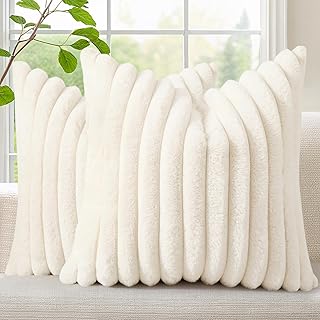
decorUhome Summer Cozy Faux Fur Throw Pillow Covers 18×18
decorUhome Summer Cozy Faux Fur Throw Pillow Covers 18×18 Set of 2 Dec punches above its price — 3 buyers rated it 4.5 stars. I would buy it again.
4. Master Layered Lighting with Warm Tones

Relying solely on harsh overhead lighting is a massive mistake. I lived in an apartment where the only light source was a blinding ceiling fan fixture, and it felt like an interrogation room. You need to layer your lighting at the ceiling, wall, and table heights. I use GE Relax LED bulbs in 2700K warm white, which cost about $9.48 for a four-pack at Walmart. This specific color temperature (2700K to 3000K) mimics the soft glow of late afternoon sun. I put these bulbs in a brass table lamp on my side table and a floor lamp behind my reading chair to create intimate lighting zones. For the ceiling, swapping a standard flush mount for a non-traditional chandelier is a huge 2026 trend. I bought a geometric brass pendant from Crate & Barrel for $299.00. It adds a modern edge while keeping the light soft and diffused. Turn off the big overhead lights and use your lamps. It changes the entire mood.
5. Select the Right-Sized Area Rug

Most people buy rugs that are way too small. I did this in my first house. I bought a 5’x7′ rug for a large room, and it looked like a tiny bath mat floating in the middle of the floor. It made the whole room feel cramped and disjointed. For a standard living room, you need an 8’x10′ or 9’x12′ rug. The front legs of your sofa and accent chairs must sit on the rug to unify the seating area. If you own a massive room, you might even need a 10’x14′ size. I currently use an 8’x10′ Safavieh natural jute rug that I bought on Amazon for $145.99. When placing it, aim for at least 18 to 24 inches of bare floor space between the rug’s edge and the walls. This border frames the space nicely. A properly sized rug completely anchors the room and stops your furniture from looking like it’s floating away into the corners.
6. Hang Curtains High and Wide

Hanging curtains right on the window frame is a rookie error that makes your ceilings look incredibly low. I used to do this until a friend pointed out how squat my windows looked. Now, I mount my curtain rods 4 to 6 inches above the window frame, or exactly halfway between the frame and the ceiling. I also extend the rod 8 to 12 inches beyond each side of the window. This trick makes the windows appear much wider and allows the curtains to stack neatly against the wall without blocking the natural light. I buy the IKEA RITVA curtains, which cost $39.99 for a pair. They have a beautiful linen-like texture. For length, you want them to just skim the floor or lightly puddle by adding 1 to 3 inches of extra fabric. Hemming them too short makes them look like high-water pants. It’s a small measurement detail that dramatically changes the room’s proportions.

CwlwGO- Ceramic Vase Set of 3
CwlwGO- Ceramic Vase Set of 3 punches above its price — 19 buyers rated it 4.5 stars. I would buy it again.
7. Curate Throw Pillows with Purpose

I used to buy cheap, flat pillows that looked completely lifeless on my sofa. The secret to a cozy transitional living room is curating an odd number of throw pillows, usually 3 to 7 depending on your couch’s depth. Start with large 24-inch or 26-inch square pillows in the back. I use 24-inch velvet covers from CB2 that cost $45.00 each. Then, layer down to 22-inch pillows, and finish with a long lumbar pillow in the front. The most critical rule: always buy a feather insert that is one size larger than your cover. If you own a 20-inch cover, stuff a 22-inch insert inside it. I buy the FJÄDRAR inserts from IKEA for $10.00. This makes the pillows look incredibly plump and expensive. Mix your textures by pairing a smooth organic linen with a heavy mohair. Stick to a cohesive color palette, but vary the scales of any patterns you use so they don’t compete visually. You might also like: 15 Charming DIY Cozy Apartments Home Decor Ideas for a Fresh New Look
8. Embrace “Less Is More” to Avoid Clutter

A common mistake in transitional design is stuffing every empty corner with small, meaningless decor objects. I used to buy handfuls of cheap trinkets from Target’s dollar spot, and my living room just looked messy and chaotic. Expert designer Alex Bass suggests avoiding the urge to buy everything at once. You need to let the space develop personality over time. Instead of fifteen tiny picture frames on a console, I now use one massive 40-inch round brass mirror from Crate & Barrel that cost $349.00. It bounces light around the room and acts as a strong focal point. I also hung one large piece of abstract canvas art above my sofa instead of a cluttered gallery wall. Embracing a “less is more” philosophy keeps the space feeling sophisticated and breathable. If you have to dust twenty tiny objects on your coffee table every week, you own too much clutter. Edit your accessories down to the pieces that actually matter. You might also like: 20 Beautiful Home Decor Ideas for Any Style
9. Incorporate Natural Wood Tones

If you only use painted furniture and metal finishes, your room will feel cold and clinical. I made this mistake in my first apartment by pairing a glass coffee table with a mirrored console. It felt like an ice box. You absolutely need natural wood tones to bring warmth and an organic element into a neutral space. I replaced my glass table with the Anton Solid Wood Coffee Table from West Elm, which costs $599.00. The light, natural mango wood instantly softened the entire room. Wood grain adds a subtle visual texture that balances out sleek contemporary sofas and chairs. You don’t need to match all your wood tones perfectly, either. Mixing a light oak side table with a slightly darker walnut console adds collected, authentic character. I often browse the clearance section at Arhaus for solid wood accent pieces. Just one substantial wood piece is enough to ground a transitional room and make it feel lived-in. You might also like: 19 Easter Decor Ideas For The Home Worth Trying

Bathroom Mirror for Wall, 24 Inch Round Mirror
A dependable everyday pick — Bathroom Mirror for Wall pulls in 788 ratings at 4.5 stars. Not flashy, just solid.
10. Add Subtle Metallic Accents

While transitional decor is generally modest and restrained, completely avoiding metallics makes a room feel dull. I used to be terrified of mixing metals, sticking strictly to matte black everything. It looked incredibly flat. Adding subtle metallic accents introduces a necessary hint of glamour. I recently swapped the boring wooden knobs on my media console for heavy, unlacquered brass hardware I found at Rejuvenation for $18.00 per pull. The brass catches the light beautifully and adds a classic warmth. I also added a small side table with polished chrome legs next to my linen armchair. The reflective chrome provides a sharp, contemporary contrast to the soft, organic fabrics. The key is subtlety. You aren’t trying to create a nightclub; you’re just adding small, reflective moments. Don’t go overboard with shiny gold spray paint on every surface. A brass lamp base or a chrome tray on the coffee table is all you need.
11. Prioritize Quality Over Quantity

I spent my early twenties buying cheap particleboard furniture that fell apart every time I moved. I bought a TV stand for $80 that literally crumbled when I tried to slide it across the carpet. Interior designers constantly emphasize prioritizing quality over quantity, and they’re right. You need to invest heavily in the “backbone” pieces of your living room: the sofa, the rug, and the primary storage console. I finally saved up and bought a solid wood media console from Room & Board for $1,200.00. I’ve had it for six years, and it still looks brand new. When you buy high-quality foundational pieces, you only have to update your inexpensive accessories, like throw pillows or a $15.00 ceramic vase from Target, when trends change. Stop wasting money on trendy, poorly made furniture that ends up in a landfill after two years. Buy fewer things, but make sure the things you do buy are built to last.
12. Integrate 2026 Trends: Sustainable Textures

The upcoming 2026 home decor trends are heavily focused on sustainability and sensory comfort. We’re moving away from synthetic, plastic-feeling fabrics and toward raw and honest materials. I recently switched to an organic linen slipcover for my reading chair, and the breathable texture is incredible. I also bought a washable natural fiber-style rug from Ruggable. I got the 8’x10′ size for $359.00, though they offer sizes ranging from 5’x7′ up to 10’x14′. It gives me that beautiful, earthy jute look, but I can actually throw it in my washing machine when my dog tracks mud inside. Incorporating reclaimed wood is another easy way to hit this trend. I found a small stool made of reclaimed barn wood at a local antique shop for $45.00, and I use it as a drink table. These sustainable textures make the room feel grounded and intentional, proving that eco-friendly choices can look incredibly chic.

Ceramic Vase Set of 3, Vases Home Decor
Ceramic Vase Set of 3 punches above its price — 30 buyers rated it 4.5 stars. I would buy it again.
13. Pull Furniture Away from Walls

This is my favorite surprising tip, and it costs exactly zero dollars. Stop shoving all your furniture tight against the walls. I did this for years because I thought it made the middle of the room look bigger. In reality, it made my living room look like a high school dance where everyone is awkwardly standing at the edges. Pulling your sofa and chairs just three to four inches away from the wall creates necessary breathing room. It instantly makes the space feel cozier and more intimate. If you own an open-concept space, pull the furniture entirely off the walls to create a dedicated conversation zone in the center of the room. I floated my Pottery Barn sofa in the middle of my living room, facing two accent chairs. It completely changed the flow of the house. People actually sit and talk now instead of shouting across a massive, empty expanse of rug. Try it today.
14. Utilize Cozy TV Screensavers

A giant black television screen is an eyesore in a carefully decorated room. I hate how my 65-inch TV looks like a massive black hole on my wall when it’s turned off. Here’s a surprising trick I use every single evening: I turn on a cozy TV screensaver. I pull up the YouTube app on my Roku and search for a 4K crackling fireplace or an autumn rain window scene. It instantly turns that ugly black rectangle into a warm visual focal point. The ambient light it casts is incredibly soothing. Sometimes I use the built-in art gallery mode on my Samsung Frame TV, which I bought on sale at Costco for $999.99, displaying a muted vintage landscape painting. It provides a cozy ambiance without requiring me to buy or store extra seasonal decor. It’s a free, instant mood upgrade that makes the whole room feel warmer, especially on gloomy winter afternoons when you just want to curl up.
15. Avoid the Mistake of Poor Scaling and Circulation

You can buy the most beautiful furniture in the world, but if the scale is wrong, your room will feel awful. I once bought a massive, overstuffed armchair that completely blocked the pathway to my kitchen. I banged my shin on it every morning for a month before I finally sold it on Facebook Marketplace. You must ensure your walkways have at least 30 inches of clear space for comfortable movement. Grab a tape measure before you buy anything. Keep this expert design rule in mind: your largest furniture piece shouldn’t exceed about 60 percent of the length of the wall it sits against. If you have a 10-foot wall, your sofa shouldn’t be longer than 6 feet or 72 inches. I bought a 70-inch sofa from Crate & Barrel for $1,499.00 specifically to fit this ratio on my living room wall. Getting the scale right ensures your room feels spacious and intentional, not cramped and accidental.
Creating a beautiful space doesn’t mean you have to be miserable or broke. It just takes a bit of planning and a tape measure. I’m so glad I stopped buying cheap, flat furniture and finally invested in the right textures and measurements. If you’re struggling with your layout, start with the rug size and work your way up. I promise it makes a difference. Pin this guide so you have all these exact measurements handy the next time you’re standing in the middle of Target trying to decide what size pillow insert to buy!

QUBA LINEN 18 x 18 Throw Pillow Insert – Pack of 2 White
Honestly, QUBA LINEN 18 x 18 Throw Pillow Insert – Pack of 2 White surprised me — sturdier than it looks in the photos, and over 29 buyers gave it 4.5 stars.
Frequently Asked Questions
What defines a cozy transitional living room?
It blends traditional elegance with modern, clean lines. You achieve this by mixing comfortable, classic furniture silhouettes with contemporary neutral colors and layered natural textures. It’s about balancing warmth and sophistication without feeling overly formal.
How do I make a large transitional living room feel cozy?
Pull your furniture away from the walls to create intimate conversation zones. Use a large area rug, like a 10’x14′ size, to anchor the seating arrangement. Layering heavy textures like wool throws and linen curtains also absorbs sound and adds warmth.
What are the best paint colors for a transitional space?
Warm neutrals work best. Benjamin Moore Swiss Coffee offers a creamy white without yellow undertones, while Sherwin-Williams Repose Gray provides a sophisticated greige. Always test swatches, as your room’s natural lighting drastically changes how these colors appear on the wall.
Can I mix metals in a transitional living room?
Yes, mixing metals adds visual interest. Pair a matte black light fixture with unlacquered brass cabinet hardware or a polished chrome side table. Keep the metallic accents subtle to maintain a calming atmosphere rather than letting them overpower the room.
