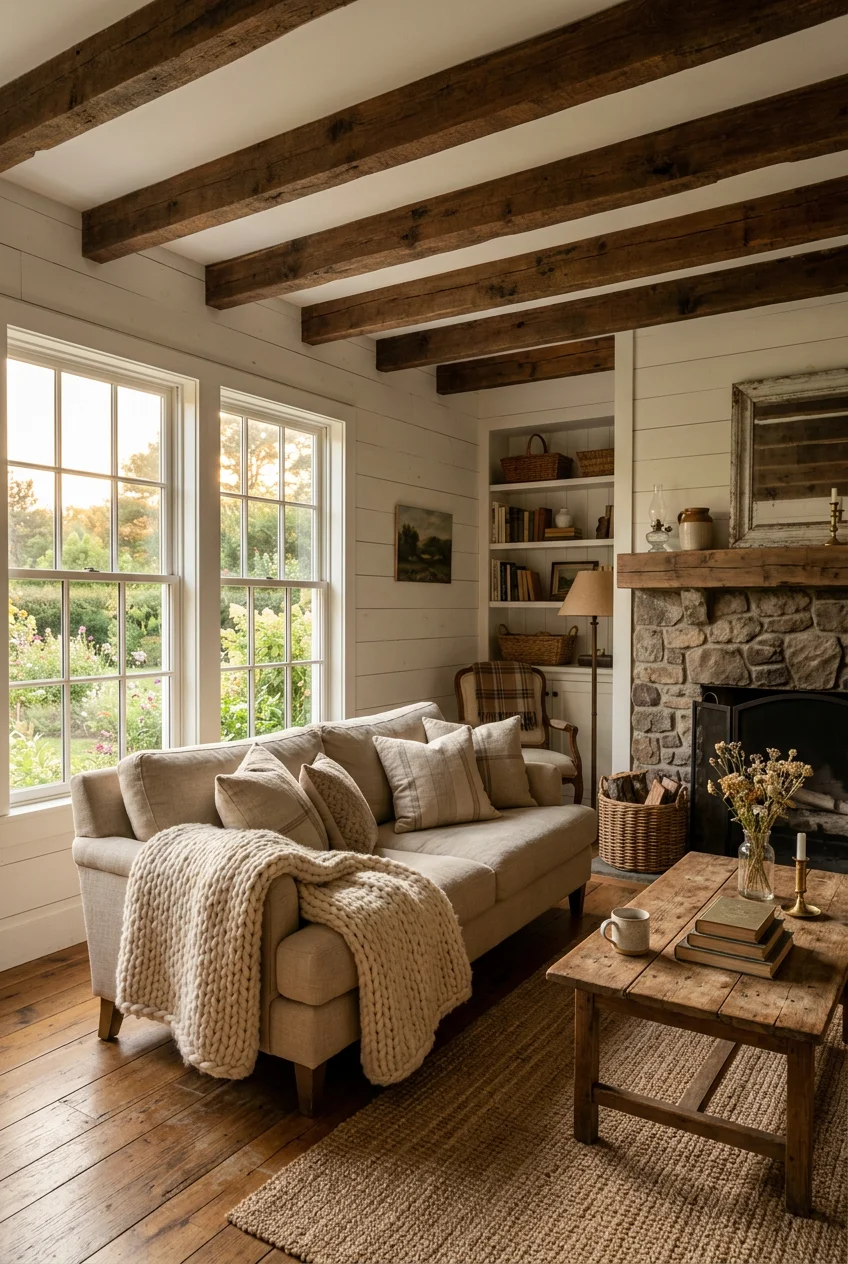
What’s Inside
- Embrace Warm Neutrals and Earthy Tones for 2026
- Layer Natural Textiles for Depth and Comfort
- Thoughtfully Mix Modern and Vintage Furniture
- Incorporate Moody Hues as Strategic Accents
- Prioritize Natural Light and Light Window Treatments
- Choose Lighting Fixtures with Character
- Add Architectural Details for Authenticity
- Embrace Curves and Softer Silhouettes
- Integrate Greenery and Natural Elements (Real Preferred)
- Avoid Clutter by Curating Your Cottage Farmhouse Decor
- Mix Materials and Textures Confidently
- Add Surprising, Unique Details
- Don’t Shy Away from Eclectic Wallpaper
- Invest in Quality, Authentic Pieces for Cottage Farmhouse Decor
- Create a Welcoming Porch or Entryway
Last Tuesday, I stood in my living room staring at a wall I’d just painted a stark, hospital white. I’d spent three days prepping and taping, only to realize my attempt at cottage farmhouse decor looked completely sterile and cold. That’s the hard truth about getting this style right. If you just copy what you see on social media without understanding the textures and tones, you end up with a room that feels like a dentist’s waiting area. Let’s fix that. I’ve spent the last four years making every design mistake possible in my own 1920s bungalow. I bought cheap faux-distressed furniture that chipped after a week. I hung heavy drapes that made my tiny living room feel like a cave. Learned that the hard way. Now I know better. Here’s exactly how to get that warm, lived-in look without making your house feel like a theme park.
1. Embrace Warm Neutrals and Earthy Tones for 2026

Instead of stark whites, you need a foundation of creamy whites, soft taupes, and muted clay tones. I painted my entire main floor with Sherwin-Williams ‘Accessible Beige’ ($74.99 per gallon) last October. The difference is immediate. The stark white I tried previously made my vintage wood pieces look dirty by comparison. The warm beige actually pulls the honey tones out of the wood. You’re trying to create a backdrop that feels approachable and soft. When I tested Benjamin Moore ‘White Dove’ ($69.99 per gallon) in my hallway, I realized the slight yellow undertone kept the space from feeling clinical under my LED lights. Skip the pure brilliant white base paints. They reflect too much blue light and make natural fabrics look dingy. You need that subtle warmth to anchor the space. I used three gallons for my living room, applying two coats. The real benefit is how the color shifts from soft cream in the morning to rich taupe by sunset. Trust me on this.
2. Layer Natural Textiles for Depth and Comfort

A room full of flat cotton looks cheap. You have to mix linen, heavy cotton ticking, and wool to get that tactile richness. I keep a Pottery Barn Belgian Flax Linen throw blanket ($129.00, 50×60 inches) draped over my reading chair. I chose this specific one because it actually softens after you wash it, unlike the stiff synthetic blends I bought at Target two years ago that pilled immediately. For my main sofa, I went with Revolution Fabrics’ 100% polypropylene upholstery ($35.00 per yard). It has a 30,000 double-rub rating, which means my dog’s claws won’t shred it in a month. I learned this the hard way after ruining a delicate linen slipcover in less than six weeks. You need fabrics that can handle actual life. I also bought two yards of 100% cotton ticking stripe fabric from JoAnn Fabrics ($14.99 per yard) and sewed simple 20×20 inch pillow covers. The heavy, slightly rough texture of the ticking contrasts perfectly against the smoother linen throw. That friction between different natural materials is what makes a room feel finished.
3. Thoughtfully Mix Modern and Vintage Furniture

If you buy a matching living room set, your house will look like a catalog showroom. You have to blend new upholstery with actual vintage pieces. Last month, I bought a new slipcovered sofa from FROY for $899.00. It has clean, modern lines and a washable cover. But I paired it with a salvaged 19th-century pine chest I found at a local flea market for $150.00. The chest has water rings and a slightly warped top. That damage is the point. Interior designer Marie Flanigan often notes that vintage furnishings add essential character to a room. When everything is brand new, the room lacks history. I tried using a mass-produced ‘distressed’ coffee table from Ashley Furniture a few years ago. It looked fake because the distress marks were perfectly symmetrical. I sold it on Facebook Marketplace for $40 and bought the real pine chest instead. You’re looking for pieces with genuine patina. Look for solid wood construction and hardware that shows actual oxidation, not painted-on rust.

Artisan Set of 4 Silver Beveled Wall Decor Mirrors
Artisan Set of 4 Silver Beveled Wall Decor Mirrors – 24×8 Inch Each punches above its price — 214 buyers rated it 4.5 stars. I would buy it again.
4. Incorporate Moody Hues as Strategic Accents

Cottage farmhouse design isn’t just white and beige. You need darker, moodier tones to ground the space. I painted my kitchen island in Benjamin Moore ‘Hunter Green’ ($69.99 per gallon in their Advance cabinet formula). I used a quart of it, applying it with a high-density foam roller to avoid brush marks. The deep forest green completely changed how the room feels. Before I added the green, the all-white kitchen looked flat and uninteresting. You can also use navy blue or burnt terracotta. I bought two terracotta-colored velvet pillow covers from West Elm ($39.50 each, 18×18 inches) for my guest bedroom. The rich color breaks up the neutral bedding. A lot of people are afraid of dark colors in farmhouse spaces. I was too. I lived with a completely beige living room for two years before I finally painted the built-in bookshelves a dark charcoal gray. The dark background actually makes my white ironstone collection stand out more. You just need to use these moody hues deliberately on a single feature wall, a piece of furniture, or through heavy textiles.
5. Prioritize Natural Light and Light Window Treatments

Heavy, dark drapes will ruin the airy feel of this style. You want as much natural sunlight as possible. I replaced my old, heavy blackout curtains with custom linen panels from Barn & Willow ($185.00 per 50×96 inch panel). They’re lined with a basic cotton privacy lining, not a blackout lining. This means the morning sun still filters through, casting a soft glow across the room. I tried cheaper polyester sheer curtains from Walmart first ($14.99 a pair), but they had a shiny, plastic look under artificial light. Linen has a matte, slightly rumpled texture that fits the aesthetic perfectly. Hang your curtain rods high and wide. I mount my matte black steel rods ($34.99 from Target) four inches below the ceiling and extend them eight inches past the frame. This makes the windows look twice as large, and open curtains won’t block the glass. This is crucial because farmhouse design relies heavily on bright, natural illumination to highlight the subtle textures of the wood and fabrics in the room.
6. Choose Lighting Fixtures with Character

Builder-grade flush mount lights are the enemy of character. You need fixtures that look like they have a history. I swapped out the basic dome light in my kitchen for the Kira Home Liberty 4-Light Industrial Farmhouse Kitchen Island Light ($149.99 on Amazon). The oil-rubbed bronze finish and exposed bulbs immediately gave the room a focal point. However, I did make a mistake initially. I bought cheap LED Edison bulbs from the hardware store that emitted a harsh, blue-toned light. It made my warm beige walls look sickly. I quickly replaced them with GE Vintage Warm Candle LED bulbs ($12.99 for a two-pack) that mimic the warm 2100K glow of traditional incandescent bulbs. The color temperature of your lighting matters just as much as the fixture itself. I also installed two brass wall sconces from Wayfair ($65.00 each) in my reading nook. They provide dedicated task lighting and add a layer of metallic warmth to the space. You don’t have to spend a fortune on lighting, but you do need to avoid generic frosted glass domes. Look for materials like wrought iron, aged brass, or seeded glass. You might also like: 20 Living Room Decor Curtains for Every Budget

Ceramic Vase for Flowers
Honestly, Ceramic Vase for Flowers – Modern Small Ribbed Textured Flower Vase fo surprised me — sturdier than it looks in the photos, and over 646 buyers gave it 4.5 stars.
7. Add Architectural Details for Authenticity

Plain drywall is boring. Adding architectural details like shiplap, beadboard, or wainscoting gives your home a genuine structural base. I installed beadboard halfway up the walls in my tiny powder room last spring. I bought 4×8 foot MDF beadboard sheets from Home Depot for $32.98 each. I cut them to 48 inches high, glued them with Liquid Nails, and capped them with 2-inch pine trim ($1.15 per linear foot). It completely erased the cookie-cutter feel. Designer Heidi Caillier recommends creating an architectural base with paneling or beams to tell a complete design story. I completely agree. A few years ago, I tried to fake a rustic look just by hanging a bunch of wooden signs. It looked terrible and cluttered. The beadboard actually changes the bones of the room. If you’re doing shiplap, buy the actual interlocking pine boards ($14.50 for an 8-foot board), not the cheap peel-and-stick vinyl planks. The vinyl looks shiny and fake in the sunlight, and the adhesive usually fails after a few months. You might also like: 20 Cozy Wall Decor Ideas for Every Budget
8. Embrace Curves and Softer Silhouettes

Modern farmhouse design in 2026 is moving away from sharp, rigid lines. You need to incorporate organic curves to soften the space. I recently swapped out my harsh, rectangular metal coffee table for a round, light oak table from the Studio McGee line at Target ($249.99, 36-inch diameter). The rounded shape makes the living room flow better, especially since the space is small and we used to constantly bump our shins on the corners of the old table. I also replaced my straight-backed wooden dining chairs with two upholstered barrel chairs from World Market ($199.99 each) at the heads of the table. The curved backs provide much better lumbar support, and the softer silhouette contrasts nicely with the heavy, straight lines of my reclaimed wood dining table. You don’t need to replace all your furniture. Just look for opportunities to add a curved lamp base, a round mirror, or a circular jute rug. I bought a 30-inch round brass mirror from Crate & Barrel ($199.00) for my entryway, and it breaks up the sharp angles of the front door and the console table perfectly.
9. Integrate Greenery and Natural Elements (Real Preferred)

Fake plastic plants collect dust and look cheap. You need real, living greenery to bring fresh life into your rooms. I buy a bunch of fresh silver dollar eucalyptus from Trader Joe’s every Tuesday for $3.99. I trim the stems at a 45-degree angle and keep them in a heavy, galvanized metal pitcher ($24.50 from a local antique mall) on my kitchen island. The eucalyptus lasts for about three weeks and smells incredible. I tried using faux ivy vines draped over my kitchen cabinets a few years ago. It looked incredibly dated, like a 1990s Italian restaurant. I took them all down and replaced them with two real Pothos plants in simple white ceramic pots ($14.99 each from Ikea). Pothos are almost impossible to kill, even if you forget to water them for a week. The key is to use authentic containers. Skip the shiny plastic nursery pots. Repot your plants into aged terracotta, galvanized steel, or glazed ceramic. The organic texture of real leaves mixed with raw, natural materials is a cornerstone of this design style. You might also like: 17 Cozy Living Room Inspiration Worth Trying

3D Wooden Floral Bathroom Wall Decor (Set of 4) Lightweight
If you want something that just works, 3D Wooden Floral Bathroom Wall Decor (Set of 4) Lightweight is a safe bet (634 reviews, 4.5 stars).
10. Avoid Clutter by Curating Your Cottage Farmhouse Decor

This is where most people fail. They buy every cute wooden sign and galvanized bucket they see until their house looks like a crowded antique shop. You have to edit your belongings. I used to have my open kitchen shelving packed with fifteen different coffee mugs, three teapots, and a bunch of random knick-knacks. It looked messy and made me anxious. Last January, I boxed it all up. Now, I only display a curated collection of seven vintage white ironstone pitchers. I found most of them at Goodwill for around $4.99 to $8.99 each. The uniform white color looks clean and intentional against the dark green wall behind the shelves. Cottage farmhouse decor should feel cozy, not chaotic. Choose fewer, higher-quality items that actually serve a purpose. If you have vintage rolling pins, display them together in one large crock rather than scattering them. Grouping items creates visual impact without feeling cluttered. I limit myself to three decorative items per surface. Any more becomes a chore to dust.
11. Mix Materials and Textures Confidently

You can’t just use wood and metal. You have to layer different finishes to create visual interest. In my dining room, I have a heavy reclaimed wood table from Bassett Furniture ($1,299.00, 72 inches long). The wood is rough and matte. To contrast that, I hung a smooth, shiny glass and black iron chandelier above it. On the table, I keep a woven water hyacinth tray from Target ($25.00) holding a smooth ceramic vase. I bought a cheap, matching wooden tray a few years ago, but it just blended into the table and looked completely flat. You need that friction between rough and smooth, shiny and matte. I also bought a set of galvanized metal wall planters from Kirkland’s ($24.99 each) for the patio. The dull, gray metal looks great against the warm, red brick of the house siding. Don’t be afraid to mix brass cabinet hardware with a matte black kitchen faucet. The old rules about matching all your metals are outdated. Mixing finishes makes the room look like it was collected over time rather than purchased all at once from a single catalog.
12. Add Surprising, Unique Details

If you only buy mass-produced items, your home will look like a trendy knockoff. You need unique, historically accurate details to make the space feel genuine. When we renovated our kitchen, I insisted on a backsplash made of authentic Moroccan zellige tiles from Cle Tile ($19.50 per square foot). They are handmade, so no two tiles are exactly the same color or thickness. The installation was a nightmare. My contractor hated working with them because you can’t use standard spacers, and the grout lines are irregular. But the finished result is stunning. The glossy, uneven surface reflects light beautifully and adds a layer of texture that standard subway tile just can’t achieve. I also spent three weekends hunting down antique glass doorknobs on eBay. I paid about $45.00 for a set of two with the original brass backplates. I installed them on my pantry and linen closet doors. It’s a tiny detail, but every time I grab that heavy, faceted glass knob, the house feels older and more established. You only need two or three of these surprising elements to completely change the vibe of a room.

Vintage Vase Set of 3, Ceramic Vintage Flower Vases
A dependable everyday pick — Vintage Vase Set of 3 pulls in 306 ratings at 4.5 stars. Not flashy, just solid.
13. Don’t Shy Away from Eclectic Wallpaper

Wallpaper isn’t just for formal dining rooms. It adds incredible personality to smaller farmhouse spaces. I installed Rifle Paper Co.’s ‘Peacock’ vintage floral wallpaper ($115.00 per roll) in my tiny downstairs powder room. The dark navy background with muted green and terracotta botanicals completely altered the boring 5×5 foot space. I bought three rolls and used a premixed Roman PRO-543 wallpaper paste ($18.98 a gallon from Lowe’s). I will admit, matching the 24-inch pattern repeat was frustrating, and I definitely wasted half a roll cutting it wrong. But the result is worth it. It gives the room a moody, historic feel that paint alone couldn’t achieve. If you’re nervous about wallpaper, don’t put it in a main living area. Start with an entryway, a laundry room, or just the back panel of a glass-front cabinet. Opt for muted colors and classic patterns like subtle ticking stripes, block-print botanicals, or classic William Morris designs. Avoid anything overly geometric or neon. The goal is to make it look like the wallpaper has been there for fifty years, gently fading over time.
14. Invest in Quality, Authentic Pieces for Cottage Farmhouse Decor

Stop buying cheap, faux-distressed decor. It makes your whole house feel flimsy. You’re much better off saving up for one artisan-crafted piece than buying ten cheap plastic signs. I bought a handmade ceramic pitcher from Farmhouse Pottery in Vermont ($145.00, 64 oz size) three years ago. Yes, it was expensive for a pitcher. But the weight of the clay, the visible wheel-thrown ridges, and the raw unglazed base make it a piece of art. I use it every day for water or holding flowers. Conversely, I bought a lightweight resin pitcher from a discount store for $12 once. It tipped over constantly and the white paint chipped off the handle within a month. Quality matters. Cheap materials aren’t worth the money and just look worse over time. For textiles, prioritize durable cotton canvas or heavy linen. I buy heavy linen pillow covers from a small shop on Etsy called MagicLinen ($38.00 for a 20×20 cover). The fabric is thick and holds its shape on the sofa, unlike the thin polyester covers that look deflated after you lean on them once. Authentic materials age beautifully.
15. Create a Welcoming Porch or Entryway

Your porch sets the tone for the entire house. It needs to be comfortable and functional, not just decorative. Last spring, I bought two cedar trellis flower boxes from Wayfair ($89.99 each, 36 inches tall) and placed them on either side of my front door. I planted real climbing jasmine in them. The smell when you walk up to the house is incredible. I also invested in a solid pine Farmhouse Porch Swing from Chic Artique ($450.00, 5-foot length). I hung it using heavy-duty galvanized chain ($2.50 per foot at Home Depot) anchored directly into the porch joists. I spent hours reading the installation manual because I was terrified it would pull out of the ceiling. It holds up perfectly. I keep two outdoor-rated pillows on it, covered in Sunbrella fabric ($45.00 each) so they won’t fade in the afternoon sun. I used to just have a tiny, uncomfortable metal bistro set on the porch that no one ever sat in. Now, I drink my coffee on the swing every morning. A proper farmhouse entryway should invite you to sit down and stay a while.
Getting this style right takes patience. You can’t just run to a big box store and buy a pre-packaged farmhouse room. It’s about slowly layering natural textures, mixing in real vintage pieces, and choosing paint colors that add warmth rather than starkness. I’ve spent years buying the wrong things (heavy drapes, fake distressed wood, and cheap plastic greenery) before I figured out that authenticity is the only thing that actually works. Start small. Paint a room a warm beige, swap out a builder-grade light fixture, or buy a real plant. If you found these tips helpful, pin this article to your home decor board so you can reference the exact paint colors and fabric types later. I’d love to hear which of these changes you’re going to try first!

Vanselia Ceramic Flower Vase Home Decor
Vanselia Ceramic Flower Vase Home Decor – Farmhouse Table Vases Rustic punches above its price — 786 buyers rated it 4.5 stars. I would buy it again.
Frequently Asked Questions
What paint colors work best for cottage farmhouse decor?
Skip stark whites and opt for warm neutrals like creamy whites, soft taupes, and muted clay tones. Sherwin-Williams ‘Accessible Beige’ or Benjamin Moore ‘White Dove’ provide an inviting backdrop that highlights natural wood textures without feeling clinical.
How do I avoid a cluttered farmhouse look?
Stop buying mass-produced wooden signs and knick-knacks. Instead, curate your belongings by grouping similar high-quality items together, like a collection of vintage ironstone pitchers. Limit yourself to three decorative items per flat surface to keep the space cozy but clean.
Can I use dark colors in a farmhouse style home?
Yes, moody hues are essential for grounding the space. Deep forest green, navy blue, or burnt terracotta work beautifully on a kitchen island, a feature wall, or through heavy textiles like velvet pillows. Dark backgrounds actually make vintage white decor pop.
What type of window treatments fit the cottage aesthetic?
Avoid heavy blackout drapes that block natural light. Choose light, airy curtains made of natural linen or cotton with a basic privacy lining. Hang your matte black or brass curtain rods high and wide to make the windows appear larger.
