What’s Inside
- Master The 1.5x Height Rule For Big Vases Decor Living Room
- Stashing Blankets In A Wide-Mouthed Floor Vase
- Treating Jumbo Vases Like Standalone Sculptures
- Picking The Right 24 To 48-Inch Height
- Investing In Realistic Budding Branches
- Grouping Matte Ceramic With Grooved Terracotta
- Limiting Pampas Grass To Just 3-5 Stems
- Framing The Sofa Instead Of Blocking The Window
- Matching Sprawling Stems To Wide Openings
- Grounding Big Vases Decor Living Room Corners With A Rug
- Pointing Warm 3000K Light At Earthy Textures
- Filling The Bottom With Play Sand For Stability
- Mixing Artisanal Glazes With Modern Metal
- Using Fresh Monstera Leaves From The Grocery Store
- Pouring Real Water In Glass Vases For Fake Stems
- Painting Thrift Store Finds With Baking Soda
- Swapping Heavy Branches For Bare Winter Twigs
- Elevating Short Vases With Hidden Plant Stands
- Sourcing The Form Studies Ceramic Collection
I bought a massive, $150 glass floor vase last October, filled it with a skimpy bunch of faux eucalyptus from Target, and stepped back to admire my big vases decor living room setup. It looked exactly like a lonely celery stalk floating in a water cooler. That disaster forced me to actually study how to scale and style large vessels without making my house look like a neglected hotel lobby. I’ve spent the last few months figuring out exactly why some oversized pieces look intentional while others just look like accidental clutter. Let’s walk through the specific rules and pieces that actually work in real spaces, skipping the generic advice that leaves you with an awkward, heavy jar in the corner.
1. Master The 1.5x Height Rule For Big Vases Decor Living Room

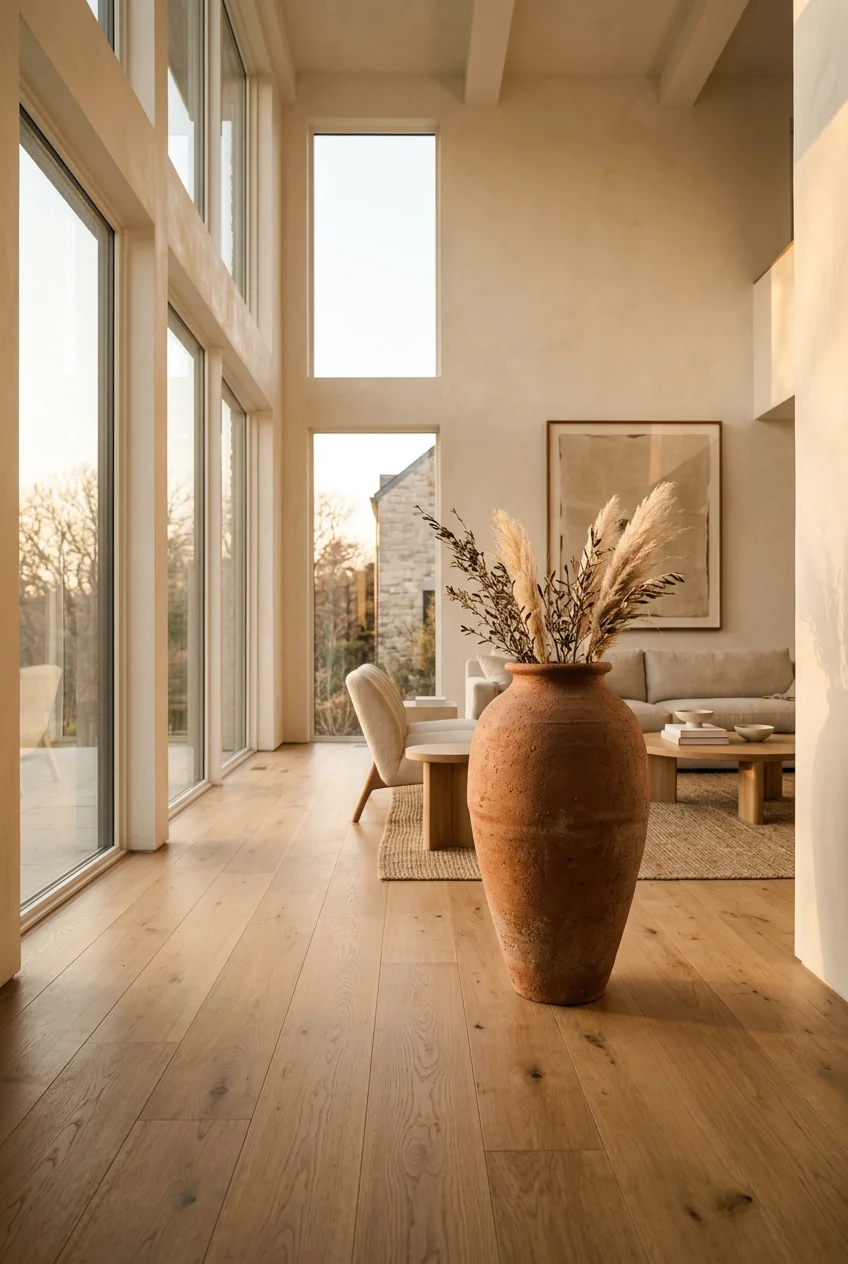
I tried stuffing a 24-inch floor vase with 20-inch dried stems I found at Sprouts last spring. The proportions were entirely wrong. The stems barely peeked over the rim, making the whole arrangement look squat and heavy. A common mistake is ignoring the relationship between the vessel and its contents. If the proportions aren’t correct, it looks terrible. For a balanced look, your chosen branches or flowers should be approximately 1.5 times the height of the vase itself. If you’re using a 30-inch tall ceramic base, your branches need to reach about 45 inches into the air. I fixed my Sprouts disaster by swapping those short stems for a bundle of 42-inch Artificial Budding Flower Branches from Afloral. They cost $28 per stem, which felt steep initially, but the visual math finally worked. The extra height draws the eye upward toward the ceiling, making my standard 8-foot living room walls feel significantly taller.
2. Stashing Blankets In A Wide-Mouthed Floor Vase

Most people assume oversized pottery only exists to hold dead plants. I figured this out by accident when I ran out of storage in my media console. A wide-mouthed, sturdy floor vase cleverly stores rolled throws or blankets, blending a sculptural aesthetic with actual functionality. I use a massive 22-inch woven water hyacinth basket-vase I grabbed at Target for $45. I keep three rolled-up fleece blankets inside it next to the sectional. It’s particularly useful in smaller living spaces where you don’t have room for a dedicated storage ottoman. The trick is rolling the blankets tightly like yoga mats so they stand vertically. Don’t use a glass vase for this. I tried it once with a clear glass cylinder, and seeing the squished fabric pressed against the glass looked incredibly messy. Learned that the hard way.
3. Treating Jumbo Vases Like Standalone Sculptures

The trend is moving toward jumbo vases that act as standalone art. You don’t always need to fill them. I used to feel pressure to cram something into every single vessel I owned. Last November, I bought the Pompeii White Oversized Ceramic Floor Vase (the 29-inch version) from Crate & Barrel for $299.00. I brought it home, set it near my fireplace, and realized adding branches actually ruined its clean, architectural lines. Look for oversized ceramic or glass urns that resemble outdoor planters with heavy, textured finishes. An empty, sculptural piece with a matte porcelain or crafted wood finish stands on its own. The negative space above the empty rim actually provides a visual break in a busy room.

UTTCMK Bookshelf Decor Thinker Statue
UTTCMK Bookshelf Decor Thinker Statue – Abstract Art Reading Thinker S has been one of the most consistently praised picks in this category. 809 reviewers averaged 4.5/5.
4. Picking The Right 24 To 48-Inch Height

Scale is the easiest thing to get wrong when shopping online. I once ordered what I thought was a floor vase from Walmart, only to unbox a 12-inch jar that looked ridiculous sitting on my rug. For most living rooms, a floor piece between 24 to 48 inches in height makes the most significant impact. You want the height of your piece to be about one-third to one-half of the closest vertical element, such as a window frame or a tall bookcase, to ensure visual harmony. I currently have a 36-inch dark bronze metal vase sitting next to my 72-inch media console. The halfway mark feels intentional and grounded. If you go under 24 inches, it just looks like a tabletop item that fell off a desk. Always pull out a physical tape measure before you hit checkout.
5. Investing In Realistic Budding Branches

While fresh botanicals smell amazing, keeping them alive in a massive floor vessel requires hauling gallons of water across your living room. I spilled dirty, stagnant flower water all over my vintage rug last summer trying to empty a heavy glass urn. Since then, I’ve switched entirely to high-quality artificial branches for my floor pieces. They offer consistent beauty without the murky water upkeep. Afloral offers incredibly realistic options like their Tall Green Budding Branches. They usually run between $20 to $50 per stem depending on the realism and size. I bought three stems of the 42-inch faux olive branches for $35 each. The silk leaves have slightly varied green tones, and the stems are wired so you can bend them to mimic natural growth.
6. Grouping Matte Ceramic With Grooved Terracotta

A single vase pushed into a corner often looks like an afterthought. I prefer creating a micro-scene by combining two or three large pieces with varied textures to enrich the depth of the room. Last weekend, I paired a sleek 24-inch matte white ceramic cylinder with a 16-inch grooved terracotta pot I found at a local garden center for $32. The contrast between the smooth, cold ceramic and the rough, warm clay makes the grouping look curated rather than bought from a single catalog page. This layered approach allows for easy seasonal adjustments. You can swap out the shorter piece while leaving the heavy anchor piece in place. When grouping, make sure the heights vary by at least 6 to 8 inches. If they aren’t staggered, they look like awkward twin pillars rather than an organic collection. You might also like: 20 Small Living Room Decor Ideas You Need to See

Farmhouse White Fake Decorative Books for Home Office Decor
Honestly, Farmhouse White Fake Decorative Books for Home Office Decor – Religion surprised me — sturdier than it looks in the photos, and over 10 buyers gave it 4.5 stars.
7. Limiting Pampas Grass To Just 3-5 Stems

I fell hard for the pampas grass trend two years ago. I bought a bundle of 20 fluffy stems and shoved them all into a narrow-necked ceramic jar. It looked like a giant, dusty feather duster and shed everywhere whenever someone walked past. Resist the urge to cram too many branches into your vase. Overstuffing hides the beauty of individual elements and makes the arrangement look cluttered. For large, fluffy pampas grass, 3 to 5 high-quality stems are usually sufficient for a large floor display. You want negative space between the plumes so light can pass through them. I currently use just three 48-inch dried pampas stems (about $18 each from an Etsy seller) in a wide-mouthed concrete vessel. It highlights the natural arch of each stem. You might also like: 20 Apartment Bedroom Decor Worth Trying
8. Framing The Sofa Instead Of Blocking The Window

Placement dictates whether your decor looks expensive or annoying. Don’t just stick a heavy jar in a random empty corner. Expert designers recommend placing large pieces to frame movement, such as beside media consoles, at the ends of sectionals, or bridging the gap between a sofa and a wall. I made the mistake of placing a tall, opaque ceramic urn right in front of my low living room window. It blocked the morning sunlight and cast a weird, long shadow across the coffee table. Now, I use a 28-inch textured charcoal vase at the end of my chaise lounge. It acts as a visual stop for the sofa without obstructing any natural light or high-traffic walking paths. If you have to walk around it carefully to avoid knocking it over, it’s in the wrong spot. You might also like: 16 Home Decor Ideas Bedroom for Every Budget
9. Matching Sprawling Stems To Wide Openings

If you plan to use voluminous fillers like large, sprawling oak branches or heavy magnolia leaves, you must choose a base with a wide mouth. I tried forcing three thick faux cherry blossom branches into a vase with a tiny 3-inch opening. The stems were squeezed so tightly together that the branches stuck straight up in a stiff, unnatural column. A wide mouth accommodates the volume and allows the stems to lean outward at an angle, preventing a sparse, rigid look. I found a massive glass jug at Whole Foods in their floral section for $24.99 with an 8-inch opening. When I drop branches in, they naturally splay out and take up horizontal space. This mimics how a real tree branch grows. If you’re using heavy branches, the opening needs to be at least 6 inches wide.

Govee RGBIC Floor Lamp Basic
Govee RGBIC Floor Lamp Basic punches above its price — 107 buyers rated it 4.5 stars. I would buy it again.
10. Grounding Big Vases Decor Living Room Corners With A Rug

Setting a hard ceramic or metal base directly onto hardwood floors often feels a bit cold and disconnected. To further integrate your large piece into the room’s design, consider placing it on or near a statement rug. The rug adds texture and color, complementing the hard material and tying the space together. I noticed my 30-inch white floor vase looked like it was floating aimlessly on my dark oak floors. I fixed this by layering a small, 3×5 faux sheepskin rug (about $35 from Costco) underneath it in the corner. The soft, fluffy texture of the rug against the smooth, cold porcelain created a beautiful contrast. It also protects your hardwood floors from scratches if you need to drag the heavy vase to clean behind it.
11. Pointing Warm 3000K Light At Earthy Textures

Lighting changes everything. You can have a stunning $300 piece of pottery, but if it sits in a dark shadow, it just looks like a black hole. The Illuminating Engineering Society suggests 150 to 300 lux for general living areas. For accentuating your floor decor, aim for 300 to 500 lux. I use a small $15 LED uplight from Amazon hidden behind my media console, pointed directly at my textured clay vase. I use a warm 3000K bulb because it makes the earthy terracotta tones glow beautifully. If you’re displaying crisp whites or cool glass ceramics, a cooler 3500K light works better. I tried using a harsh, cool white bulb on my brown clay pot once, and it made the material look like cheap, gray plastic.
12. Filling The Bottom With Play Sand For Stability

If you have kids or a large dog, tall floor decor is basically a bowling pin waiting to be knocked down. I learned this the hard way when my Golden Retriever’s tail shattered a tall glass cylinder I bought at Kroger for $25. For stability, choose options with a wide base and a low center of gravity. More importantly, add weight inside the base. I buy 50-pound bags of play sand from the hardware store for about $6. I pour about 10 pounds of sand into the bottom of every floor piece I own. It lowers the center of gravity dramatically. If you don’t want loose sand, heavy river pebbles work just as well. The peace of mind knowing your 40-inch ceramic tower won’t crush a toddler is absolutely worth it.

Homedics Tabletop Water Fountain
Homedics Tabletop Water Fountain has been one of the most consistently praised picks in this category. 44 reviewers averaged 4.5/5.
13. Mixing Artisanal Glazes With Modern Metal

Matching everything perfectly is a fast track to a boring room. Ceramic options, especially those with artisanal, drippy glazes or organic textures, are highly sought after right now. But if your entire room is matte clay, it starts to look heavy. I like to mix materials. Glass offers transparency and elegance, while metal provides a modern aesthetic. I currently have a chunky, speckled ceramic pot from West Elm sitting a few feet away from a sleek, hammered brass cylinder I found at Kirkland’s Home for $59. The brass reflects the ambient light in the room, breaking up the heavy, light-absorbing qualities of the ceramic. Don’t be afraid to put a shiny, modern metal piece next to something that looks like it was dug out of an archaeological site.
14. Using Fresh Monstera Leaves From The Grocery Store

Faux stems are great, but sometimes I want real greenery without the hassle of a massive floral arrangement. My favorite budget trick is buying giant, fresh tropical leaves. I stop by the floral section at Trader Joe’s and grab three massive Monstera leaves for about $4.99 a bunch. They easily stand 30 inches tall. I drop them into a water-tight floor vessel with a few inches of water. Unlike delicate flowers that wilt in three days, fresh Monstera leaves can last for over a month in tap water if you trim the stems weekly. I tried this with cheap ferns once, and they crisped up in 48 hours, leaving a mess on my floor. Stick to thick, waxy tropical leaves. They give you massive scale and a vibrant pop of green for less than the cost of a latte.
15. Pouring Real Water In Glass Vases For Fake Stems

If you’re using clear glass for your floor decor, the stems of your artificial branches are completely exposed. Nothing ruins the illusion of expensive faux botanicals faster than seeing plastic, wire-wrapped stems bundled together at the bottom of a clear jar. My solution is simple. I pour two inches of actual tap water into the bottom of my clear glass pieces. I have a 24-inch clear cylinder from Target ($30) filled with faux eucalyptus. The real water refracts the light and visually blurs the plastic stems, tricking the brain into assuming the plants are real. Just remember to change the water every two weeks. I forgot once, and the metal wires inside my cheap fake stems rusted, staining the glass with a stubborn orange ring that took an hour of scrubbing to remove.

Vanselia Ceramic Flower Vase Home Decor
A dependable everyday pick — Vanselia Ceramic Flower Vase Home Decor – Farmhouse Table Vases Rustic pulls in 764 ratings at 4.5 stars. Not flashy, just solid.
16. Painting Thrift Store Finds With Baking Soda

Floor pottery is expensive. If you can’t drop $200 on a piece, thrift stores are packed with ugly, glossy 1990s floor vases for under $15. I buy them purely for their shape and scale. Last month, I found a 32-inch tall, bright red, shiny urn at Goodwill for $12. I took it home, mixed one cup of standard white latex wall paint with three tablespoons of baking soda, and painted it right over the glossy red finish. The baking soda adds a gritty, matte texture that mimics expensive raw ceramic or concrete. It dries into a gorgeous, chalky finish. The only negative is that this textured paint chips easily if you bump it with a vacuum cleaner. I have to do minor touch-ups every few months, but it beats paying catalog prices.
17. Swapping Heavy Branches For Bare Winter Twigs

Your floor displays shouldn’t look identical in July and December. I rotate my fillers to match the season, which keeps the living room feeling current. In the spring, I use light, wispy cherry blossoms. But by late fall, those look completely out of place next to my heavy wool throw blankets. I swap them out for bare, twisted curly willow branches. I usually grab a massive bundle of them at Costco for around $16.99 during the holiday season. The dark, sculptural twigs look incredibly dramatic against a plain white wall. I tried leaving my bright green faux olive branches out all winter once, and they just clashed with the cozy, moody vibe I was trying to create with my lighting and fireplace. Let your large floor pieces reflect what’s actually happening outside your window.
18. Elevating Short Vases With Hidden Plant Stands

Sometimes you find a piece you genuinely love, but it’s only 18 inches tall. Putting it on the floor makes it look puny, but it’s too heavy for a side table. I solve this by using low, wooden plant stands to cheat the height. I bought a mid-century modern wooden cross-stand on Amazon for $22. It lifts my favorite squat, black ceramic pot an extra 8 inches off the floor. This brings it right into that ideal 24-inch visual window. The wood base also adds a warm organic texture that breaks up the black clay. I once tried just setting a short pot on top of a stack of coffee table books on the floor. It looked incredibly messy and collected dog hair like a magnet. A proper, low-profile wooden stand makes the added height look intentional and architectural.
19. Sourcing The Form Studies Ceramic Collection

If you want a shortcut to a perfectly scaled floor display, you have to look at the architectural collections from major retailers. West Elm’s Form Studies Ceramic Floor Vases are a prime example of getting the proportions exactly right. They range from $150 to $250, but the matte, slightly asymmetrical shapes look hand-thrown. I purchased the tall, narrow version in charcoal. The irregular shape means it looks slightly different depending on what angle you view it from in the room. I previously bought a perfectly symmetrical, machine-made cylinder from a discount store, and it felt completely sterile and lifeless. When shopping for these large anchor pieces, look for slight imperfections, uneven rims, or varied glaze textures. Those small details are what make a massive object feel like a warm, handcrafted addition to your home rather than an industrial pillar.
Decorating with oversized pieces doesn’t have to end in an awkward, cluttered corner. Once you nail the 1.5x height rule and start treating these large vessels as architectural elements rather than just flower holders, your entire space will feel more intentional. I highly recommend starting with a heavy, textured 24-inch piece and experimenting with placement before you invest in expensive faux branches. If you found these tips helpful, pin this article to your home decor board so you have the measurements handy the next time you’re standing in the home goods aisle trying to do the visual math.
Frequently Asked Questions
How tall should a floor vase be in a living room?
For most spaces, a height between 24 and 48 inches works best. You want the vessel to reach about one-third to one-half the height of nearby vertical elements like windows or media consoles so it doesn’t look puny.
What is the 1.5x rule for vase fillers?
To achieve visual balance, your branches or dried stems should be approximately 1.5 times the height of the vase itself. If you’re using a 30-inch tall base, your branches need to reach about 45 inches into the air.
How do you keep large floor vases from tipping over?
Choose vessels with a wide base and low center of gravity. I highly recommend pouring about 10 pounds of play sand or heavy river pebbles into the bottom to anchor the piece, especially if you have pets or kids.
Can you leave a large floor vase empty?
Absolutely. Jumbo vases with sculptural shapes, matte porcelain finishes, or heavy textures act as standalone art. Leaving them empty provides a visual break in a busy room and highlights the clean, architectural lines of the pottery.
