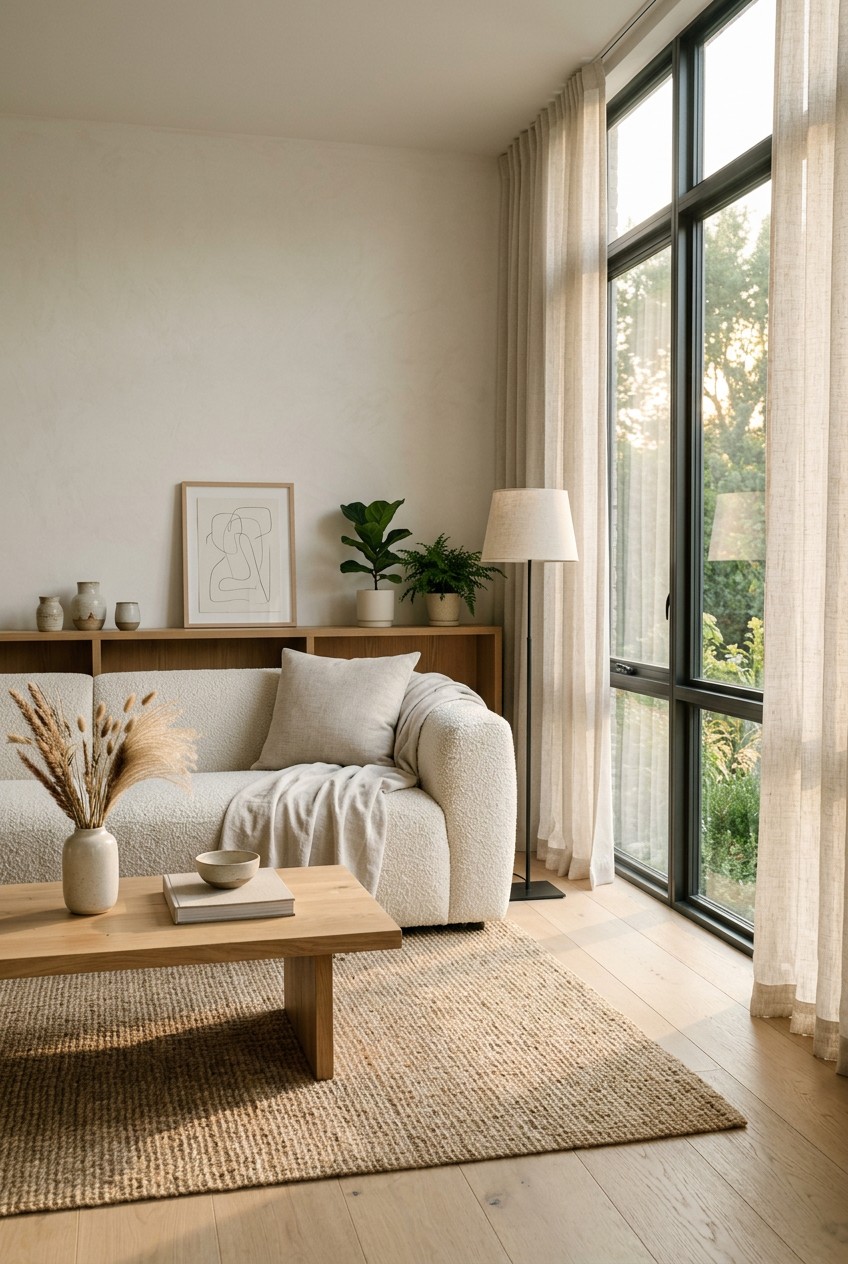
What’s Inside
- Embrace a Warm Base for Your Cozy Minimalist Living Room
- Invest in a Low-Profile, Deep-Seated Sofa with Soft Curves
- Prioritize Multifunctional Coffee Tables with Integrated Storage
- Layer Textures Extensively for Warmth and Depth
- Implement Layered Lighting with a Warm Glow
- Curate Meaningful Decor Object by Object
- Integrate Natural Elements and Biophilic Design
- Ground the Space with a Massive Woven Rug
- Soften Windows with Oeko-Tex Linen Curtains
- Swap Rigid Chairs for Soft Bouclé Accent Seating
- Use Floating Shelves for Intentional Display
- Introduce Earthy Browns and Muted Greens
- Disguise the Television with Frame Technology
- Add Scent as an Invisible Design Layer
- Choose Asymmetrical Ceramics for Organic Shapes
- Keep Floor Space Open in Your Cozy Minimalist Living Room
Last Tuesday at Whole Foods, I was staring at a $12.99 bouquet of dried eucalyptus, realizing my apartment looked exactly like a dentist’s waiting room. My first attempt at a cozy minimalist living room was a total disaster. I bought a cheap, rigid white sofa that felt like sitting on a cinderblock. I painted the walls stark white. I got it wrong for months before figuring it out. The space was cold, echoing, and—no exaggeration—depressing. I’m here to tell you minimalism doesn’t mean living in an empty white box. It’s about intentional choices. Let’s fix your space. Here are 16 ideas for a cozy minimalist living room that actually feels like a home.
1. Embrace a Warm Base for Your Cozy Minimalist Living Room

Opt for a base of whites, creams, beiges, and soft grays for your walls and large furniture pieces. I used to think true minimalism meant pure, blinding white. I painted my entire living room in a harsh, cool white. It was a massive mistake. When my best friend came over with a bag of snacks from Trader Joe’s, she actually shivered and said the room felt sterile. You can’t ignore paint undertones. In 2026, warm neutral color palettes are trending, moving away from overly stark minimalism. I highly recommend applying the 60-30-10 rule. Use 60 percent primary neutral, 30 percent secondary neutral like a soft taupe, and 10 percent for a carefully chosen accent color. I ended up repainting my walls with Farrow & Ball ‘School House White’ for $145 a gallon. It has this creamy, soft depth that instantly warms up the room. Skip the flat, pure white paint. It looks like wet cardboard under artificial light. You need those creamy, earthy undertones to make the space feel inviting and lived-in.
2. Invest in a Low-Profile, Deep-Seated Sofa with Soft Curves

You’re going to need a sofa that anchors the room without dominating it. Choose a sofa with clean lines and a low silhouette to maintain an open, breathable space. This is a massive trend for 2026 called horizon-line living. Look for deep seats and soft, rounded edges. I bought a rigid, upright mid-century modern sofa a few years ago. My back ached every time I tried to watch a movie. I couldn’t get comfortable. Now, I swear by the Povison Lamb Fleece Minimalist Sofa. It gives you that deep-seat cloud sofa experience. If you want a Scandinavian style, the Article Abisko 91-inch Sofa is incredible and usually sits under $1,300. The fabric is soft, and the cushions have this perfect sink-in quality. Another great option is the Room & Board Metro sofa, starting around $1,999. It offers consistent comfort across different body types. A low profile keeps the sightlines clear across your living room. It makes your ceilings feel taller and the whole room feel instantly more expansive and relaxed.
3. Prioritize Multifunctional Coffee Tables with Integrated Storage

Select a coffee table that offers hidden storage to reduce visual clutter. This is ideal for stashing remote controls, magazines, or charger cables. I used to have a sleek glass coffee table. It was a nightmare. It showed every single fingerprint, dust speck, and water ring. I’d wipe it down daily, and it still looked messy. Plus, all my junk was visible underneath. Functionality is critical in minimalist design. You won’t regret choosing pieces that work double duty. The Woud Arc side table runs around $780 and has a brilliant rotating top for easy access. If you need something more budget-friendly, the IKEA BORGEBY coffee table is around $70. It has a fantastic hidden storage shelf. I use mine to hide my ugly remotes and the $4.99 bags of white cheddar popcorn I grab from Kroger for movie nights. Ferm Living’s Podia table is another gorgeous option with generous compartments for extra cushions or small blankets. Hidden storage is the secret weapon for maintaining that clean, uncluttered aesthetic without sacrificing your everyday comforts.

Dog Sculpture Home Decor Cute Man and Dog Statue Decoration
If you want something that just works, Dog Sculpture Home Decor Cute Man and Dog Statue Decoration for Office is a safe bet (326 reviews, 4.5 stars).
4. Layer Textures Extensively for Warmth and Depth

You have to combat the common mistake of a cold, sterile space by layering diverse textures. I’ve seen so many minimalist rooms that look like corporate waiting areas because they lack tactile elements. Incorporate materials like linen, wool, bouclé, raw wood, rattan, and soft cotton. I bought a cheap synthetic throw blanket once because I liked the color. It felt like scratchy plastic and made me sweat instantly. Skip the cheap synthetics. Drape a chunky knit throw over your sofa. Parachute Home makes an incredible Oeko-Tex certified cotton knit throw for $149. It breathes beautifully and feels incredibly soft against your skin. Add velvet or linen cushions to your seating. I love placing a small 2×3 foot faux sheepskin rug over a larger woven one for a cozy, multi-dimensional feel. Interior designer Kendra Nash emphasizes that textures and finishes add crucial interest and depth to minimalist rooms. This ensures they feel welcoming rather than empty. Mixing rough jute with smooth velvet creates a visual friction that makes the room feel expensive and thoughtfully designed.
5. Implement Layered Lighting with a Warm Glow

Move away from single overhead lights and embrace multiple light sources to create pockets of light. This is a key aspect of the Danish concept of hygge. Using only the main ceiling fixture is a massive mistake. I lived in an apartment where I only used the overhead dome light. It cast harsh shadows and made my living room look like a police interrogation room. You aren’t going to relax under that kind of glare. Use warm-toned LED bulbs, ideally around 2700K to 3000K, for a soft golden glow. Neglecting lighting can make a minimalist space feel totally sterile. Brands like Flos, Artemide, Louis Poulsen, and Tom Dixon offer stunning minimalist lighting fixtures. Consider a floor lamp like the Gareth 20.5-inch Brass Desk Lamp from AllModern for $120. It provides perfect task lighting. I also love using subtle wall sconces or LED strip lighting hidden behind the TV console. It creates ambient light without visible fixtures. The soft, diffused light completely changes the mood of the room after the sun goes down. You might also like: 15 Charming DIY Cozy Apartments Home Decor Ideas for a Fresh New Look
6. Curate Meaningful Decor Object by Object

Display only a few carefully chosen items that serve a purpose or bring you genuine joy. Keep your surfaces largely clutter-free. Aim for only one or two decorative pieces visible per furniture item. Overcrowding the space with too many objects is a fundamental mistake that disrupts visual flow and causes low-level anxiety. I used to buy every cute $15 ceramic bird or geometric paperweight I saw at Target. My shelves were packed tight. It looked incredibly messy and dusting was a nightmare. In 2026, styling is thoughtful and minimal, focusing on organic shapes like round trays and asymmetrical ceramics. I finally boxed up all the tiny trinkets. Now, I just display a heavy brass candle snuffer and a single handmade clay bowl on my console table. The empty space around the objects is just as important as the objects themselves. It gives your eyes a place to rest. When you limit your decor, the pieces you do choose to display suddenly feel much more important and museum-like. You might also like: 20 Cozy Aesthetic Cozy Home Decor That Make a Real Difference

Homedics Tabletop Water Fountain
If you want something that just works, Homedics Tabletop Water Fountain is a safe bet (437 reviews, 4.5 stars).
7. Integrate Natural Elements and Biophilic Design

Bring nature indoors with plants, wood finishes, and natural materials to soften clean lines and add life. A large indoor plant can make a massive impact in a sparse room. Biophilic touches remain essential for emotional well-being and are a strong trend for 2026. I killed my first Fiddle Leaf Fig because I overwatered it and kept it in a dark corner. Its leaves turned brown and crispy before dropping off one by one. It was tragic. Learned that the hard way. Now, I get my plants from Costco. They sell huge, healthy ZZ plants for $29.99 that are practically indestructible. I put mine in a simple, textured ceramic pot from VivaTerra that cost $89. The vibrant green leaves pop beautifully against soft white walls. The organic, chaotic shape of a living plant breaks up the rigid straight lines of minimalist furniture. Even if you have a black thumb, a few branches of dried olive leaves in a glass vase can bring that necessary earthy element into your living room. You might also like: 15 Clever DIY Cozy Home Decor That Make a Real Difference
8. Ground the Space with a Massive Woven Rug

You absolutely need a large rug to define your seating area and add acoustic warmth. A tiny rug is a massive design mistake. I once bought a 5×7 foot rug for my main living space just to save money. It looked like a tiny bath mat floating in the middle of the ocean. All my furniture sat awkwardly around the edges. You need an 8×10 foot rug at the absolute minimum for a standard living room. I swear by the NuLoom chunky jute rug. You can get an 8×10 size for around $150. The thick woven texture feels incredible under bare feet, like a gentle massage. It also absorbs sound, which is crucial in minimalist rooms that can easily sound echoey. Make sure the front legs of your sofa and accent chairs sit firmly on the rug. This visually connects all your furniture pieces into one cohesive zone. The rough, earthy texture of natural jute or sisal perfectly balances the smooth finishes of your walls and coffee table.
9. Soften Windows with Oeko-Tex Linen Curtains

Window treatments can make or break the cozy factor in your living room. I used to have heavy, dark velvet drapes because I thought they looked luxurious. Instead, they collected massive amounts of dust and made my living room feel tiny and suffocating. They blocked all the natural light. You want your space to feel airy and bright. I highly recommend swapping heavy fabrics for light, breathable linen. Quince sells gorgeous European Linen curtains for $89 per panel. I buy the 50×96 inch size to ensure they brush the floor perfectly. Hang the curtain rod high and wide. Install it about six inches above the window frame and extend it a foot on either side. This trick makes your windows look huge. The linen fabric lets a soft, diffused light filter through during the day while still offering privacy. The slight wrinkling of natural linen adds a beautiful, relaxed texture that fits perfectly with the cozy minimalist aesthetic. It feels effortless and deeply calming.

UTTCMK Bookshelf Decor Thinker Statue
UTTCMK Bookshelf Decor Thinker Statue – Abstract Art Reading Thinker S punches above its price — 771 buyers rated it 4.5 stars. I would buy it again.
10. Swap Rigid Chairs for Soft Bouclé Accent Seating

Minimalism doesn’t mean you have to suffer on uncomfortable furniture. I tried forcing a rigid, architectural wooden accent chair into my living room layout. It looked like a piece of modern art, but nobody ever sat in it. It was basically a very expensive clothes rack. You need seating that actually invites you to sit down. Bouclé fabric is perfect for this. It adds that nubby, sheepskin-like texture that just begs to be touched. I replaced that awful wooden chair with the Castlery Amber Bouclé Swivel Chair for $499. The curved back and plush fabric instantly softened the harsh angles of my room. The texture catches the afternoon light beautifully, creating tiny shadows across the fabric. When you keep your color palette restrained, you have to rely on interesting fabrics to do the heavy lifting. A soft, rounded bouclé chair provides the perfect contrast to a sleek, low-profile sofa or a hard wooden coffee table. It makes the room feel infinitely more approachable and lived-in.
11. Use Floating Shelves for Intentional Display

Ditch the bulky, towering bookcases that eat up all your valuable floor space. I used to have a massive dark wood bookshelf that dominated my living room. It felt heavy and imposing, casting a dark shadow over the entire corner. Floating shelves keep the floor clear and draw the eye upward, making the ceiling feel taller. I installed two West Elm reclaimed wood floating shelves. They are exactly two feet long and cost $110 each. The raw, rough-hewn wood adds a beautiful natural element to the wall. Because shelf space is limited, you are forced to be intentional about what you display. I keep it simple. I have a stack of three neutral design books, a small trailing pothos plant, and a $14.99 bag of artisanal coffee beans from Sprouts inside a glass jar just for the rich, roasted smell. Keeping the display sparse ensures the shelves look like a curated gallery rather than a storage catch-all. It’s a simple swap that drastically opens up the room.
12. Introduce Earthy Browns and Muted Greens

While warm neutrals form your base, you need subtle hints of color to prevent the room from feeling lifeless. I tried doing a completely gray and white living room once. It was incredibly depressing. It felt like living inside a black-and-white photograph. I eventually realized you have to pull colors from nature to make the space feel grounded. Introduce muted, earthy tones like olive green, terracotta, or warm cognac brown. I added a $35 muted green velvet pillow from Crate & Barrel to my cream sofa. That one small pop of earthy color changed the entire dynamic of the room. It brought warmth and vitality without breaking the minimalist rules. You can also bring in these tones through natural wood furniture, a leather ottoman, or even the terracotta pots holding your plants. These subtle, nature-inspired colors trick your brain into feeling more relaxed. They bridge the gap between the outdoors and your interior space, making the living room feel like a true sanctuary.

WIPHANY Entryway Wall Key Holder with 5 Hooks
If you want something that just works, WIPHANY Entryway Wall Key Holder with 5 Hooks is a safe bet (47 reviews, 4.5 stars).
13. Disguise the Television with Frame Technology

Nothing ruins a carefully curated minimalist living room faster than a giant, glossy black plastic rectangle hanging on the wall. It acts like a black hole, sucking all the aesthetic energy out of the space. I held out for years because of the price, dealing with the ugly black screen dominating my wall. I finally caved and bought the Samsung Frame TV. I got the 55-inch model for $1,499. It was honestly the best design decision I’ve ever made. When the TV is off, it displays high-quality digital art. I currently have a vintage, muted landscape painting displayed. The matte screen finish makes it look exactly like real canvas. You can buy a customizable bezel frame that snaps onto the edges. I chose the light oak finish for $150 to match my floating shelves. It completely blends into the room. If a Frame TV isn’t in the budget, you can achieve a similar effect by surrounding your standard TV with a small, carefully spaced gallery wall to minimize its visual impact.
14. Add Scent as an Invisible Design Layer

We spend so much time thinking about how a room looks, but how it smells is just as important. Scent is an invisible layer of design that instantly dictates the vibe of the space. I bought a cheap vanilla candle from Walmart once. It smelled like cloying, fake frosting and gave me a massive migraine within ten minutes. Skip the cheap, artificial stuff. You want subtle, complex, earthy scents that mimic nature. I personally swear by the P.F. Candle Co. Teakwood & Tobacco soy candle. The 7.2-ounce jar costs $24 and lasts for weeks. It has notes of leather, teak, and orange that make the room smell rich and inviting. Trust me on this. The amber glass jar also looks beautiful sitting on a coffee table. Another great option is an ultrasonic essential oil diffuser. I use a matte ceramic one that blends right into my decor. Diffusing a few drops of cedarwood and bergamot oil creates a spa-like atmosphere. It engages your senses the moment you walk through the door.
15. Choose Asymmetrical Ceramics for Organic Shapes

A perfectly symmetrical room with rigid, matching decor looks like a furniture catalog, not a home. You need weird, organic shapes to break up the harsh lines of your sofa and coffee table. I used to buy matching sets of everything. I had two identical lamps, two identical vases, and perfectly matching pillows. It felt stiff and formal. Now, I actively seek out asymmetrical, slightly imperfect pieces. I found a gorgeous, wobbly, matte white ceramic vase at Crate & Barrel for $45. It looks like it was shaped by hand on a pottery wheel. I keep it slightly off-center on my console table. It holds three dried olive branches. The imperfect shape draws the eye and adds a human touch to the room. In minimalist design, where every item is scrutinized, these small imperfections add massive character. Look for bowls with uneven edges, vases with off-center necks, or hand-carved wooden trays. These organic elements bring a quiet, earthy energy that perfectly complements a cozy minimalist aesthetic.

GODONLIF Candle Warmer Lamp with Timer Dimmable
Honestly, GODONLIF Candle Warmer Lamp with Timer Dimmable surprised me — sturdier than it looks in the photos, and over 75 buyers gave it 4.5 stars.
16. Keep Floor Space Open in Your Cozy Minimalist Living Room

The amount of visible floor space directly impacts how large and airy your living room feels. I used to have a chunky, overstuffed sofa that sat directly on the ground. It completely blocked the visual flow of the room. It felt like a massive roadblock right in the middle of my apartment. Now, I make sure almost all my furniture sits at least six inches off the ground on slim legs. This allows light to pass underneath the pieces, creating a sense of weightlessness. Even my media console is wall-mounted to keep the floor underneath totally clear. This concept is crucial for a cozy minimalist living room. It gives the room visual breathability. When your eyes can travel across the floor uninterrupted, the footprint of the room feels significantly larger. Plus, it makes vacuuming and sweeping incredibly easy. You don’t have to sacrifice coziness for this open feeling. The warmth comes from your textured rugs, soft lighting, and plush fabrics, while the lifted furniture keeps the architecture feeling crisp and clean.
Creating a cozy minimalist living room doesn’t happen overnight. It’s a deliberate process of editing out the noise and bringing in pieces that genuinely serve you. I highly recommend starting with your lighting and textures. Those two elements alone will completely change how your space feels. Don’t be afraid to make mistakes along the way. I certainly did. Save this post for your next home decor refresh, and be sure to pin your favorite ideas to your Pinterest boards so you can reference them later!
Frequently Asked Questions
What colors work best for a cozy minimalist living room?
Stick to a warm neutral base using the 60-30-10 rule. Use creams, soft grays, and beiges for 60 percent of the room, taupe for 30 percent, and earthy accents like olive green or terracotta for the final 10 percent.
How do I make a minimalist room feel warm?
Layering textures is the secret. Mix rough materials like jute and raw wood with soft fabrics like bouclé, linen, and chunky cotton knits. Adding warm 2700K LED lighting also instantly softens the space.
What kind of sofa is best for minimalist decor?
Opt for a low-profile, deep-seated sofa with soft curves. A cloud-style sofa in a cream or light gray fabric anchors the room without dominating the visual space, keeping sightlines open.
How do I display decor without creating clutter?
Limit your display to one or two meaningful items per surface. Use floating shelves to save floor space, and choose asymmetrical, organic ceramics to add character without overwhelming the room.
